How to Become a Compensation Analyst: Education, Certifications, & Career Path

With companies constantly competing for top talent, HR and compensation professionals are always in demand and serve critical roles in organizations of all sizes. Compensation Analysts are relied upon to examine compensation data which, if done successfully, helps to attract, retain, and motivate employees. If you are applying for a new job in Human Resources or have you recently taken on new duties in compensation planning, then now may be the right time to consider a career as a Compensation Analyst. 

What Is a Compensation Analyst? 

As defined in the extensive database of job descriptions in ERI Economic Research Institute’s Assessor Platform, a Compensation Analyst assesses and performs analysis on collected compensation data and prepares wage and salary data to facilitate compensation and management functions of an organization.  

What Does a Compensation Analyst Do? 

According to the Compensation Analyst job description in ERI’s Assessor Platform, they confer with management to determine the type, scope, and purpose of analyses. Their duties include examining and evaluating both executive and non-executive positions. The responsibilities of a Compensation Analyst are of a professional level and require understanding of both compensation theory and practice. Additionally, these are the typical functions of a Compensation Analyst: 

  • Works with computers or other analytic tools. 
  • Prepares reports and analyses. 
  • Works with other analysts and supervisors to complete assigned project work. 
  • Studies current organizational wage and salary data and compiles reports, organization and flow charts, and other information. 
  • Collects and analyzes occupational data, such as physical, mental, and training requirements of jobs and workers and develops written summaries, such as job descriptions, job specifications, and lines of career movement. 
  • Audits and recommends changes to salary structures and position classifications. 
  • Utilizes developed occupational data to evaluate or improve methods and techniques for recruiting, selecting, promoting, evaluating, and training workers, as well as administration of related personnel programs. 
  • Reviews wage and salary adjustments for conformance to policy. 
  • May observe jobs and interview workers and supervisory personnel to determine job and worker requirements. 

How Do You Become a Compensation Analyst? 

Those interested in a career as a Compensation Analyst often gain a degree in Human Resources (HR), though that is not necessarily required for some positions. Alternatively, many pursue professional HR certifications. Certifications, particularly those administered online, are often very flexible, allowing the individual to work at their own pace and fit studies around existing responsibilities. Compensation Analyst training, specifically, may include completion of a Compensation Analyst Credential (CAC).  

How Do You Get Certified as a Compensation Analyst? 

ERI’s Distance Learning Center (DLC) offers a number of continuing education opportunities, including the Compensation Analyst Credential (CAC). The Compensation Analyst Credential designation is a convenient way to learn the fundamentals of this discipline without ever leaving the office. This online credential teaches the basics of salary planning and administration. By earning a CAC, you will prove to employers that you have demonstrated expertise in the field of compensation. Employers will know that you have received high-quality training in the most fundamental areas of salary planning.  

Why Should You Earn a Compensation Analyst Credential? 

  • Promotes career advancement 
  • Education without the time, expense, and inconvenience of travel 
  • Work at your own pace from anywhere you have an Internet connection 
  • Easily fits into your busy schedule 

What Are the CAC Requirements? 

In order to earn a CAC from ERI’s Distance Learning Center, you must complete 12 courses and pass their exams for CAC credit. A passing score requires a grade of at least 80% on the final exam (8 out of 10 questions answered correctly). You may retake a course’s CAC exam as many times as necessary to pass, but you will not get the same questions every time. (There is no charge for retaking an exam, either to get a pass or to get a different type of credit.) 

How Do You Get Started? 

To get started, order the CAC. Then, go to your Training History and begin taking these courses: 

Read through the course text, answering each memory jogger question correctly to proceed to the next page. You may exit a course at any time and later return to the page you left by clicking the Page Index link in the course’s left-hand navigation. 

When you are ready to take the Final Exam, you will be asked to select a credit type. Select Compensation Analyst Credential and your location (state, province, or country). After you have passed the exam, go to your Training History to view and print your certificate of completion. 

How Do You Get a CAC Application? 

After you have passed the 12 required CAC courses (listed above), please print this CAC application form and fill it out. Then email it to ERI’s Distance Learning Center. We will review your application and mail you your CAC certificate. You will have one year from the date of purchase to complete the CAC. 

What Else Does the Distance Learning Center Offer? 

ERI’s Distance Learning Center offers these resources for HR online compensation training: 

Free Human Resources Training Courses: The content of 36 self-study courses is offered at no charge. Exams and credit are not available for these free courses. ERI’s Distance Learning Center self-study courses cover the following topics: 

  • Total Rewards Foundation 
  • Job Analysis, Descriptions, and Evaluation 
  • Salary Structures 
  • Salary Administration 
  • Variable Pay 
  • Executive Compensation 
  • Global Compensation 
  • Employee Benefits 

Webinars: The DLC offers webinars related to salary planning, compensation benchmarking, geographical differentials, and more that qualify for recertification credit from the HRCI, SHRM, and WorldatWork. These salary administration webinars are currently available: 

Distance Learning Center Credentials: You may purchase courses to earn one of our credentials, either the Compensation Analyst Credential (CAC) or the Compensation Committee Certification (CCC). Earn HRCI and SHRM recertification credits simultaneously at no additional cost.  

Recertification and Continuing Education Credit: HRCI and SHRM credits may be earned simultaneously. WorldatWork recertification and National Association of State Boards of Accountancy (NASBA) continuing education credits are also available. Credit eligible courses may be purchased in bundles of five or more.  

Further Information 

If you have any questions about the Compensation Analyst Credential (CAC) designation or other resources provided by ERI’s Distance Learning Center, please email [email protected] 

A Look into Geographic Differentials in Practice

For any organization, particularly those operating within a national or international scope, planning strategic geographic pay considerations is crucial to deciphering and developing the direction of an organization’s salary structure. As such, it becomes standard practice for HR and compensation professionals in these organizations to focus on and incorporate geographic pay differentials in their compensation planning and strategy.

With that said, this blog post will highlight a few of the findings from ERI’s Geographic Pay Differentials in Practice. This white paper draws conclusions from ERI’s Compensation Best Practices Survey, one of a series of surveys conducted by ERI as part of ongoing research in the field of compensation. ERI’s Geographic Pay Differentials in Practice white paper provides insights into common practices and current trends regarding how organizations analyze data to implement logical and competitive geographic pay differentials.

Consider these key insights:
  • 81% of participating organizations factored in some sort of geographic pay differences when creating salary structures.
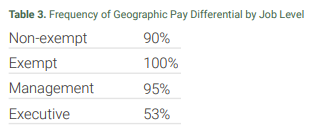
  • Geographic differentials are typically applied to all job levels except executive.
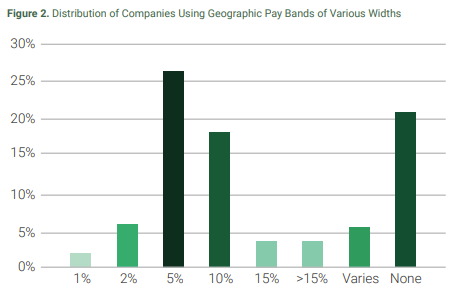
  • The two most popular geographic pay banding widths are 5% and 10%.

The findings discussed here shed light on popular trends and practices that may impact how HR and compensation coordinators incorporate geographic pay differentials into their own compensation planning.

Factors Involved in the Application of Geographic Pay Differentials

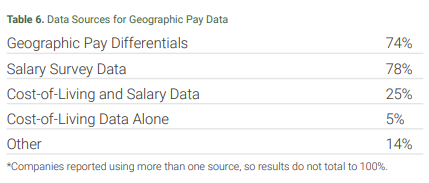
There are a multitude of factors involved in the application of geographic differentials. But, before we cover those factors, it is important to establish which data sources are used by organizations to inform those factors. As found in ERI’s Compensation Best Practices Survey, many organizations utilize geographic pay differential surveys and local salary survey data.

Interestingly, cost-of-living data are much less used, with only 5% of respondents reporting the use of cost-of-living data as their sole source. It is more common to utilize cost-of-living data in tandem with other sources, such as geographic salary data. Cost-of-living information is more typically used to build relocation packages, or apply cost-of-living adjustments, when moving employees. In contrast, geographic pay differences between offices in distinct locations are based more often on labor market cost differentials, which are measured by local salary surveys and reported by geographic labor cost differential surveys based on salary differences.

Size and Scope

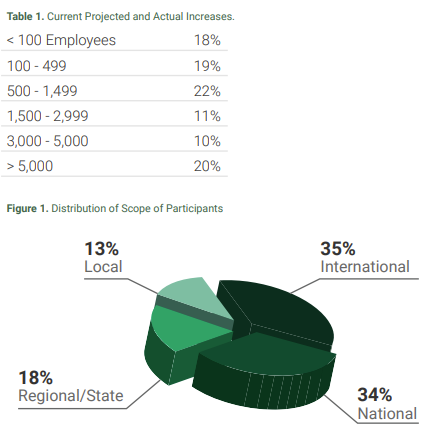
A total of 158 organizations participated in ERI’s Compensation Best Practices Survey. Distinguishing characteristics of those participating organizations were that 63% of organizations had at least 500 employees and 69% were national or international in scope.

This demonstrates that the participating organizations were larger and broader in scope, asserting that smaller organizations, which may have only one location, are less likely to utilize and implement geographic pay differentials. Because organizations of a larger size and scope often work from a national or international scope, utilization of geographic pay differentials in compensation planning becomes crucial to informing and restructuring geographic salary structures for those organization. For instance, 81% of participating organizations factored in some sort of geographic pay differences when creating salary structures.

Job Level and Geographic Level

In the matter of geographic pay differentials, job levels are also a significant factor to consider as part of compensation planning. As found in ERI’s survey results, geographic differentials are consistently applied to all job levels except executive, where rates of application are almost half that of the other job levels. The table below demonstrates that executive-level jobs are often excluded from salary structures that are adjusted by location. Executives are usually recruited at the national level with compensation packages already so large and complex, making geography a minimal (if even existent) concern when planning executive compensation.

Additionally, defining the exact geographic level is another important aspect when applying geographic pay differentials, with a majority of organizations using either the city or metro level for geographic determination. Similarly, when it comes to organizations with a more international scope, these companies must maneuver specific complexities, often using  city or metro geographies when applying geographic pay differentials. This is most likely done to account for multiple areas with significantly higher or lower cost of labor.

Administration of Geographic Pay Differentials

Now, how would HR and compensation coordinators put geographic pay differentials into practice?

Once the factors for geographic pay differentials have been applied, there are myriad ways to administer changes. According to the results of ERI’s Compensation Best Practices Survey, 56% of respondents reported that they would adjust the overall salary structure at an organization to implement geographic differentials, making this the most popular choice amongst HR and compensation coordinators.

These adjustments are made through geographic pay bands, typically reported as a percentage difference from a location. For instance, ERI’s findings in the chart below indicate that 80% of companies that report using geographic pay differentials will implement some type of banding and that the two most popular widths are 5% and 10%. When it comes to geographic banding, the widths can differ in line with specific factors, such as the variability between branch offices and the total number of branch offices.

As mentioned, most survey respondents typically administer geographic pay differentials by adjusting the overall salary structure. Coordinators would typically use this approach because it addresses specific variations and practicalities, such as enabling coordinators to treat locations that might have minor differences consistently, having fewer numbers to work with, and allowing an easier handle of small fluctuations over time. Moreover, this method simplifies administration of geographic pay differentials while still matching relatively closely to local labor market conditions.

ERI’s Geographic Assessor Is the Reliable Choice

For practical applications of geographic differentials and more, ERI’s Geographic Assessor provides a robust tool to assess the cost of labor by geographic location, ensuring equitable pay across all branches of an organization. Our Geographic Assessor provides quintessential tools and trusted data to simplify essential tasks, such as calculating geographic differentials, building pay structures, and ongoing maintenance of an organization’s compensation program.

Try a free demo today to begin streamlining salary planning and compensation management in your organization!

How to Conduct a Pay Equity Analysis: Step-by-Step Guide for Fair Compensation

The social optics of equity and inclusion have placed pressure on how fair and equal pay is administered amongst employees. Beyond standard compliance, companies that implement fair pay policies create a work environment that is conducive to attracting and retaining talented employees, while also building a relationship of trust and transparency between companies and their employees.  

As equitable compensation is a crucial pillar to an organization’s long-term success, ensuring that an organization is appropriately compensating their employees with fair and competitive pay requires that they regularly conduct pay equity analyses. A pay equity analysis allows HR and compensation coordinators to identify and address the pay inequities that may have gone unidentified for multiple reasons, including the following: 

  • Market misalignment: The labor market is dynamic, constantly shifting and fluctuating due to multiple factors, such as the supply and demand for local labor, economic conditions, changing demographics, and government policies. HR and compensations professionals must stay on top of evolving trends by benchmarking internal salary data against the market to ensure that employee compensation stays fair and competitive.  
  • Insufficient data analysis: Without access to the most current and accurate salary survey data, organizations may inadvertently face issues with pay disparity. Regularly analyzing compensation data to compare internal pay practices against the market is crucial to maintaining consistent fair pay.  
  • Ineffective pay structures: HR and compensation coordinators must ensure that their pay structures are not outdated or poorly designed. Otherwise, this could potentially lead to unequal pay that does not accurately reflect the diverse jobs being performed at an organization. 


Conducting a pay equity analysis allows coordinators to examine any gaps in pay and rectify the factors that may have contributed to the oversight. ERI’s Salary Assessor provides a comprehensive compensation management solution and pay equity analysis tool that HR and compensation professionals rely on to identify, address, and manage pay inequities within an organization.  

To conduct a pay equity analysis thoroughly and competently, it is essential to understand why pay equity is important in the first place.  

Understanding What Pay Equity Is and Why It Matters 

Everyone deserves the pay that is commensurate with the value of the work that they perform. Although this fact is indisputable, companies must examine how they administer equitable pay.  

By definition, pay equity is fair, consistent pay without discrimination based on gender, race, or other protected categories that also considers job-related factors, such as education, work experience, and tenure. 

In general, pay equity may be examined at two levels: internal equity and external equity.

Internal equity pertains to an organization’s internal compensation program and is accomplished when current employees who perform similar job functions within the same organization are paid fairly. Employee compensation should be delivered based on fair and objective criteria, such as merit, seniority, education, experience, performance, skills, and knowledge, to ensure the attainment of internal equity.  

External equity is the measure of an organization’s pay rates compared to the compensation paid by similar companies competing for labor in the same market. External equity indicates that a company’s pay levels are comparable to market rates.  

Understanding how internal and external equity impact a company’s compensation strategy affects fair pay and how it can be measured. Taking both into consideration will allow coordinators to contextualize their internal pay structures and inform the parameters by which they measure and benchmark the effectiveness of their fair pay practices. Pay equity is not only an essential practice to implement within an organization, but it is also strategically imperative to maintaining employee satisfaction and company longevity. When pay equity is implemented properly, it ensures that a number of objectives are met: 

  • Compliance: In addition to state laws, there are two federal laws that specifically govern pay equity. The Equal Pay Act of 1963 (which amended the Fair Labor Standards Act of 1938) prohibits wage discrimination based on the sex of workers performing the same tasks at the same organization. Title VII of the Civil Rights Act of 1964 takes the Equal Pay Act of 1963 further by not only prohibiting sex discrimination, but also discrimination based on race, color, religion, and national origin. Proper pay equity practices ensure that an organization stays legally compliant, avoiding potential lawsuits or penalties.  
  • Company Reputation: Achieving pay equity contributes to a company’s reputation among job seekers, current employees, competitors, and clients. How a company distributes and designs its pay structures can ultimately affect outside perspectives on employee treatment, priorities, and overall business interactions. Pay equity, in addition to pay transparency, can influence how important parties, specifically clients, perceive a company, impacting growth and even company profits.  
  • Employee Retention: Pay equity is also one of the leading factors that contribute to long-term employee retention and motivation. When employees know and feel that they are fairly compensated, their confidence in their work and productivity increases. In addition, specifically among historically marginalized groups who are at higher risk of facing pay inequities, being paid commensurate to their skills and experience is one of the leading contributors to how they view their professional value at work.  

Pay equity matters. Conducting a regular pay equity analysis is crucial to not only a company’s reputation and profitability, but also the retention and motivation of valuable talent in an organization.  

How to Conduct a Pay Equity Analysis 

Conducting a consistent pay equity analysis is a crucial best practice to ensure that a company is compensating employees fairly, both internally and externally. Regularly analyzing and updating salary practices creates a better understanding of how a company is navigating pay, informs budgets, and ensures that a company’s compensation strategy is equitable and competitive.  

Step 1: Define company goals and objectives  

Before anything, it is always important to understand and define a company’s goals and objectives. What are the main motivations that compel coordinators to conduct a pay equity analysis? Is it to restructure pay practices, ensure compliance, or eliminate pay inequities that have been overlooked? Because these types of processes should be conducted regularly to ensure consistency, efficacy, and fairness in pay structures, identifying and defining goals every time a pay equity analysis is done will shape the process, perspective, and methodology of the analysis. 

Step 2: Understand current pay structures and policies 

Next, HR and compensation professionals must understand the pay structures and policies in place in their organization. This contextualizes the analysis in an existing framework that allows coordinators to restructure pay, as needed, to reflect the unique circumstances of each organization and identify any discrepancies that may arise. 

Step 3: Determine what is “comparable work”  

One of the most important tasks in conducting a pay equity audit is the evaluation of similar roles performed by different employees within an organization. Through job evaluation, coordinators can determine whether various positions in a single organization are comparable. For instance, using ERI’s Salary Assessor, coordinators can determine whether two different positions, even from varying departments, are quantifiably comparable. It is crucial to look at a job in its entirety because job titles and descriptions alone do not specifically determine comparability.  

Step 4: Gather relevant data  

Next, gathering relevant and accurate data on an organization’s employee list is crucial. Although data are dependent on the scope and purpose of the analysis, these pertinent factors will usually be included: 

  • Current salary information (base salary, bonuses, etc.) 
  • Education and qualifications 
  • Job title and descriptions 
  • Tenure 
  • Performance evaluations 
  • Demographics and protected characteristics, such as gender, race, sex, age, etc. 
  • Market data 

It is crucial to recognize that the selection of factors to integrate into a pay equity audit should be tailored to a specific organization’s size, prioritizing the factors and variables that are the most relevant to the organization, employees, and analysis goals.

Step 5: Analyze employee data for pay equity

ERI’s Salary Assessor has a unique Pay Equity feature in the Compensation Management solution that helps HR and compensation coordinators comb through their entire employee list and compare compensation between protected groups. Coordinators can utilize this solution to complete pay equity audits and make sure that total compensation remains fair and competitive. 

To get started:   

  • First, in ERI’s Salary Assessor, enter employee data into the Compensation Management platform. This can be accomplished manually, by uploading data, or via secure HRIS integration.  
  • Next, navigate to the Workplace Insights feature to take a deep dive into internal and external pay equity. 

In Workplace Insights, coordinators can easily and accurately identify any pay gaps and plan the next course of action to tackle pay discrepancies. Beyond examining pay equity for employees in protected groups, coordinators may face other types of pay disparities while conducting a pay equity audit, such as pay compression and variance from peers. In addition to the Pay Equity feature used to compare compensation between two groups of a protected group, such as age range, disability, gender, national origin, race, religion, and sexual orientation, ERI’s Salary Assessor includes the following tools to identify issues at the job and employee level: 

  • Compression Check 
  • Peer Analysis 
  • Variance from Market 

Using ERI’s Compensation Management solution in the Salary Assessor, HR and compensation professionals can run in-depth analyses that ensure both internal and external pay equity. In addition to the features described above to examine internal pay equity, ERI’s Assessor Platform provides a robust database with current salary survey data and an array of benchmarking tools to compare pay for internal jobs against market rates, an essential step in ensuring external pay equity. ERI’s Assessor Platform is the solution for HR and compensation professionals to streamline and optimize essential organizational tasks, such as pay equity audits.  

Step 6: Determine when to make salary adjustments 

When conducting a pay equity analysis, the easiest part is identifying the pay gaps. What is arguably the most difficult part is determining when to apply changes. After identifying any pay gaps, coordinators must conclude whether pay gaps are justified. In the case of seniority, educational and professional qualifications, or even merit, a pay difference could indeed be justified.  

Alternatively, what if an HR coordinator discovers a pay discrepancy that is not justified? For example, employee A is a Latina American woman, 39 years old, with a bachelor’s degree and 15 years of relevant professional experience. Employee B is an Asian American man, 40 years old, with a bachelor’s degree and 16 years of relevant experience. However, employee A makes $7,000 less per year than employee B, even though they perform comparable tasks with roughly similar backgrounds. 

Now, how should coordinators approach resolving this pay gap?  

Similar to conducting a pay equity analysis, implementing salary adjustments requires several crucial steps. First, share the findings of your pay equity analysis with the relevant individuals within the organization that are involved in the process. Besides the HR coordinator, stakeholders could include others on the HR team, department managers, and admin. From there, coordinators can best determine when to make these salary adjustments. Here are some things to consider when adjusting compensation based on a pay equity analysis: 

  • Ensure that an HR budget is established that considers the organization’s financial constraints 
  • Verify that changes are compliant with state and federal pay equity laws 
  • Communicate the adjustments clearly and thoroughly with the HR team, relevant department managers, admin, and involved employees to ensure confidentiality 

Every organization is different, so consider the unique circumstances that influence when salary adjustments are made. 

ERI Is the Solution to Resolving Pay Inequities 

ERI’s Salary Assessor includes current salary survey data and an array of features in the Compensation Management platform to address pay equity. Using Workforce Insights, fair employee compensation may be analyzed from three perspectives: pay equity for employees in protected groups, job-focused internal equity, and employee-focused internal equity, including checks for pay compression, peer analysis, and variance from the market. ERI provides an essential Compensation Management platform that HR and compensation professionals in organizations of all sizes rely on to ensure both internal and external pay equity. Using ERI’s Assessor Platform, coordinators will not only be able to swiftly conduct an accurate pay equity analysis but also optimize salary survey data to accurately benchmark compensation against the market. Ensure that your organization stays competitive, remains legally compliant, and maintains pay equity, promoting a more inclusive and diverse workplace built on trust and transparency. Begin optimizing your compensation planning today—try a free demo to get started!  

Retirement Benefits Trends: 2025 Benefits Benchmarking Survey Highlights

Assisting employees in preparing for the milestone that is retirement is a rewarding but often complex process. Although retirement may seem to be a lifetime away for younger employees, planning for the future requires careful selection of advantageous plans that optimize retirement savings. A tried-and-true method of planning and updating retirement plans involves benchmarking internal practices against the market. By doing so, HR and compensation professionals can design data-driven retirement packages that are both competitive and enticing to current and prospective employees.  

To assist with this process, ERI Economic Research Institute proudly presents its 2025 Benefits Benchmarking Survey.  The focus of this annual survey report is to offer insight into valuable data to benchmark an organization’s benefits practices with those of other employers in the external marketplace. Having the ability to accurately benchmark employer-sponsored employee benefits will help HR and compensation analysts evaluate and improve the effectiveness of their overall compensation and benefits strategy and provide an edge over competing organizations. 

The eighteenth edition of this survey includes a comprehensive analysis of employee benefits, offering detailed data cuts for general benefits, medical benefits, life and disability insurance, employee leave practices, retirement, and executive prerequisites. This survey also contributes benefits information to the robust database provided in ERI’s Assessor Platform, allowing compensation analysts to more accurately benchmark and plan benefits packages.  

Although health care will continue to be the primary concern for employers and employees alike, other benefits are just as important to consider when planning a well-rounded benefits package. A comprehensive and attractive benefits package is essential to attracting, retaining, and motivating top talent. 

In this specific article, we look at the trends and data in employer-sponsored retirement plans, as reported by ERI in the 2025 Benefits Benchmarking Survey.

ERI Economic Research Institute’s Survey Methodology

ERI’s survey questionnaires were designed and distributed for the 2025 Benefits Benchmarking Survey in October 2024. Participation was solicited from employers in the public, private, and nonprofit sectors, as well as government entities in the United States. Data input was collected in the period from October 1, 2024, to February 3, 2025. The requested effective date of benefits data was January 1, 2025. 

Eighty-eight (88) U.S. organizations contributed data to the survey. Characteristics of participants varied greatly and are illustrated in the “Characteristics of Participating Organizations” section of the survey. Seventeen (17) industry groups are represented, including nonprofit organizations and government entities.

Investing in Rewarding Retirement Packages for Employees 

Employer-sponsored retirement plans are more than just a benefit for employees. They are a strategic investment by a company to recruit and retain top talent. Offering attractive retirement benefits for employees not only invests in their future but also contributes to employee engagement and productivity.  

A well-structured retirement plan begins with identifying organizational goals and employee expectations. Each company works within a unique context and might prioritize different needs and concerns. For example, established companies might plan their rewards with employee retention in mind, while start-ups or growing companies may focus more on flexibility. Whichever may be the concern, understanding an organization’s specific goals is crucial when planning and benchmarking retirement plans.  

Additionally, it is important to identify particular aspects of retirement packages that allow benefits coordinators to strategically plan benefits in a highly competitive market. These are just a few things to keep in mind to when benchmarking internal practices against the market:  

  • Understand employee demographics and expectations. 
  • Be knowledgeable of the various retirement plans available. 
  • Review budget and legal standards to determine employer-contribution limits. 
  • Consider retirement plan options that best align with organizational goals.
Benchmarking Data to Plan Competitive Retirement Packages 

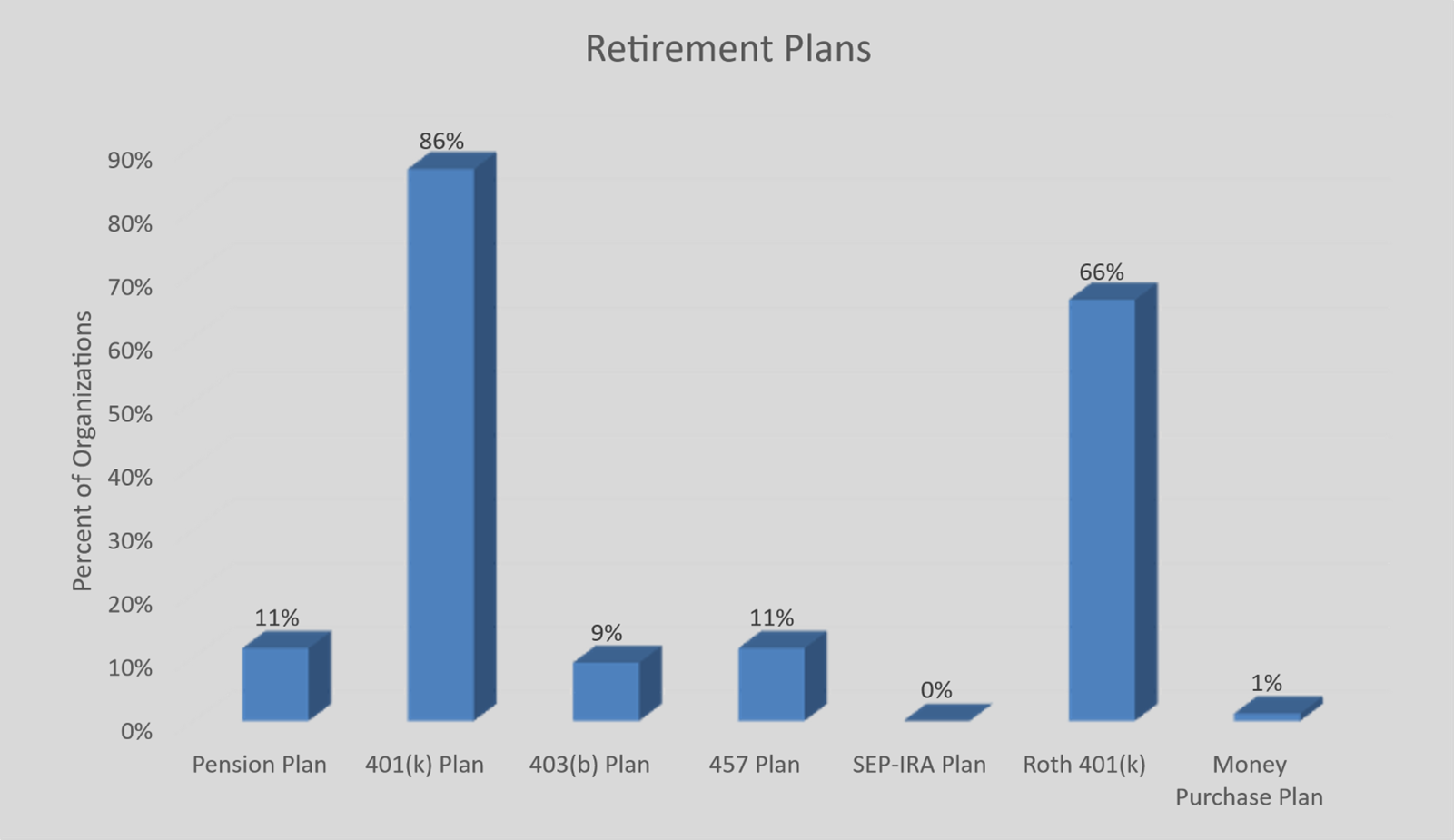
As mentioned, to successfully design competitive retirement packages, it is important to know the various retirement plans that can be offered by employers in the United States. According to ERI’s 2025 Benefits Benchmarking Survey, eighty-five (85) of the eighty-eight (88) respondents offered some type of retirement plan to employees. Eighty-six percent (86%) of the organizations providing a retirement plan offered a 401(k) plan1. The following chart demonstrates the most common types of retirement plans offered by employers according to survey participants, with definitions provided below:

  • 401(k) Plan – An employer-sponsored retirement savings plan that allows employees to contribute a portion of their pre-tax wages through payroll deductions.  
  • Roth 401(k) Plan – A type of retirement savings plan that represents a unique combination of features of a Roth IRA and a traditional 401(k). The Roth 401(k) is funded with after-tax dollars for which taxes are paid in the current year. Typically, the earnings on Roth contributions are tax free as long as the distribution is made at least 5 years after the first Roth contribution and the employee has attained the age of 59½. 
  • Pension Equity Plan – A defined-benefit plan that provides an annuity or lump-sum benefit upon end of employment. Pension equity plans define benefits in terms of a current lump-sum value. Annual credits can be based on age, service, or a combination of both. The plan determines the total benefits by providing a “schedule of percentages” that are accumulated throughout the work life of the employee. 
  • 457 Plan – A non-qualified tax-deferred compensation plan, typically for local or state government or tax-exempt organizations, that works like a 401(k) and a 403(b) plan. Employees are allowed to defer compensation on a pre-tax basis through payroll deductions that further allow them to defer federal and sometimes state taxes until the assets are withdrawn. 
  • 403(b) Plan – An annuity that provides retirement income for employees of certain tax-exempt organizations derived from tax-deferred employee and/or employer contributions.  
  • Money Purchase Plan – A defined-contribution plan in which the amount of contribution that each employee receives from the employer is in proportion to the employee’s wages. 
  • SEP-IRA Plan – A Simplified Employee Pension (SEP)-Individual Retirement Account (IRA) is a company-sponsored IRA that can be opened by even the smallest of businesses. Under an SEP-IRA, an employer can make deductible contributions to an employee’s existing IRA. SEP-IRAs are flexible for employers since the employer does not have to contribute every year. 

Using reliable survey data, HR and compensation professionals will get current market insights into these popular retirement plan types. To help analysts drill down on the data that most accurately reflect comparable organizations competing for talent, ERI provides data cuts by organization sector (privately and publicly owned for-profit, nonprofit, and government organizations), industry group, geographic region, and organization size (number of employees).  

Beyond understanding the various types of employer-sponsored retirement plans available, there are fundamental components in the design of retirement benefits to consider. To assist in evaluating current market trends, ERI’s 2025 Benefits Benchmarking Survey reports survey participant responses for these retirement plan options:

Employer Contributions to Defined-Contribution Plans 

  • Matching Contributions  
  • Fixed Contributions  
  • Discretionary Contributions  
  • Both Matching and Non-Matching Contributions 

Vesting Schedules 

  • 100% Immediate  
  • Cliff Vesting  
  • Graded Vesting 

Special Plan Provisions in Defined-Contribution Plans 

  • Participant-Directed Investment 
  • Participant Loans 
  • Auto Enrollment 
  • Hardship Withdrawals 
  • In-Service Withdrawals 

Types of Defined Benefit Plans 

  • Final Average 
  • Career Average 
  • Cash Balance 
  • Pension Equity 
Use ERI’s Benefits Benchmarking Survey Data to Transform Benefits Planning  

According to the American Psychological Association, 63% of adults aged 45-64 in 2023 reported that money and the economy were a significant stressor, a huge jump from the 45% reported in the same demographic in 20192. In short, finance is a large concern for many Americans. This is why employer-sponsored retirement plans are essential in retaining employees, while also providing workers with financial stability.  

Creating data-driven rewards packages is a major part of this process and begins with planning and benchmarking benefits practices. Benchmarking external market data is imperative to benefits planning, in particular, because it enables analysts to contextualize their practices against organizations competing for the same labor. For example, ERI’s 2025 Benefits Benchmarking Survey reported these average maximums for employer-matching contributions from all U.S. survey respondents: 

$0.25 for each $1 up to $0.50 for each $1 up to $0.75 for each $1 up to $1.00 for each $1 up to Average Contribution as % of Base
4.0% 6.7% -- 7.1% 4.6%

In interpreting the data to inform benefits planning, analysts will be able to identify the more market-popular matching contribution maximums, with 7.1% of respondents contributing $1 for each $1. The data provided will help planners evaluate competitive trends in the market and revise internal practices accordingly, ensuring that their retirement benefits packages are not only attractive to employees but also fit the organization’s budget and long-term goals. 

This is why ERI strives to provide HR and compensation professionals with the latest and most accurate data vetted by PhD-level scientists. Using current market data, like that reported in our 2025 Benefits Benchmarking Survey, analysts can reliably benchmark retirement plans and other employee benefits. Data from ERI’s 2025 Benefits Benchmarking Survey also contributes to the extensive database in ERI’s Salary Assessor, providing for more precise and informed benchmarking and analytics. ERI’s Assessor Platform gives HR and compensation experts immediate online access to a robust database, consisting of compensation and benefits surveys, for both benchmarking and more comprehensive compensation management. Optimize your benefits planning with ERI’s Assessor Platform. Try a free demo today!   

Sources: 
  1. ERI Economic Research Institute. “2025 Benefits Benchmarking Survey.” ERI Salary Surveys, Apr. 2025, www.erieri.com/salarysurveys/benefits 
  2. “Stress in America 2023: A Nation Recovering from Collective Trauma.” American Psychological Association, Nov. 2023, www.apa.org/news/press/releases/stress/2023/collective-trauma-recovery

Employee Leave Benefits Trends: 2025 Benefits Benchmarking Survey Highlights

Navigating benefits is no easy feat. HR and compensation professionals have the challenging task of designing a comprehensive and rewarding benefits package. Although health care will continue to be the primary concern for employers and employees alike, other benefits like employee leave practices and retirement are just as important to consider when planning a well-rounded employee benefits package. 

As such, ERI Economic Research Institute proudly presents its 2025 Benefits Benchmarking Survey. The focus of this survey report is to offer insight into valuable survey data to benchmark an organization’s benefits practices with those of other employers in the external marketplace. Having the ability to accurately benchmark employer-provided employee benefits will help HR and compensation analysts evaluate and improve the effectiveness of their overall compensation and benefits strategy and provide an edge over competing organizations. 

ERI’s 2025 Benefits Benchmarking Survey provides a comprehensive analysis of employee benefits, offering detailed data cuts for general benefits, medical benefits, life and disability insurance, employee leave practices, retirement, and executive prerequisites. This survey also contributes employee benefits information to the robust database provided in ERI’s Assessor Platform, allowing compensation analysts to more accurately benchmark and plan benefits packages. 

In this specific article, we will look at the trends and data in employee leave practices as collected by ERI Economic Research Institute for the 2025 Benefits Benchmarking Survey and how employers might administer time off for employees.  

ERI Economic Research Institute’s Survey Methodology  

ERI’s questionnaires were designed and distributed for this eighteenth edition of the Benefits Benchmarking Survey in October 2024. Participation was solicited from employers in the public, private, and nonprofit sectors, as well as government entities in the United States. Data input was collected in the period from October 1, 2024, to February 3, 2025. The requested effective date of benefits data was January 1, 2025. 

Eighty-eight (88) U.S. organizations contributed data to the survey. Characteristics of participants varied greatly and are illustrated in the “Characteristics of Participating Organizations” section of the survey. Seventeen (17) industry groups are represented, including nonprofit organizations and government entities. 

The Importance of Employee Leave Practices 

Employees everywhere face the difficult task of balancing work duties and obligations with their personal lives. As work environments become more fast-paced and demanding, the effects don’t go unnoticed—that is to say, the correlation between an employee’s mental health and their workplace has never been more apparent. The U.S. Department of Health and Human Services reports the following findings on workplace mental health and well-being:1 

  • 76% of U.S. workers reported at least one symptom of a mental health condition.2
  •  81% of workers reported that they will be looking for workplaces that support mental health in the future.3

With numbers like these collected from the most recent few years alone, employers are aware that employee leave benefits are essential to attract and retain top talent, ensure employee wellness, avoid burnout, and improve productivity. How companies administer time off for employees can get difficult, but as employees increasingly value a healthy work-life balance, this process requires careful decision-making. 

A crucial part of that process requires careful consideration of a specific organization’s standards and goals, analysis of competitive and evolving market data, and employee performance and feedback. This is what makes ERI’s market data indispensable when it comes down to reliable survey results, allowing analysts to accurately benchmark internal practices against local market practices to better inform benefits, such as time off plans.  

Understanding TimeOff Systems: Traditional vs. Bank (PTO) 

Most employers administer time off based off two approaches: a traditional paid time-off system or a bank paid time-off (PTO) system.  

A traditional paid time-off system typically separates time off into different categories consisting of vacation, sick time, bereavement, personal leave, and holidays. Usually, each type of leave will have a different policy regarding the use, in addition to having a specific number of hours or days off for each category. 

Alternatively, a bank paid time-off (PTO) system provides a bank of hours that consolidates various types of leave (e.g., vacation, sick, and personal leave) into a pool of eligible time off. Compared to a traditional system, this plan does not separate paid leave into distinct and separate categories; instead, it consolidates all time off into a bank of hours or days. This plan essentially allows employees to use time as needed rather than assigning a certain number of days to sick time, vacation, etc.  

As to which of the two systems would be a better model for administering time off, that is dependent on an organization’s specific goals and employee needs.  

Which Plan Is More Popular? 

Besides the clear differences that distinguish the two systems of time off from one another, there are particular aspects of each that may make one more attractive than the other to an organization. 

For instance, a bank PTO system is intrinsically flexible as opposed to the categorical structures of a traditional system. This might make a bank PTO system the more enticing path for employees who are encouraged by a healthy work-life balance and employers who want a simpler and more straightforward method of administering leave, such as a startup firm or small business. Larger, highly regulated, or public-sector firms may prefer the clear categorization and compliance assurance of the traditional paid time-off system. 

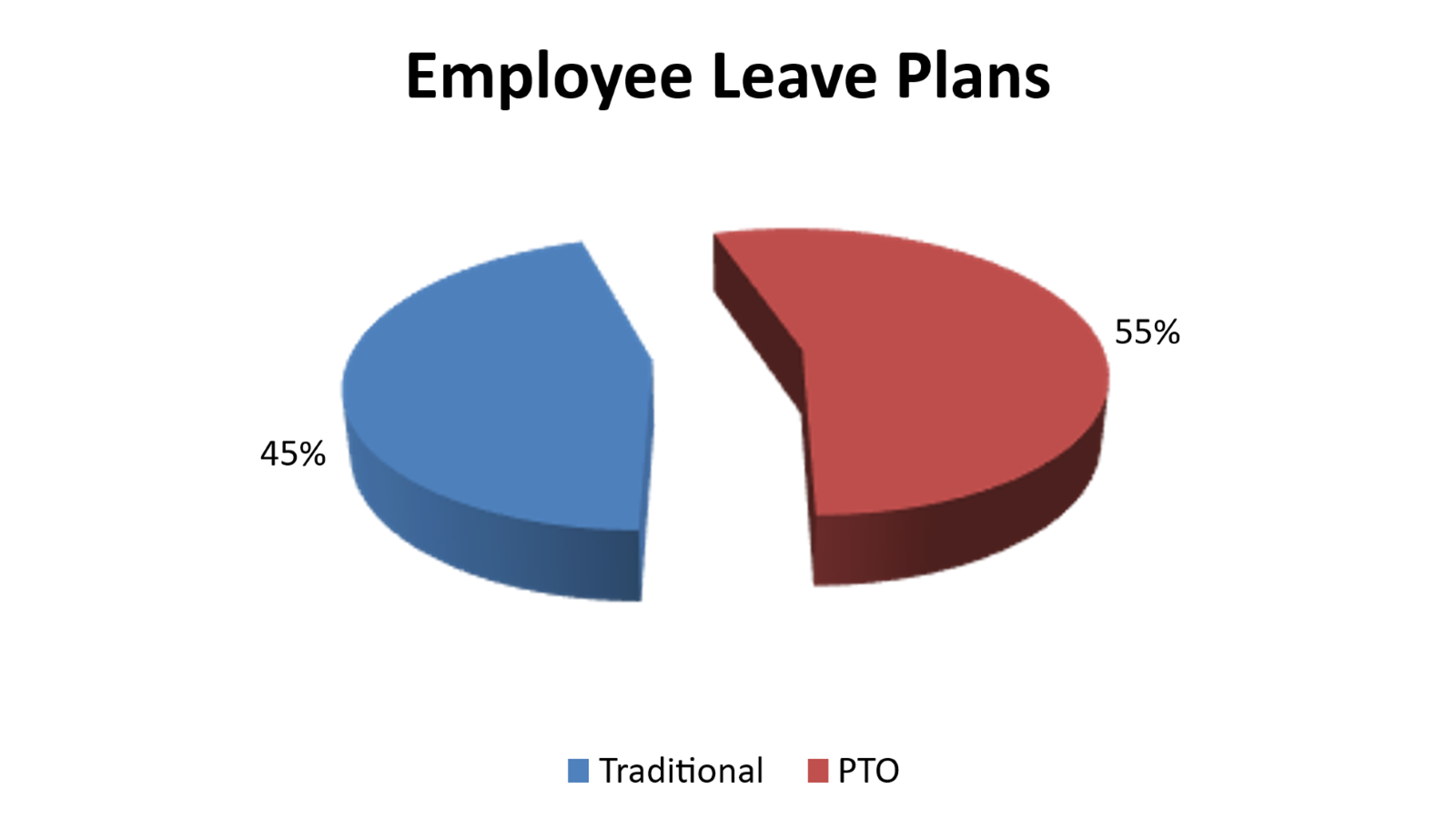
When it comes down to the survey data, ERI found that fifty-five percent (55%) of respondents used a banked paid time-off (PTO) system that combines all or part of paid leave into one pool, compared to the forty-five percent (45%) of respondents who used traditional leave plans that typically consist of vacation, sick time, bereavement, personal leave, holidays, and floating holidays. Ease of leave administration was the most common reason given for using a pooled-leave system.4 

Using Data to Benchmark Leave Benefits 

Besides understanding and selecting a leave system that best fits a particular organization, designing and updating a leave plan is conducive to creating a comprehensive and attractive benefits package. This begins by benchmarking internal practices against the market, allowing HR and analysts to identify flaws or internal shortcomings as it applies to leave practices and, in turn, improve them to create a competitive and effective benefits package.  

As part of a thorough and inclusive leave system, HR and compensation professionals must pay attention to the details. Important elements that contribute to an attractive leave system for employees include the handling of unused time at the end of a cycle or separation, hours for jury duty, the number of days or hours granted or accrued at milestones, incorporating an inclusive variety of holidays, etc.  

Paying attention to these details and how your organization compares to competitors is key to identifying and rectifying shortfalls, a critical step in ensuring a well-rounded package. For example, when handling unused vacation time at the end of a cycle in a traditional plan, ERI’s survey found that forty-two percent (42%) of respondents administered a 100% rollover, thirty-two percent (32%) a partial rollover, and twenty-six percent (26%) forfeited.4  

When looking at the benchmark data, analysts would want to ensure that their handling of unused vacation time falls in a range that is not only comparable with current market practices but also responsive to employee needs and concerns, while also satisfying an organization’s metrics and goals. For instance, the popularity of a 100% rollover of unused vacation might demonstrate company flexibility and ultimately boost employee retention; however, PTO hoarding could become an issue without appropriate rules or limits. 

Current benchmark data, such as that provided in ERI’s 2025 Benefits Benchmarking Survey, can be used to create and update an effective leave plan that satisfies employee expectations, meets budgetary requirements, and achieves organizational goals for a comprehensive employee benefits package. Benefits survey data should inspire HR and compensation professionals to think critically and strategically about their practices, allowing them to create more competitive and data-driven benefits packages tailored to organizational needs. 

ERI Economic Research Institute can provide HR and compensation professionals with the latest and most accurate data available. Using data-driven surveys like our annual Benefits Benchmarking Survey, benchmarking leave plans and other benefits becomes both efficient and effective. What’s more, the 2025 Benefits Benchmarking Survey contributes data to the Benefits solution in ERI’s Salary Assessor, which includes additional sources to form an extensive benefits survey database, facilitating more precise and informed benchmarking and analytics. ERI’s Assessor Platform gives analysts immediate online access to a robust database, consisting of compensation and benefits surveys vetted by our data scientists for accuracy, to assist in both benchmarking and comprehensive compensation management. Through ERI’s trusted and reliable Assessor Platform, HR and compensation professionals can optimize data and extract value to inform more productive and meaningful decision making as it applies to benefits planning.  

Sources: 

  1. Office of the Surgeon General. “Workplace Mental Health & Well-Being.” U.S. Department of Health and Human Services, 24 Jan. 2025, www.hhs.gov/surgeongeneral/reports-and-publications/workplace-well-being/index.html.   
  2. “2021 Mental Health at Work Report.” Mind Share Partners, 2021, www.mindsharepartners.org/mentalhealthatworkreport-2021. 
  3. American Psychological Association. “Workers appreciate and seek mental health support in the workplace.” 2022 Work and Well-being Survey, Jul. 2022, www.apa.org/pubs/reports/work-well-being/2022-mental-health-support 
  4. ERI Economic Research Institute. “2025 Benefits Benchmarking Survey.” ERI Salary Surveys, Apr. 2025, www.erieri.com/salarysurveys/benefits. 

Health Benefits Trends: 2025 Benefits Benchmarking Survey Highlights

When it comes to providing employees with a comprehensive total compensation package, offering an array of diverse options, acknowledging employee expectations, and setting realistic goals all work to help HR and compensation professionals plan a competitive and attractive benefits package. Benefits packages often play a principal role in attracting and retaining top talent and even boosting employee productivity and morale.  

This makes staying on top of evolving industry standards and practices a necessity when designing and updating benefits plans. With that said, ERI Economic Research Institute proudly presents its 2025 Benefits Benchmarking Survey. The focus of this survey report is to offer insights into valuable survey data used to benchmark an organization’s benefits practices with those of comparable employers in the external marketplace.  

Access to accurate and fully vetted market data will help HR and compensation analysts productively evaluate and improve the effectiveness of their overall compensation and benefits strategy and provide an edge over competing organizations. 

This survey provides a comprehensive analysis of employer-provided employee benefits. ERI’s Benefits Benchmarking Survey also contributes information to the robust database provided in ERI’s Assessor Platform, allowing compensation analysts to more accurately benchmark and plan benefits packages. 

In this specific article, we will look at the trends and practices in employer-sponsored health plans, as surveyed by ERI Economic Research Institute for the 2025 Benefits Benchmarking Survey, and how employers might approach various aspects of health care benefits.  

Survey Methodology  

ERI Economic Research Institute is the publisher of the 2025 Benefits Benchmarking Survey. In addition to a comprehensive analysis of health care benefits, this eighteenth edition of the survey includes sections on life and disability insurance, paid time off, retirement, and executive prerequisites.  

Questionnaires were designed and distributed for this eighteenth edition of the Benefits Benchmarking Survey in October 2024. Participation was solicited from employers in the public, private, and nonprofit sectors, as well as government entities in the United States. Data input was collected in the period from October 1, 2024, to February 3, 2025. The requested effective date of benefits data was January 1, 2025.  

Eighty-eight (88) U.S. organizations contributed data to the survey. Characteristics of participants varied greatly and are illustrated in the “Characteristics of Participating Organizations” section of the survey. Seventeen (17) industry groups are represented, including nonprofit organizations and government entities.  

In accordance with our objective to publish only the most accurate and representative information possible, each data submission was thoroughly reviewed by our experienced research staff before it was included in the survey. Areas in question were reconciled with participants before inclusion. 

Factors to Consider When Planning Health Benefits 

Planning health benefits is no easy feat. On top of being complex and manifold, navigating health care will continue to be the primary and most expensive benefit for most organizations. According to ERI’s data from the 2025 Benefits Benchmarking Survey, the average monthly employee cost for Preferred Provider Organization (PPO) plans for employee-only coverage was $144.89, up from $120.47 in 2024 but still lower than $159.94 in 2015. The employer cost for employee-only coverage for Preferred Provider Organization plans equaled eighty-one percent (81%), down from eighty-three percent (83%) in 2024. 

Despite its costs and complexity, employer-sponsored health plans are a continued staple in any competitive benefits package that will ultimately impact the recruitment and retention of employees. In addition, health benefits are one of the most examined details of a benefits package, with many current and prospective employees prioritizing affordable and diverse plans over other benefits. 

When incorporating medical insurance into a comprehensive benefits package, there are multiple factors to consider to ensure a straightforward and effective administration of health benefits. Here are a few issues to keep in mind: 

  • Staying compliant with state and federal regulations (such as the employer mandate under the Affordable Care Act 
  • Providing diverse options for health insurance plans and coverage 
  • Evaluating monthly costs (premiums) for offered insurance plans and their shared costs between employers and employees 
  • Whether to offer different plans based on bona fide employee classifications (full-time vs. part-time employees) 
  • Size and scope of an employer’s workforce 
  • Eligibility requirements for new employees 
  • Integration with current HR and payroll systems 
  • Enrollment periods 
  • Carrier reliability and reputation

Although these are just a few points, considering these details is crucial when it comes to creating a benefits plan, especially medical and other types of health insurance. For instance, employers with a larger employee group can potentially negotiate lower premiums, more favorable coverage options, and greater flexibility in customizing medical insurance plans. ERI’s 2025 Benefits Benchmarking Survey found that the average employer cost for an employee-only Health Maintenance Organization (HMO) plan varies by organization size. An organization with 50-99 employees paid a monthly cost of $560.08 as opposed to the $452.08 that an organization with 500-900 employees had to pay. Specificity matters when creating the best and most affordable medical plan for employees, and HR and compensation professionals must be as meticulous as possible when benchmarking and planning benefits.  

Offering Diverse Options of Health Benefits Plans 

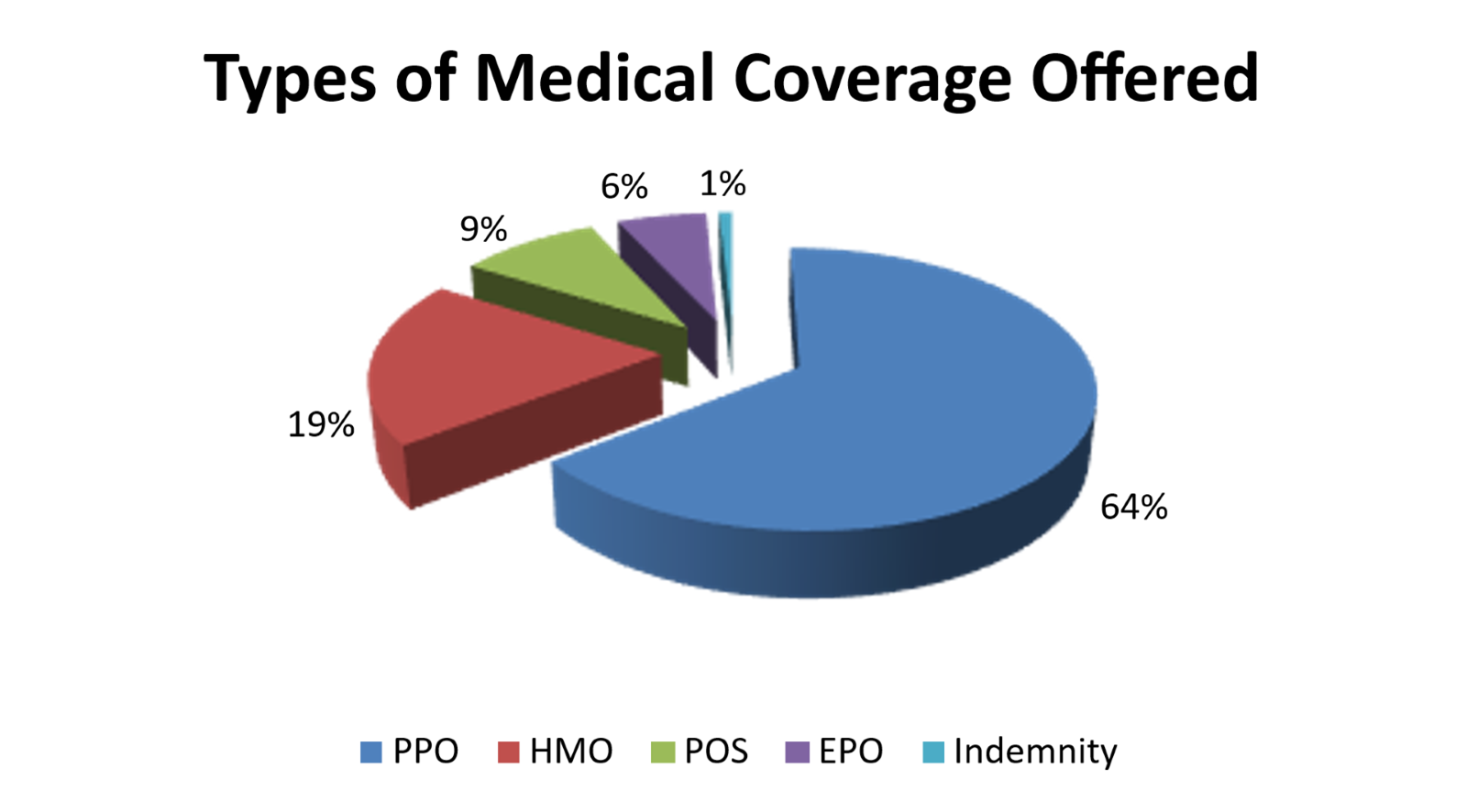
As mentioned, employer-sponsored health benefits generally include multiple plan options. Here are the most common types of medical coverage offered, as reported in ERI’s 2025 Benefits Benchmarking Survey: 

  • Preferred Provider Organization (PPO) – A group of physicians, dentists, hospitals, and other practitioners that contracts with employers, unions, or third-party administrators to provide employees with services at competitive rates. Employees have the ability to choose among physicians within the PPO arrangement. If the employee chooses to use a physician from outside the PPO network, then benefits are still paid, but the employee will typically have to pay a higher percentage of the cost. This is the most popular plan, with 64% of respondents offering PPO plans.  
  • Health Maintenance Organization (HMO) – An organized system for the delivery of comprehensive health care services to a voluntarily enrolled population for a fixed, pre-negotiated payment. This is the second most popular plan offered by survey participants, with 19% offering this type of coverage.  
  • Point of Service Plan (POS) – A type of managed care medical plan where the level of benefits received depends on how an employee elects to receive care at the “point of service” that care begins. For example, if care begins with the primary care physician in the network, then benefits would be higher than if care were received outside the network. This is the third most popular, with 9% of respondents offering this type of plan.  
  • Exclusive Provider Organization (EPO) – An alternative delivery system, composed of self-funded medical plans which resemble an HMO or a PPO. Participants are usually required to use only providers that are part of the system. The fourth most common plan, 6% of respondents reported offering this plan.  
  • Indemnity Plans – Medical plans that allow the participants the maximum amount of choice in selecting doctors, hospitals, and other providers of benefits. This is an insurance program that pays medical providers for services performed and defines the maximum amounts that will be paid for covered services. This is one of the least common plans, with only 1% of survey respondents offering the plan. 
Using ERI’s Benefits Benchmaking Benefits Survey 

The importance of benchmarking internal organization practices with market practices cannot be stressed enough, especially as it applies to creating and updating health benefits plans. To ensure the affordability, quality, and competitiveness of an organization’s health benefits packages, staying up to date with the latest data through reliable surveys, such as ERI ’s Benefits Benchmarking Survey, is a necessity. 

By benchmarking practices against ERI survey results, HR and compensation professionals will be able to identify a plan’s strengths or areas that must be addressed. Besides identifying an organization’s benchmarking goals and selecting the metrics to pay attention to, analyzing and interpreting the data as it applies to an organization’s particular situation is crucial. For example, in the 2025 Benefits Benchmarking Survey, ERI found these annual in-network deductibles for a PPO medical plan, as reported by all U.S. survey participants: 

25th Percentile Median 75th Percentile Average
$750 $1,500 $3,000 $1,925.99

In interpreting the data to inform an organization’s internal practices, an HR and compensation professional could begin by asking whether their offered health plans have high out-of-pocket costs compared to ERI’s data. Then, as one common way to mitigate those high costs, employers could potentially offer a Health Savings Account (HSA) to incentivize employees to use those plans, particularly if employers also contribute to employees’ HSAs. 

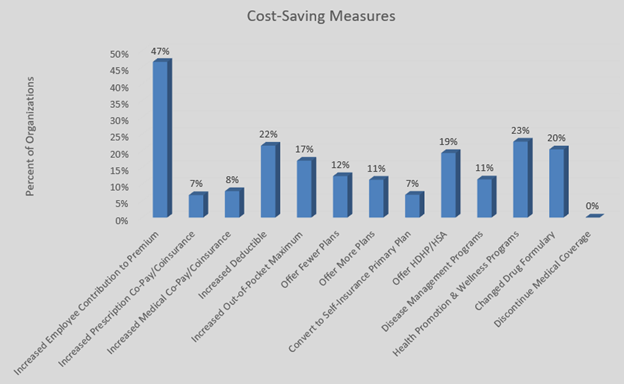
Additionally, from the angle of employer costs, there are various cost-saving measures that organizations can take to mitigate expensive medical plans while ensuring the affordability and quality of coverage of those plans. In the chart below, ERI data found that 47% of respondents increased employee contributions to premiums and 23% took the initiative to invest in health promotion and wellness programs to reduce expenses.  

This is what makes ERI’s survey results indisputable. ERI’s survey data can be used to inform internal organization practices, enabling benefits administrators to develop data-driven solutions that align plans with market standards and address areas for improvement. Below is a sample of additional data insights provided in ERI’s 2025 Benefits Benchmarking Survey to assist HR and compensation professionals with health benefits benchmarking:  

  • Employee vs. employer costs by plan 
  • High deductible vs. standard deductible plans 
  • Co-payments 
  • Out-of-pocket maximums 
  • Prescription drug plans 
  • Mental health services provisions 
  • Disease management programs 

Through reliable surveys like our annual Benefits Benchmarking Survey, benchmarking benefits can be a straightforward process that forms the foundation of an organization’s employee benefits plan. Besides providing current and accurate survey results, ERI’s Assessor Platform offers a streamlined solution to make benchmarking data efficient and effective. ERI’s Assessor Platform gives HR and compensation professionals immediate access to a robust database, consisting of compensation and benefits surveys vetted by PhD-level data scientists for accuracy. Data from the 2025 Benefits Benchmarking Survey also contributes to the Benefits solution in ERI’s Salary Assessor, providing benefits benchmarking analytics online. Optimize and analyze valuable data to inform your decision making as it applies to benefits planning using ERI’s trusted and reliable database today! 

Sources: 

ERI Economic Research Institute. “2025 Benefits Benchmarking Survey. ERI Salary Surveys, Apr. 2025, www.erieri.com/salarysurveys/benefits 

Top 10 Highest-Paid Nonprofit CEOs in California

Nonprofit organizations are private, non-governmental entities, typically created to benefit the public or community and further or fulfill a specific mission statement. This makes executive compensation at nonprofits an interesting – albeit at times, contentious – topic. Because nonprofits operate under regulatory guidelines distinct from for-profit entities, CEO compensation at nonprofit organizations is usually influenced by a combination of responsibilities: adhering to the mission, responsible spending, and compliance requirements.

Factors That Influence Executive Compensation at Nonprofits

As mentioned, nonprofits operate under a distinct set of principles as opposed to other entities. These principles ultimately impact the decision making behind CEO compensation.  As expected, CEO compensation at nonprofits is complex and dependent on myriad factors, such as the size and scale of the organization, budget requirements, government regulations specific to tax-exempt entities, and arguably most important, a board of directors.

In short, the board of directors plays a pivotal role in ensuring that CEO compensation aligns fairly with a nonprofit’s mission and overall legal standards. Because nonprofits are typically funded from an array of sources, such as donations from individuals and organizational fundraising, in addition to applying for funding from government entities and other sources, pay transparency, especially at the executive level, is critical. This is where the board of directors, usually compiled of individuals that hold no personal or financial interest in the organization, becomes key in decision making as it pertains to CEO compensation.

Compensating CEOs at Nonprofits

Despite misconceptions about executive compensation at nonprofits, it is important that the board of directors determine a reasonable and competitive salary that is proportional to the organizational size and competitive in its sector. A competitive CEO salary is vital to ensuring that a nonprofit can achieve the following goals:

  • Attract and retain top talent
  • Motivate CEOs as they navigate complex issues with experience and expertise
  • Maintain its mission statement through decisive and impactful executive direction

CEOs are principal figures at nonprofit organizations, which makes fair and competitive executive compensation critical.

Highest-Paid Nonprofit CEOs in California

Nonprofit organizations continue to play a necessary role in furthering social causes, as well as member and professional development, and can have missions related to the arts and humanities, education, the environment, health and human services, international affairs, religion, and more. As specific organizations continue to gain traction and flourish, the social optics of ethical executive compensation become all the more relevant. With that said, the chart below highlights the top 10 highestpaid CEOs at nonprofits in the state of California using data reported in 2023.  

CompanyNameTitleTotal Compensation
Kaiser Foundation Health Plan Inc. Gregory Adams Chairman & CEO $12,567,386
Sutter Health Warner Thomas President & CEO $8,705,274
Delta Dental of California Michael J CastroCEO $6,909,365
Credit Unions in the State of California Gary Rodrigues President & CEO $6,705,661
Motion Picture Association Inc.Charles RivkinChairman & CEO$4,284,073
Sutter HealthSarah KrevansEmeritus CEO$4,097,431
Educational Employees Credit UnionElizabeth DooleyCEO$3,304,415
Adventist Health System-WestKerry HeinrichDirector & CEO$3,302,428
Scan Health PlanSachin H. Jain, MDPresident & CEO$3,268,166
San Diego County Credit UnionTeresa CampbellCEO & President$3,100,634

It is important to remember that figures for nonprofit executive director salaries in California may change over time, reflecting market dynamics, company performance, and industry trends. Stay informed of the latestcompensation survey data,powered by ERI, to ensure that your salary plan remains up to date and competitive within your industry. 

For a more detailed breakdown of executive compensation in the nonprofit sector, turn to ERI’s Nonprofit Comparables Assessor today and take advantage of these features:  

  • Review compensation data collected from nonprofit organizations’ IRS Forms 990, 990-EZ, and 990-PF in easy-to-interpret interactive graphs and tables. 
  • Generate benchmark reports based on salary data from comparable peers in tax-exempt and/or for-profit organizations.  
  • Group peer organizations, including for-profit data, with the detailed compensation comparables needed for a “rebuttable presumption of reasonableness” that protects an exempt organization from the imposition of intermediate sanctions taxes, penalties, and interest by the IRS (IRC 4958). 
  • Search, rank, and sort compensation data from comparable organizations by industry subsector, geographic area, date, and size (revenue or assets). 

ERI’s Assessor Platform is designed to help you customize your executive compensation analysis to confidently grasp how executive salaries compare in your specific industry and make the most accurate data-driven decisions.  

Enjoyed this article? Learn more about top executive compensation in various industries atERI, including the top 20 highest-paid CEOs in health careand thetop 20 highest-paid CEOs in technology.   

15 Most Affordable Cities in the U.S.

With rising inflation and the skyrocketing cost of housing in many American cities, many employees need to think carefully about the cost of living when they consider new job offers, transfers, and opportunities for career advancement. Cost of living is also essential to HR professionals in compensation planning and is used to evaluate business or employee relocation, expansion, and remote work. To that end, ERI has compiled an Affordability Index listing the 15 most affordable major cities in the United States:

  1. Sioux Falls, South Dakota
  2. Amarillo, Texas
  3. Rochester, Minnesota
  4. Clarksville, Tennessee
  5. Huntsville, Alabama
  6. Cedar Rapids, Iowa
  7. Fargo, North Dakota
  8. Lubbock, Texas
  9. Springfield, Illinois
  10. Beaumont, Texas
  11. Minneapolis, Minnesota
  12. Oklahoma City, Oklahoma
  13. Raleigh, North Carolina
  14. Newport News, Virginia
  15. Peoria, Illinois

The Affordability Index is composed of a weighted combination of ERI’s Cost of Labor and Median Household Income versus ERI’s Cost of Living. ERI’s Cost of Labor is defined as the annual cost of labor based on the U.S. national average for an annual income of $78,000, calculated using 2025 data from ERI’s Geographic Assessor. Median Household Income is derived from the American Community Survey (ACS), an annual publication by the U.S. Census Bureau providing detailed population and housing information. ERI’s Cost of Living is defined as the annual cost of living based on the U.S. national average for an annual income of $78,000 using ERI’s defaults for family size (4 people), transportation (ownership of 2 vehicles), and a rental accommodation, calculated using 2025 data from ERI’s Geographic Assessor. A list of 261 major U.S. cities, as defined in ERI’s Geographic Assessor, were compared in this analysis, and the 15 highest-ranking cities with populations of more than 100,000 are provided in the Affordability Index above.

Understanding the cost of living between cities and affordability as compared to the national average can help HR professionals make informed decisions about relocation, salary planning, and budgeting. For a more in-depth analysis of cost of living, turn to ERI. Our Assessor Platform can help you stay on top of cost-of-living changes among cities and analyze cost-of-living differentials based on earnings level, home size, home ownership or rental, family size, number of vehicles, and automobile value. Total cost-of-living analyses include breakdowns of major expenditures, including consumables, transportation, health services, housing, tax obligations, and more. To learn more about cost-of-living analyses using ERI’s Assessor Platform, visit www.erieri.com.

References:

U.S. Census Bureau, U.S. Department of Commerce. “Median Household Income in the Past 12 Months (in 2023 Inflation-Adjusted Dollars).” American Community Survey, ACS 5-Year Estimates Detailed Tables, Table B19013, 2023, https://data.census.gov/table/ACSDT5Y2023.B19013?q=B19013&d=ACS+5-Year+Estimates+Detailed+Tables

A Look into Labor Market Trends: ERI’s April 2025 National Compensation Forecast

With a dynamic labor market and increasingly uncertain economic conditions, many HR professionals are turning to compensation forecasts to plan and manage compensation in 2025. To meet those needs, ERI examines the rates at which compensation has increased  each quarter and provides guidance on expected increases for the upcoming year in a quarterly National Compensation Forecast. These rates are calculated using ERI’s Salary Assessor and ERI’s Salary Increase Survey & Forecast. This blog post will highlight some findings from ERI’s latest National Compensation Forecast released in April 2025.

To explore labor market and overall economic conditions, ERI’s National Compensation Forecast offers insights into these indicators:

  • Open jobs rate
  • Hires rate
  • Quits rate
  • Unemployment rate
  • Inflation rate

Job Openings Rate vs. Hires Rate

An examination of the current number of job openings indicates a high number of open jobs in the United States, with a job openings rate of 4.6%, which is lower than the 10-year average open job rate of 4.8%. It is also down significantly from the high of 7.3% in March 2022. The rate of hires is currently 3.4%, which has been slowly trending down since the high of 4.4% in March 2022. This gives us a current gap between open jobs and hires of 1.2%, which closed from its highest point of 2.9% in March 2022. The 15-year gap between hires and open jobs is 0.41%, so the gap between hires and open jobs remains above average. The chart below shows the historical difference between the rate of open jobs in the economy and the rate at which employees are hired. A gap between the number of open jobs and the number of employees who are hired indicates that organizations are not able to hire all the employees that they would like. This can lead to organizations needing to raise compensation rates to hire the employees that they need.

Quits Rate

Employees are currently quitting at a rate of 2.1%, which is down from the high of 2.9% in April 2022 and below the 10-year average of 2.29%. This rate is also unchanged since the January 2025 National Compensation Forecast. The gap between the job openings and hires rates, along with fewer people quitting, are now below long-term trends, which points towards slower rates of compensation growth.

Unemployment Rate

The unemployment rate is currently 4.1%, which is up from the low of 3.5% reported in July 2022 but still considered full employment.  Full employment, which means that just about everyone who is willing and able to work is able to find work, is generally defined as an unemployment rate up to approximately 4%.

Inflation Rate

In March 2025, the inflation rate stood at 2.8%, which is up by 0.1% over last quarter and down by 6.5% since the high in June 2022. These rates continue the trend of slowing inflation, which may have a tempering effect on compensation increases. Inflation can influence the growth of compensation, and the extent of that influence also varies depending on the level of inflation, with high inflation related to higher levels of compensation growth.

In summary, the labor market remained largely unchanged over the first quarter of 2025 with minimal shifts in job openings, hires, quits, and unemployment rates. This consistency in the labor market, constraints on organization budgets, and low current inflation point towards an environment with less pressure on compensation growth than we have seen in the past several years. However, if tariffs lead to higher inflation, then we may see increased compensation growth towards the end of 2025. ERI expects moderate compensation growth continuing through 2025, with the potential of higher growth towards the end of 2025, depending on economic conditions. ERI will continue monitoring and reporting on these trends as they unfold over the next several quarters.

For a deeper analysis into these labor market and economic indicators and their impacts on compensation growth, please see ERI’s April 2025 National Compensation Forecast.

Overall Salary Trends

April salary growth (0.63%) is up slightly from the January 1 data release (0.60%), which is lower than the predicted quarterly rate of 0.69%. Growth over the past year has been 2.66%, with an average quarterly growth of 0.66%. To put this into context, the average quarterly growth over the past 20 years has been 0.71%. Over the same 20-year period, the average April increase has been 0.64%. Over the past 20 years, April increases (first quarter) have been lower than increases throughout the rest of the year, and the current quarter is no exception. The annual growth rate appears to have decreased from 2.82% to 2.62%, with growth rates in previous quarters of 0.6% (January 2025), 0.6% (October 2024), and 0.84% (July 2024).

Overall Trends by Year

ERI’s April 2025 National Compensation Forecast also takes a closer look at overall trends by year by examining budget increases, structure increases, and expected increases over a ten-year period. This illustrates where the reality of salary movement has departed from the expected trend, giving us information regarding how salaries might move in the future. Compensation growth in 2025 appears to be slowing since the ten-year peak in 2022.

Salary Growth by Category

The April 2025 National Compensation Forecast also analyzes mean annual, three-year, and ten-year total salary growth trends by occupational category to understand how different types of occupations move relative to each other and across time. Not all occupations grow at the same rate, and not all occupations grow at the same rate across time. As of April 2025, Sales employees saw the highest level of growth, whereas Top Management occupations saw the slowest growth over the ten-year period spanning 2015 to 2025.

To learn more, please download the full April 2025 National Compensation Forecast and watch for upcoming quarterly reports on compensation growth trends at www.erieri.com.

ERI Economic Research Institute was founded over 30 years ago to provide accurate and up-to-date salary survey data and compensation management applications for private and public organizations. Our talented team of professionals is among the best in the industry. Most of the Fortune 500 and thousands of small and medium organizations rely on ERI data and analytics for key compensation decisions. We provide high quality, in-depth compensation data for over 39,000 positions in more than 1,000 industries and over 10,000 locations around the globe to support our subscribers in making reliable pay decisions. An added benefit is the wealth of resources available to ERI customers.

ERI’s Assessor Series® – Solutions for every compensation decision

Remote Work Trends & Practices in 2024

During the COVID-19 pandemic, many organizations turned to remote work as a necessity to remain operational and productive while ensuring the safety of their workforces. Now, almost five years since the outbreak of the pandemic, myriad organizations are shifting towards a return to the workplace, encouraging or even requiring some employees to work in the office for part or all of the work week. Organizations often value the collaboration that face-to-face communication facilitates, along with the ability to train and oversee employees in person. On the other hand, many employees have grown accustomed to remote work and value not only the flexibility it provides but also the time and costs saved in avoiding the office commute. Considering these benefits, many employees are factoring the option of remote work into their decisions to take a new position or remain employed with an organization.

Given these remote work trends, organizations must make careful decisions about whether to offer remote work, provide a hybrid remote work option in which employees can work remotely part of the week and work in the office the remainder of the week, or mandate a full return to the office. In order to attract, retain, and motivate employees, organizations must stay abreast of current industry trends regarding remote work, knowing that new and current employees now place a significant value on the remote work option. Striking the right balance will be key to any organization’s success.

To that end, this blog post will highlight some findings related to remote work practices and trends from a recent survey conducted by ERI and summarized in the white paper, “Merit Increases, the Changing Economy, and Remote Work – Fall 2024.”  Between October 7 and November 11, 2024, ERI conducted a survey of organizational responses concerning merit increases, compensation and workforce planning, and remote work. There were 327 organizations that submitted answers to the survey during that time. The goal of this survey was to identify the changes that organizations are making to their labor and compensation practices, particularly merit increases, as a direct result of the rise in remote workforces and economic gauges, such as inflation. ERI’s recent white paper, “Merit Increases, the Changing Economy, and Remote Work – Fall 2024,” offers insights into the present impact of these compensation drivers. To summarize the results of the study, this paper is split into the following sections: Merit Increase Policies and Planning, Compensation and Workforce Planning Changes, Remote Work Changes, and Organization Scope.

Looking specifically at the Remote Work Changes section of ERI’s latest white paper, several interesting trends were uncovered in this survey. First, ERI found that remote work is persisting, but there is a reduction in remote work hiring. ERI asked, “Are you currently hiring remote workers?” to determine if organizations were changing their approach to hiring remote workers. Many organizations, specifically 25% of respondents, are hiring remote workers without any specific restrictions. Additionally, 20% of organizations are not hiring remote workers at all but are hiring on-site employees. In a similar vein, 5% of organizations are reducing or eliminating the hiring of remote workers. Notably, 8% of respondents also indicated that they do not have an established policy on remote worker location, while the remaining 4% confirmed that they do not have remote workers and therefore do not have an established policy.

However, 36% of respondents reported that, while they are hiring remote workers, it is only under certain circumstances. Generally, these organizations noted the following restrictions: the position must be capable of being done remotely, the employee must be hybrid, or some restriction that is otherwise contingent on business needs.

Comparing Q2 to Q4 2024, there has been a notable 10% increase in participant organizations reporting that they are not hiring remote workers but are hiring on-site employees. Similarly, there has been an 8% decrease in the number of participant organizations reporting that they are hiring with restrictions, while reports of restriction-free hiring have only increased by 3%. These remote work trends may be indicative of the increasingly commonplace return-to-work initiative that many organizations have been undertaking since the decline of the COVID-19 pandemic.

ERI asked survey respondents to note if they have changed their approach to remote work over the last year. The results concluded that many organizations have chosen to adopt some form of continued remote work, although the number of organizations reporting that they changed their policy have declined considerably since 2022. See ERI’s “Remote Work, AI, and Compensation Best Practices – Spring 2024” white paper for additional details.

As of Q4 2024, remote work has become a permanent option at 15% of organizations, and 12% indicated that they have adopted a hybrid work-from-home option for employees to work remotely on a part-time basis. The nature of some jobs disallows them from being able to work from home, and 4% of respondents confirmed that they have no remote workers for whom they can make remote work changes. Furthermore, 0.4% of organizations reported that they have removed their work-from-home option, and 4% are currently considering removing it. Moving from Q2 to Q4 2024, the most notable change is the 11% increase in participant organizations that reported that they have not changed their approach.

The survey yielded interesting results regarding the geographic basis for adjustments to remote worker pay. Currently, most organizations account for geography in some fashion when setting pay for remote workers. To clarify how organizations plan to adjust compensation, the survey asked, “Which location are you using to determine any adjustments to remote worker pay?” Of all participant organizations, 73% are using a specific location, while the remaining 27% are using a national structure rather than a specific location to decide adjustments for remote worker pay. Of those using a specific location, most are using the worker’s city of residence to decide adjustments for remote worker pay (24%), followed by the assigned office of the remote worker, regardless of distance (19%).

Moving from Q2 to Q4, there has been a 1% increase in organizations that are using the city of residence of the employee, a 4% increase in using the state of residence, and, most drastically, a 7% jump in using the assigned office of the remote worker, regardless of distance.

In summary, remote work persists as an option for most organizations, though the survey suggests a reduction in remote work hiring. There appears to be a trend towards streamlining and standardizing compensation policies for remote work compared to ERI’s previous survey, “Remote Work, AI, and Compensation Best Practices – Spring 2024.” Organizations are less concerned with remote-specific factors, such as employee-specific area adjustments. This coincides with the wider ongoing movement away from remote work in a post-COVID-19 world and towards a return to the office. In observing remote worker hiring practices, there has been a noteworthy 10% increase from Q2 to Q4 2024 in actively preferring on-site to remote workers. That said, remote work certainly remains an option in many organizations, and the compensation community is starting to  coalesce around standard practices that integrate remote work.

This survey is part of a series of surveys aimed at examining and measuring changes to compensation and the labor force following the COVID-19 pandemic. It is the third of these surveys to be published post-pandemic that specifically addressed changes in the workforce in relation to remote work and economic drivers, such as inflation. The next survey will take a deep dive into remote work and performance management, examining which performance management practices organizations are using, particularly in relation to remote worker performance. For those interested in participating in the upcoming survey, “Workforce Insight Survey: Remote Work, Performance, and Compensation Best Practices in the Changing Economy,” please visit https://resources.erieri.com/free-workforce-insight-survey. The results of this survey will be free with participation.

For more information on how COVID-19 and post-pandemic economic factors have affected compensation, visit www.erieri.com. ERI compiles salary survey data on a semi-quarterly basis to help organizations understand and accurately benchmark compensation rates. Information published on our websites captures salary changes throughout the year and helps HR professionals plan and develop business strategies.