Get Alerts on the Latest Minimum Wage Changes with ERI
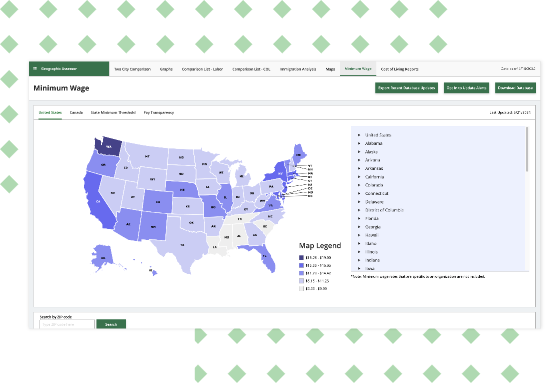
ERI provides up-to-date and detailed minimum wage data at the federal, state, and local levels to help assist with your compensation planning. In our Geographic Assessor, you can track current rates and scheduled minimum wage changes for each of the 50 states, the District of Columbia, and all provinces in Canada. We provide the minimum wage data you need to inform your compensation strategies, such as minimum salary thresholds to qualify for exemption, local and state pay transparency rules in the U.S., and the ability to search for minimum wage rates for major cities, counties, and municipalities.
With ERI’s minimum wage data, you can stay on top of minimum wage changes to ensure that your organization complies with local labor laws, adheres to applicable regulations, and can strategically plan and budget for minimum wage increases.
With ERI's comprehensive minimum wage data your organization can navigate complex minimum wage laws easily. Check out a sample of North American Minimum Wage Updates found in our Geographic Assessor.
ERI’s Minimum Wage Database
- Search for current minimum wage rates for non-tipped and tipped employees.
- See upcoming minimum wage changes to forecast and plan for increased labor costs.
- Find data specific to your company based on size, location, job type, and more.
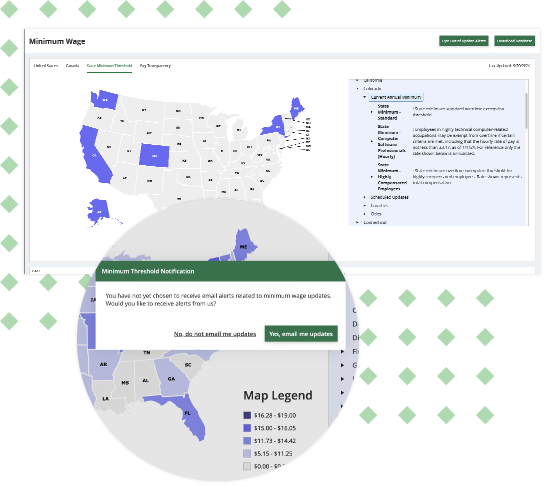
- Get detailed information on minimum salary thresholds to identify exempt employees.
- View local and state pay transparency rules to build and maintain trust with employees.
- Get alerts when employees drop below minimum wage requirements to stay compliant.
Are you an HR Manager or Compensation Professional?
ERI’s Assessor Platform offers:
- Comprehensive job reports specific to your business
- Employer-reported compensation and benefits survey data
- Salary planning tools, benchmarks, and cost-of-living data