What Are Pay Grades and How Are They Determined?
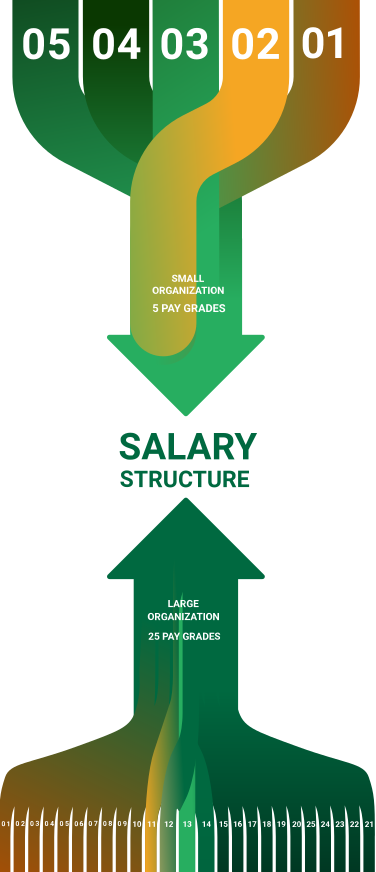
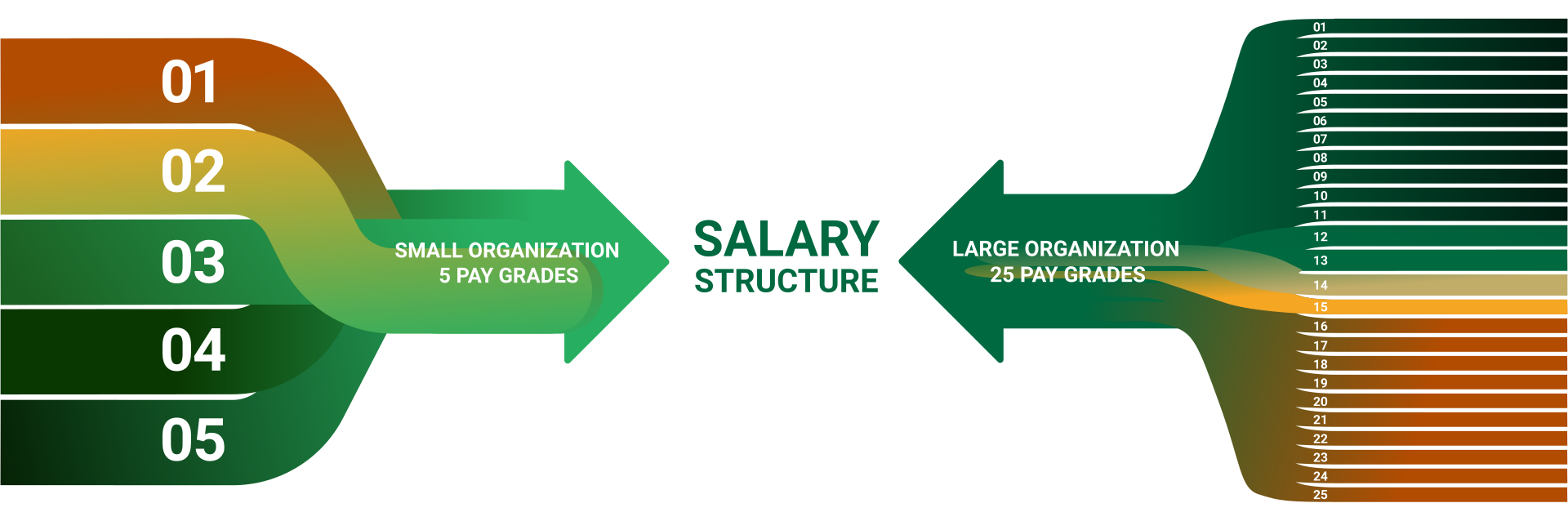
An organization’s salary structure(s) will typically include the lowest-paid job up to the highest-paid job within a structure (e.g., exempt, nonexempt, executive, sales, etc.). The salary structure can even include the entire organization. The structure is then divided into pay grades to support managing the organization’s hierarchy of jobs and to ensure market competitiveness. The number and range of pay grades within a structure can vary considerably. It can vary from 1 up to 25 pay grades or even more. For example, a small organization or an executive team might have just 5 pay grades, whereas a large organization with 8,000 employees might have 25 pay grades. Generally, pay structures with more than ten pay grades are considered a narrow-graded pay structure, while those with less than ten are considered a broad-graded pay structure.
A market pricing or formal job evaluation process will typically determine the midpoint and pay grade for the job. Government agencies, as well as many for-profit and nonprofit organizations, often use a salary structure that includes pay grades to determine how each job should be paid. Market pricing of jobs is the most effective way to establish a salary structure with fair and competitive midpoints for each pay grade. Salary ranges within a pay grade are commonly 40-50% in width, but they can be as narrow as 30% or as broad as 80% or even more. Executive positions commonly have wider ranges, while operative/production jobs tend to have narrower ranges. Some industries will even use broad pay bands without pay grades. The percent difference between salary range midpoints, representing the market value of jobs, commonly increases between nonexempt and exempt salary structures.
Who Should Use Pay Grades?
Salary structures with pay grades can be used in any job, job family, job type, or organization. They are typically found in the public sector, private sector (including for-profit and nonprofit organizations), and unionized work.




Pay grades will support an organization in establishing the hierarchy of jobs, fairly and competitively deliver employee pay, and motivate employees with the perception of growth and opportunities for development. Not all jobs can lead to promotions or transfers, so pay grades may increase an employee’s salary even while performing the same job.
Pay grades play a crucial role in determining short- and long-term incentive compensation eligibility. For instance, employees in grade 6 may be eligible for an annual incentive plan with a target of 10% of base pay. This information is vital for managing new hire compensation, performance pay increases, promotions, transfers, and even demotions, providing a comprehensive view of the compensation landscape.
The Challenges When Creating Pay Grade Structures
How ERI Can Help
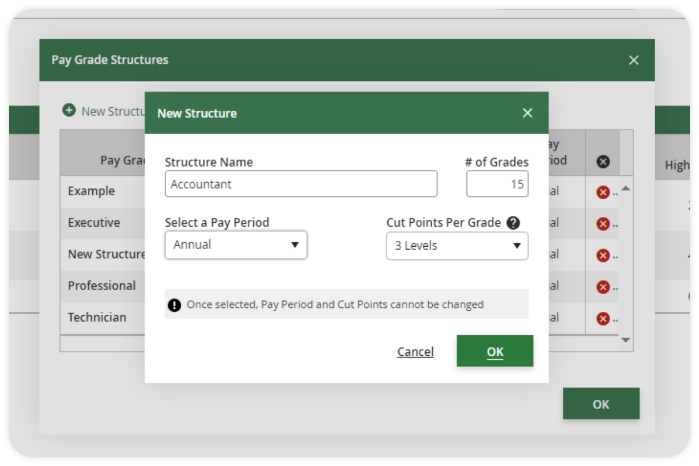
ERI’s Assessor Platform includes these valuable features:
- If you know your pay grade structure (minimum/midpoint/maximum), then you can enter them manually or use a template to easily import your structure with either values or jobs.
- To simplify and accelerate the process, use ERI’s AI Pay Grade Creation tool to generate complete, review-ready pay grade structures with jobs assigned to grades.
- There is no limit to the number of salary ranges and pay grades that you can create.
- Customize the number of grades, pay period, and percent width and difference between grades.
- Automatically set the midpoint of the structure to the market or define a midpoint progression.
- Define each job added to a grade based on years of experience, level, revenue, assets, fiscal year budget, or number of employees.
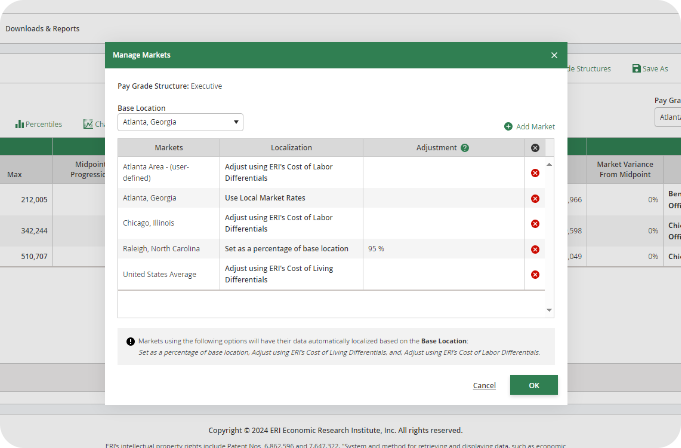
- Add geographic markets to the pay grade structure and choose localization options for each market.
- View charts to visualize the structure’s various pay grades and overlaps.
- Share profiles (including pay grade structures) with other users on the same account.
Learn More and Try a Demo
If you want to learn more or try a demo of our products, schedule a guided tour with our sales team to get a free sample of our data. If you prefer a more self-guided approach, try a free demo of our software today!