Compensation management has evolved far beyond setting pay ranges and administering annual merit increases. Today’s labor market is defined by talent shortages, pay transparency legislation, geographic pay complexity, and heightened employee expectations, making compensation a strategic business function. As a result, organizations that manage pay thoughtfully and systematically are in a better position to attract talent, retain high performers, maintain internal equity, and control labor costs.
This makes understanding the fundamentals of compensation management essential in any organization. Now, what exactly is compensation management and how can organizations, specifically compensation and HR professionals, use this effectively to benefit their organizations?
What Is Compensation Management?
Compensation management refers to the structured process of designing, implementing, and maintaining an organization’s total pay strategy. This includes the following:
- Base pay (salary or hourly wages)
- Variable pay (bonuses, incentives, commissions)
- Equity or long-term incentives (where applicable)
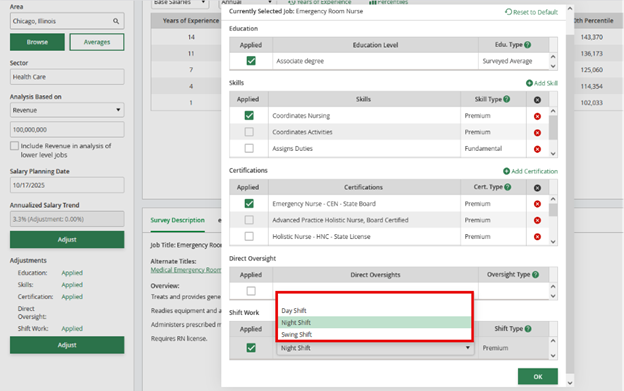
- Pay differentials (such as geographic, shift, skill, or supervisory oversight)
- Governance, policies, and pay administration processes
At its most basic level, compensation management ensures that employees are paid accurately and on time. At its most strategic level, it aligns pay with organizational goals, labor market realities, internal equity principles, and regulatory requirements.
For HR and compensation professionals, effective compensation management requires balancing three competing forces:
- External competitiveness: Paying in line with the labor market
- Internal equity: Ensuring fair and consistent pay relationships
- Affordability and sustainability: Managing compensation spending responsibly
Without a disciplined approach, organizations risk overpaying for some roles, underpaying for others, or introducing inequities that undermine trust and engagement. To prevent these issues from taking place, many HR teams tap into intelligent compensation management software like ERI’s Assessor Platform to streamline work processes, reduce human errors, and leverage benchmarking tools to stay competitive and compliant.
Why Strategic Compensation Management Matters
Compensation Is a Primary Talent Lever
Compensation remains one of the most influential factors in employee attraction and retention. While culture, flexibility, and career development matter, pay is often the deciding factor in whether employees join or even leave an organization.
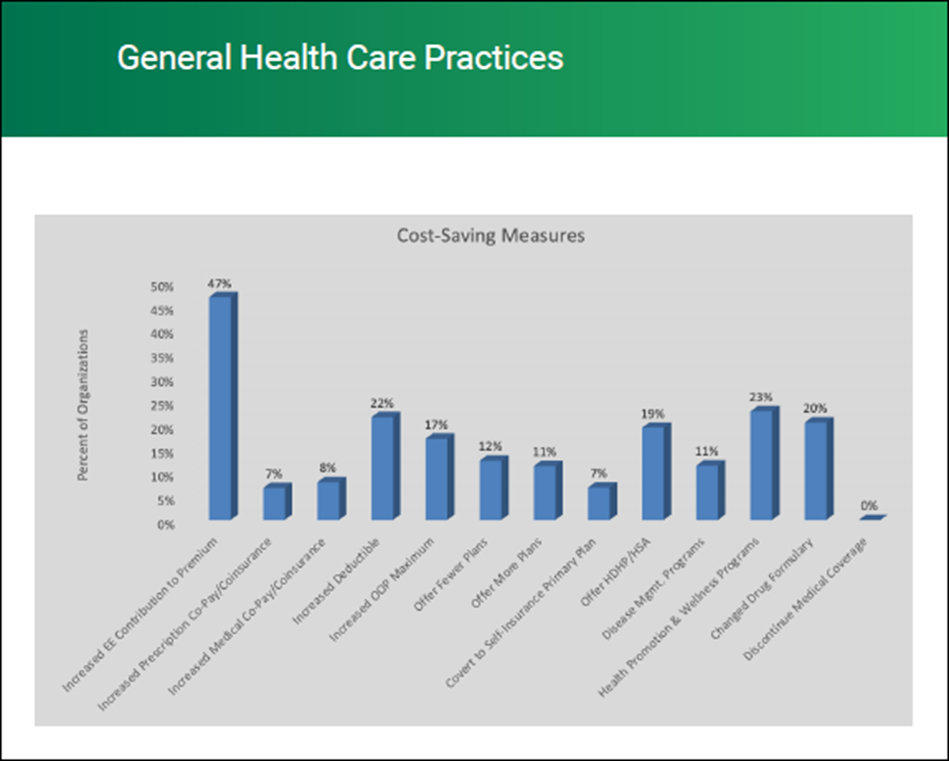
Take for instance this scenario. A health care organization struggling with nurse turnover discovered that, while its average pay looked competitive, certain critical roles lagged behind market rates when analyzed by geography and specialty. Using compensation data to refine job-specific and location-specific pay ranges, the organization can reduce turnover in those roles, lowering reliance on costly contract labor.
Pay Practices Signal Organizational Values
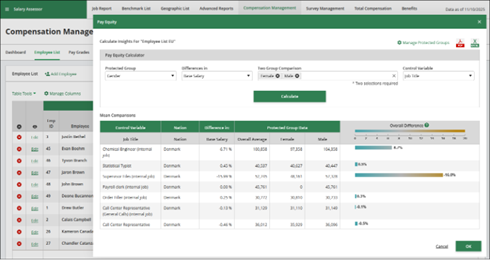
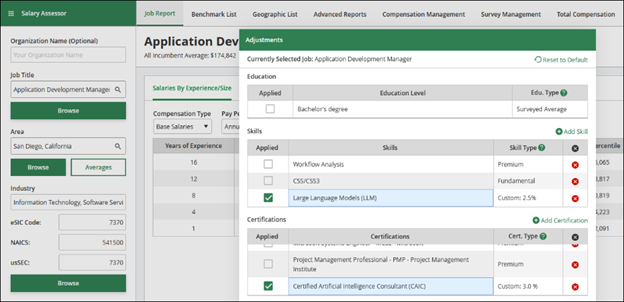
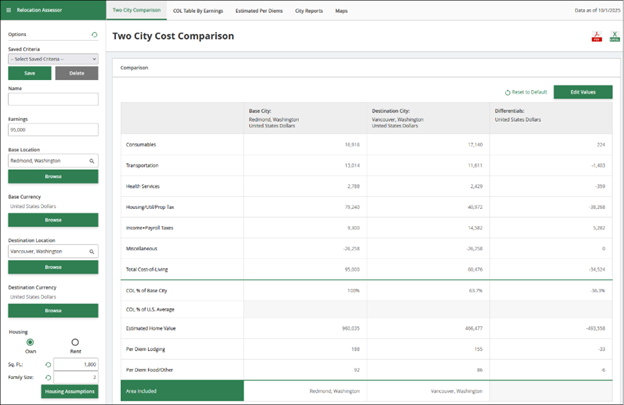
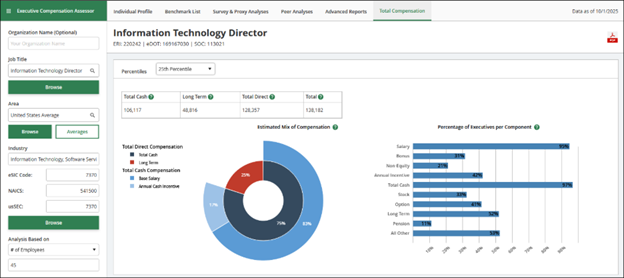
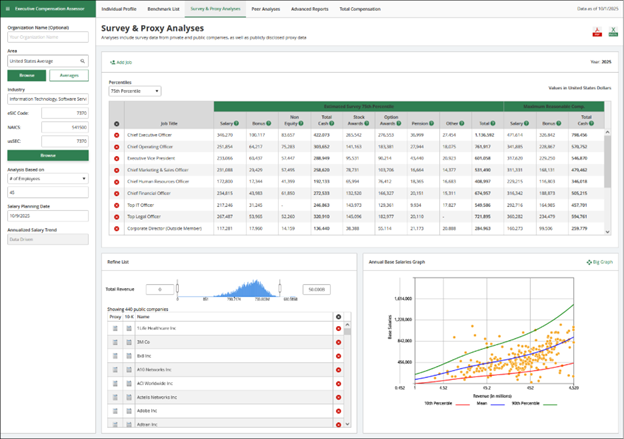
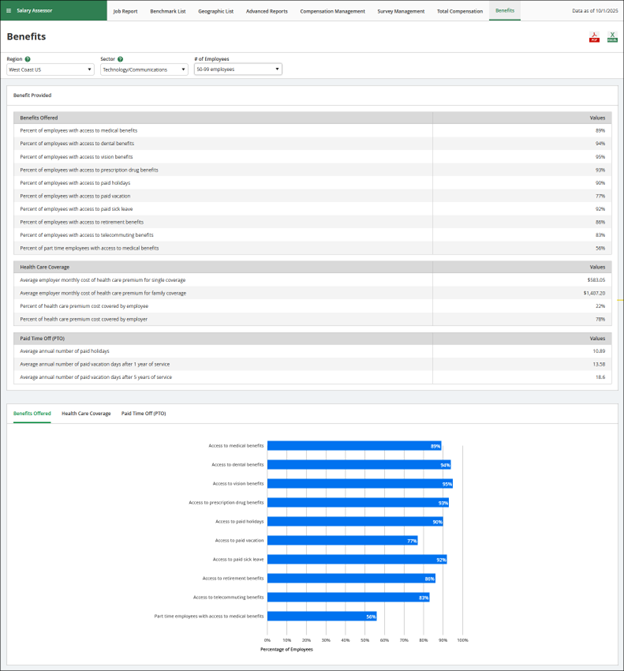
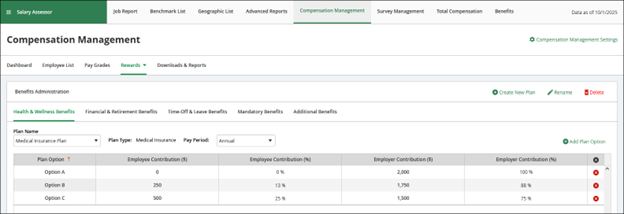
Employees interpret compensation decisions as signals of what the organization values. Pay that is inconsistent or disconnected from performance can erode trust. This is why tapping into strategic compensation management software like ERI’s Salary Assessor is so crucial. For instance, here are but a few uses of the Compensation Management solution:
This becomes especially important as pay transparency laws expand, and employees have greater access to salary information.
Compensation Drives Business Outcomes
When compensation is aligned with organizational priorities, it can reinforce desired outcomes such as productivity, innovation, customer satisfaction, or safety. In the Compensation Management solution of ERI’s Salary Assessor, users can manage various pay elements, including incentive pay, skill-based pay, and pay progression frameworks, that can directly support business objectives by creating clear pathways that prioritize employees and their expectations, thus affecting an organization’s overall goals.
Effective Compensation Management Benefits
Organizations with data-backed and systematized compensation management practices experience measurable advantages:
1. Improved Attraction and Retention
Market-aligned pay reduces hiring friction and limits costly turnover. Replacing an employee is expensive, depending on role and industry, making competitive compensation a preventative investment.
2. Greater Pay Equity and Compliance
Structured pay ranges and consistent benchmarking support equitable pay practices. This is increasingly critical as organizations face audits, employee inquiries, and regulatory scrutiny.
3. Better Budget Control and Forecasting
Compensation management tools allow organizations to model merit increases, employee- and job-level adjustments, and incentives before decisions are finalized, helping leaders understand cost implications.
Common Challenges in Compensation Management
Despite its importance, compensation management remains one of the most challenging areas of HR as there are so many moving parts to keep track of over time. Here are a few common challenges that HR and compensation professionals could face:
1. Fragmented and Inconsistent Data
Many organizations rely on a mix of spreadsheets, HRIS systems and exports, salary surveys, and manager input. This fragmentation increases the risk of errors and makes it difficult to answer basic questions, such as these:
- Are we paying competitively for this role in this location?
- How consistent are our pay decisions across departments?
- What will this compensation cycle cost us?
2. Manual and Time-Consuming Processes
Salary increase and bonus cycles depend on multiple resources and time, involving multiple approval layers. This not only slows decision making but also increases the likelihood of inconsistent outcomes.
For instance, imagine that a national professional services firm requires HR to manually consolidate compensation recommendations from dozens of managers across regions. Each cycle took months and produced frequent discrepancies. However, with ERI’s Manager Audit Tool feature, HR and managers can collaborate and edit centralized data, significantly reducing errors and improving consistency and cycle workflow.
3. Keeping Pace with Market and Regulatory Changes
Labor markets shift rapidly, and compensation data could become outdated quickly, especially in high-demand roles. At the same time, new regulations around pay transparency and equity require organizations to document and justify compensation decisions more thoroughly than ever.
Resources That Support Strategic Compensation Planning
To manage compensation effectively and accurately, HR and compensation leaders must rely on a combination of data, expertise, and technology.
Market Pay Data
Accurate and current job and pay data are foundational to compensation management. The best tools for making compensation decisions based on data include, but are not limited to the following resources: This includes, but is not limited to, these resources:
- Salary surveys and benchmarking tools
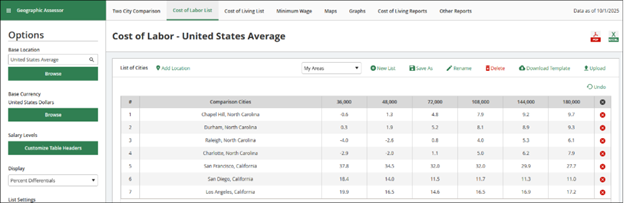
- Geographic and cost-of-labor differentials
- Industry-specific and job-level data
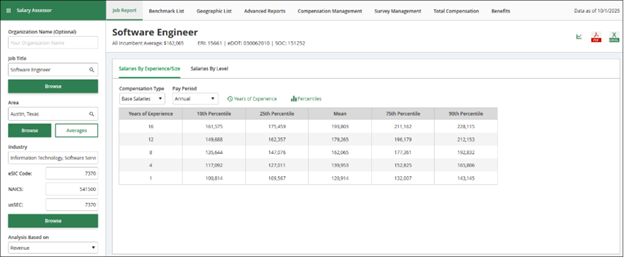
ERI provides robust compensation data covering a wide range of roles, industries, and locations, helping organizations understand what competitive pay looks like.
Analytical Frameworks
Beyond raw data, compensation professionals use structured frameworks to ensure that compensation decisions are consistent and defensible, including the following:
- Job architecture and leveling systems
- Pay range design methodologies
- Market positioning strategies (e.g., target percentiles, such as the 25th/median/75th percentile, to lead, match, or lag the market)
Professional Guidance and Best Practices
HR associations, peer networks, and thought leadership resources help professionals stay informed about emerging trends, regulatory changes, and evolving employee expectations.
Compensation Management Solutions: From Data to Execution
As compensation grows more complex, technology such as ERI’s smart Compensation Management software plays an increasingly vital role in helping organizations manage pay decisions effectively.
What Comprehensive Compensation Solutions Offer
ERI’s Salary Assessor provides a comprehensive and cutting-edge Compensation Management platform with innovative AI-powered features and HRIS integration built to support compensation planning and administration:
- Market Benchmarking: Access to reliable compensation data by role, location, and industry
- Pay Structure Development: Essential tools, such as the Pay Grade feature in Compensation Management, to design and maintain structured salary grades and ranges
- Planning and Modeling: Current versus adjusted compensation, market index, compa ratio, salary increases, and incentives
- Workflow Management: Streamlined approvals and collaboration
- Reporting and Analytics: Insights into equity, competitiveness, and total spending
With these workflows in place and supported by ERI’s compensation platform, HR teams will be able to focus on the strategic side of compensation, while also ensuring a solid foundation for their compensation planning.
How ERI Supports Strategic Compensation Management
ERI’s Compensation Management tools are designed to help organizations move from static to strategic pay decisions. By combining extensive compensation data with practical planning tools, ERI’s Compensation Management platform enables HR teams to seamlessly accomplish essential tasks, such as these:
These capabilities and features of a compensation management solution are especially valuable for organizations managing distributed workforces, specialized roles, or highly competitive labor markets.
Compensation Management in Practice: A Strategic Advantage
Compensation management is no longer just about keeping up with the market. It’s about using pay to support workforce and business goals with clarity and reliability. Organizations that invest in the right data, processes, and tools gain confidence in their decisions and reduce the roadblocks that slow down compensation cycles.
With ERI’s Compensation Management software, HR and compensation leaders can implement a structured framework, ground decisions in reliable market data, and align pay practices with organizational values and objectives.
Ready to see what this looks like in your workflow? Try a free demo today!