As salary expectations shift and fluctuate with industry trends and economic conditions, validating compensation structures with relevant market data becomes an indispensable strategy in ensuring that an organization’s pay practices remain consistently competitive, fair, and sustainable. It is essential that compensation analysts consistently validate their structures against market data to reduce the risk of pay inequities and compliance issues that may arise from as outdated compensation structure. As HR and compensation professionals set to establish the framework for their organization’s compensation structures, taking the additional steps to benchmark and validate compensation structures with market data is a critical aspect of best compensation management practices.
What Is a Compensation Structure?
In essence, a compensation structure is an organized framework that an organization utilizes in order to establish fair and equitable pay internally for all employees working in the organization and market-competitive compensation externally. It is usually composed of an organization’s hierarchy of jobs, which is based on grades, ranking, or job evaluation points, and their associated pay ranges. Here are some examples of different types of salary structures:
- Pay Ranges: Pay ranges with grades are the most common salary structure currently found amongst organizations. They may also be called salary ranges or open ranges. This type of structure allows an organization to pay for performance and avoid the limitations and issues associated with step ranges.
- Single-Rate Pay System: A single-rate pay system compensates jobs at a single or flat rate, which is typically based on the market rate for the job. It is important to note that there is no complexity when it comes to pay variations for experience, skill, seniority, or performance.
- Automatic Step Rate: An automatic step rate is a pay step range that has standard progression rates for a job. Employees progress from step to step based on time or seniority.
- Variable Step Rate: A variable step-rate program is similar to an automatic step-rate program, but it includes a performance modifier. Typically, there are 5-10 steps under a variable step-rate program, with a 2-5% difference between each step and a time schedule for the review. This program works well for companies with jobs commonly paid via a step program in the labor market that want to differentiate based on performance.
- Broadbanding: Broadbands are typically designed with very wide range spreads of 80% to 200% with a few wide bands that encompass all the jobs within the organization. Broadbanding offers much more flexibility in terms of differentiating pay for varying skill or performance levels within the same grade, while also increasing the ability of organizations to match market rates for various jobs within the band.
The only reliable way of knowing if a compensation structure stays competitive is by frequently benchmarking and validating internal data and practices against the market.
How to Design a Compensation Structure
A well-designed and effective compensation structure typically includes the following steps:
- Establish job structures by conducting job evaluations and market pricing.
- Develop pay grades to assign jobs to based on job evaluation results and an organization’s job structure.
- Determine salary ranges, as well as their respective range spread and midpoint progressions, to complete the competitive base salary structure.
- Align an organization’s particular compensation structure with external market data.
Validating a Compensation Structure Using Market Data
As HR and compensation professionals gear up to create compensation structures, they will soon realize that only through the alignment of an organization’s pay practices and data with external market data can they truly design a competitive and effective compensation structure. A compensation structure that is carefully designed using the steps mentioned above will accomplish several objectives:
- Align with organization’s goals and industry standards: An effective compensation structure helps propel an organization in the direction of its overall goals by addressing employee expectations with clear and defined parameters and developing an organization’s pay philosophy according to industry standards.
- Attract and retain talent: As organizations set clear compensation structures with defined pay practices, it simplifies salary negotiations and decisions through transparent communication and expectations.
- Ensure fairness and transparency: As organizations consider pay transparency and fairness, a well-designed compensation structure ensures that pay is internally equitable while staying externally competitive based on pertinent criteria, such as job responsibilities and market data. Validating a compensation structure using market data may also reduce the risk of compliance issues related to minimum wage rates, pay equity laws, and other compensation regulations.
- Control costs and budgets: Compensation structures help organizations manage their budgets and provide a precise way to set budget expectations and avoid overspending.
A compensation structure directly impacts an organization’s success. ERI’s Assessor Platform is the indispensable solution that you need to manage compensation effectively while also optimizing your workflow. ERI provides an array of features and a comprehensive salary survey database to support HR and compensation professionals in designing effective compensation structures and conducting a comparative market analysis to make data-driven decisions.
Design Your Compensation Structure in ERI’s Assessor Platform
In ERI’s Salary Assessor, HR and compensation professionals can easily create salary structures, such as pay grade structures, and analyze ERI market data using our Compensation Management solution. Alone, building out a salary structure with pay grades can become tedious and rife with error. However, the Compensation Management solution simplifies this process and allows experts to efficiently upload and maintain their organization’s salary structures with pay grade scales. ERI’s platform easily adapts to a specific organization’s needs, allowing HR and compensation professionals to adjust salary structures continuously to reflect organization-level or market changes.
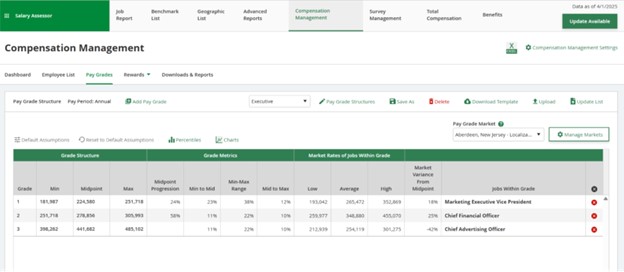
Figure 1. Create multiple pay grade structures in ERI’s Salary Assessor using the Compensation Management solution.
The key to ERI is our unique salary survey database. HR and compensation professionals can compare existing salary structures to ERI market data, allowing them to adjust pay grade structures based on validated market data.
Access ERI Market Data to Inform Salary Adjustments
As validating an organization’s compensation structure through market data is integral to making data-informed salary adjustments, the sources that HR and compensation professionals use to benchmark pay must be reliable and vetted. ERI possesses an extensive library of market data that is continuously updated with the most recent survey results, including our long-term study of data beginning in the mid 1980s with the creation of the Assessor Series. ERI’s comprehensive salary survey database contains the data that HR and compensation professionals need to analyze and set accurate and effective pay, ensuring compensation structures stay competitive and aligned with market and industry standards.
For example, users can download the Employee Pay Alignment report under Downloads & Reports in the Compensation Management solution to quickly align internal pay practices with market data, pay grade midpoint, or pay grade range.
What’s more, the Salary Assessor provides the market index in several valuable resources. In Compensation Management, the Employee List includes the market index column, providing a quick reference of an employee’s current pay to the median/mean of the market. The market index is also calculated at the job level on the Benchmark List page. Compensation teams often target a one-to-one relationship with the market, so ERI calculates the market index ratio for users to check for this or some other target index. Additionally, market index graphs are provided, transforming data into charts for a visual summary.
Furthermore, ERI’s Survey Management feature, which aggregates salary survey data from all your survey vendors, calculates the survey market index at both the employee and overall structure level and provides a comparison of current pay against rates reported by all your aggregated vendors at once.
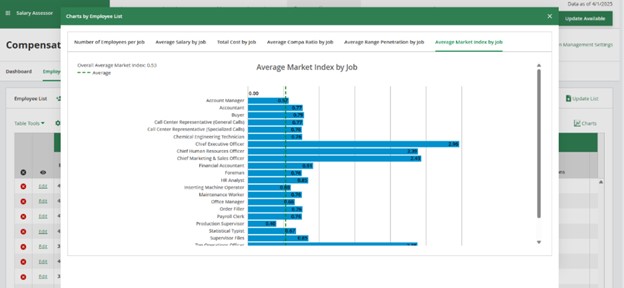
Figure 2. Access market data comparisons in the Compensation Management solution and generate charts to see a visual representation of market data by jobs.
Best Practices for Benchmarking and Validating a Compensation Structure
As you begin benchmarking and validating your organization’s compensation structure against market data and practices, here are a few best practices to keep in mind to ensure that all areas are covered when it comes to making potential adjustments.
- Set a timeline for review: Creating a working timeframe that outlines the steps needed from start to finish keeps things organized and ensures all necessary personnel are informed regarding shared responsibilities and tasks, as well as potential adjustments. For instance, a simple timeframe of the review process would look like this:
i. Review plans and tasks with the HR team to begin benchmarking salary structures against market data.
ii. Get approval from management.
iii. Identify areas where adjustments are needed and communicate changes with department managers.
iv. Notify employees of changes.
- Define the right market comparisons: Gather salary market data that is specific to your industry. Choose reliable, relevant, and current survey data and keep in mind that, to conduct the most accurate benchmarking analysis, you must compare it to organizations with a similar scope, size, profit, etc.
- Review compensation structures regularly: Validating your organization’s compensation structure with market data is a continuous process. The labor market is always changing, so it is crucial to stay proactive and keep up with industry trends.
To learn more about how to create a competitive salary structure, see ERI’s white paper, “How to Set Competitive Compensation Structures.”
The Platform for All Your Organization’s Needs
ERI’s Assessor Platform is key to optimized salary planning. Our robust compensation management solution houses the market survey data and applications that you need to design competitive and effective compensation structures. From benchmarking existing pay grade structures with reliable ERI data to accessing market index comparisons, ERI’s comprehensive platform is an innovative way of merging integral data with efficient features, all in one system.
Are you interested in ERI’s unique compensation solutions? Try a demo to jumpstart the way you manage compensation!