HR and professionals recognize that salary adjustments are a crucial component of maintaining fair and competitive pay within an organization. It is a way of not only ensuring that a particular set of criteria regarding an employee’s compensation is met, such as a market-competitive base salary, but also navigating pay with consistency, strategic planning, and adaptation to evolving market pay practices.
Although many typically associate salary adjustments with employee performance, such as merit and performance pay raises, a salary adjustment does not always indicate a rise in pay and it is not necessarily tied to performance. Pay increases based on performance or merit are ultimately considered a salary adjustment; however, conceptually, salary adjustments and pay raises refer to different things.
Salary adjustments refer to a change, either an increase or a decrease, to an employee’s base pay, which is typically made to reflect distinct factors, such as market rates, internal pay equity, or cost-of-living increases.
Pay raises, on the other hand, are typically tied to employee performance. These salary changes are administered as a way to reward individual performance, with the focus on motivating employees and retaining talent. Alternatively, salary adjustments are made to ensure equity within the organization and competitiveness in the market, resulting in either salary increases or decreases.
In general, salary adjustments are a method for HR and compensation professionals to ensure legal compliance, align with market rates, and stay competitive. Which brings us to our next point: what are some factors that influence why salary adjustments are made?
Reasons Why Salary Adjustments Are Administered
Salary adjustments may be made for myriad reasons, but here are some typical examples:
- Internal Equity: HR coordinators may administer salary adjustments in the case of internal organization issues, such as salary compression or pay disparities, to maintain internal equity. These adjustments will be applied after conducting internal audits of pay structures and employee salaries. For instance, HR teams typically conduct a pay equity analysis comparing compensation for employees in protected groups, such as age range, religion, or disability, to ensure that the organization maintains equitable pay for all employees.
- Internal Pay Structures: Additionally, coordinators may administer salary adjustments in response to changes within the company structure, as in the restructuring of job responsibilities or a job hierarchy, for example, or work model changes, such as a company-wide shift from in-office to hybrid or remote work.
- Market Alignment: To stay competitive and promote external equity, HR and compensation professionals often benchmark internal organization salary data with market data specific to the organization’s geographic region, industry, and organization size. Ultimately, the market holds a huge influence on how HR teams navigate pay adjustments to ensure compensation stays competitive and fair.
- Legal and Compliance: Maintaining compliance with current labor laws is a necessity. Labor laws may change over time, ranging from federal mandates, such as changes to Fair Labor Standard Act (FLSA) overtime rules, to local regulations, such as county-level or municipal minimum wage rates. This makes it critical for HR coordinators to stay abreast of current labor laws, conduct internal audits, and make pay adjustments to prevent any potential legal issues due to dated salary structures.
Different Types of Salary Adjustments
As HR and compensation professionals steer through evolving pay practices, administering salary adjustments becomes a strategy in maintaining pay consistency, retaining employees, and refining pay structures. There are several types of salary adjustments that coordinators may administer for particular situations and purposes, including these typical examples:
- Market-Based Salary Adjustments: Market salary adjustments are one of the most common pay adjustments that HR and compensation professionals make. Salary benchmarking is a crucial task as this process is used to analyze an organization’s internal pay practices against the market. As the labor market evolves due to various factors, such as the economy, government regulations, and more, ensuring that salary structures and employee pay align with market standards is crucial to staying competitive, managing budgets, and avoiding potential problems that may arise from dated structures and salary data.
- Geographic Differential or Location Adjustment: HR coordinators often make salary adjustments based on location. These adjustments are based on a geographic differential, a numerical value representing the comparison of pay in a particular geographic location to the national average or between two different locations. HR coordinators apply location adjustments to maintain compensation that reflects the local labor market where the organization is competing for talent, especially if the scope of an organization reaches multiple locations. Locations may be assigned geographic differentials by city, locations within a radius, state or province, region, or country.
- Internal Equity Adjustments: Pay equity adjustments are applied to correct internal pay disparities. HR coordinators may administer pay equity adjustments after identifying specific internal pay issues, such as pay compression, tenure gaps, or inequity in compensation for employees within protected group categories, such as age range, disability, gender, national origin, race, religion, and sexual orientation.
- Cost-of-Living Adjustments (COLA): A cost-of-living salary adjustment is typically tied to economic factors, such as inflation or other cost-of-living changes. A cost-of-living adjustment is usually implemented to help employees maintain their purchasing power as living expenses rise or assist employees with relocation between areas with different cost-of-living rates.
Best Practices When Administering Salary Adjustments
When adjusting salaries, coordinators must be as accurate as possible, requiring steps to ensure that the process stays transparent, compliant, and fair. Here are a few best practices to consider when implementing salary adjustments:
- Review Your Organization’s Budget: One of the first steps in administering a salary adjustment is a budget review. With an understanding of the organization’s budget, teams will be able to identify the limitations or scope of what they are able to efficiently manage, while also averting problems caused by going over or under budget.
- Understand the Salary Adjustment Justification: It is important to identify the reasons behind a salary adjustment in order to implement the correct action and the scale of a particular adjustment, as well as effectively communicate the adjustment to the employee.
- Access Benchmarking Data: Benchmarking internal salary data against market data is a crucial aspect of salary adjustments. By analyzing market data, HR teams can make data-driven pay decisions that are accurate and effective.
- Assess Internal Pay Structures: To avoid any further pay discrepancies that may arise even after adjusting salaries, regularly assess your organization’s internal pay structures. Doing so will contribute to equitable pay across similar jobs and job hierarchies.
- Monitor Changes: After implementing salary adjustments, coordinators must monitor changes and evaluate whether these adjustments achieve a particular goal or garner the expected outcome.
Using ERI’s Assessor Platform to Administer Salary Adjustments
Salary adjustments are fundamental to maintaining fair and competitive pay. ERI’s Assessor Platform has the accurate data and resources that HR and compensation professionals need to confidently conduct various tasks in compensation management, including administering salary adjustments. ERI’s Assessor Platform provides a robust database with current salary survey data and an array of benchmarking tools to compare pay for internal jobs against market rates. With various useful applications, ERI’s Assessor Platform is the perfect solution for HR and compensation professionals to streamline and optimize essential organizational tasks.
Our Geographic Assessor makes it simple and straightforward to calculate geographic cost-of-labor differentials. Using the Two City Comparison feature, users can access decisive geographic wage differential data to set branch office salary structures, calculate adjustments for cost-of-living differences, and accurately apply location adjustments, ensuring that salaries stay consistent and updated.
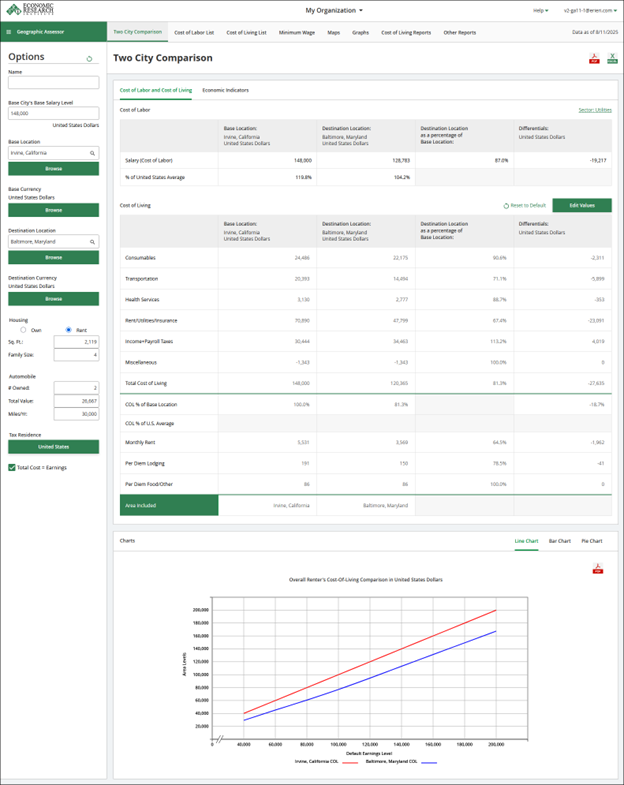
Figure 1. Access cost-of-labor and cost-of-living data using the Two City Comparison feature in ERI’s Geographic Assessor.
Additionally, ERI’s Salary Assessor is your reliable solution for both salary benchmarking and comprehensive compensation management. In the Compensation Management solution, the Pay Equity feature helps HR and compensation coordinators comb through their entire employee list and compare compensation for employees in protected groups. Coordinators can utilize this solution alongside other workforce insight tools to complete pay equity audits and ensure that total compensation remains both internally equitable and externally competitive.
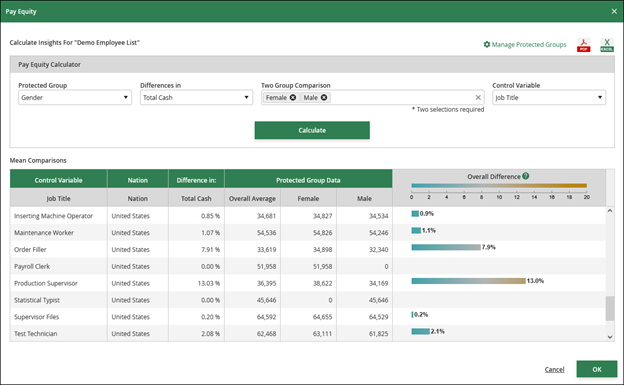
Figure 2. Use the Pay Equity feature in the Compensation Management solution in ERI’s Salary Assessor to easily analyze employee data and compare pay for employees in protected groups.
Moreover, ERI’s Assessor Platform boasts an extensive salary survey database that is continuously updated with the most recent market data to ensure your compensation strategy stays market competitive. Using the Survey Management resource in our Salary Assessor, compensation professionals can easily import and manage their salary survey library and make comparisons with ERI’s robust compensation database to apply data-driven market adjustments for their internal jobs.
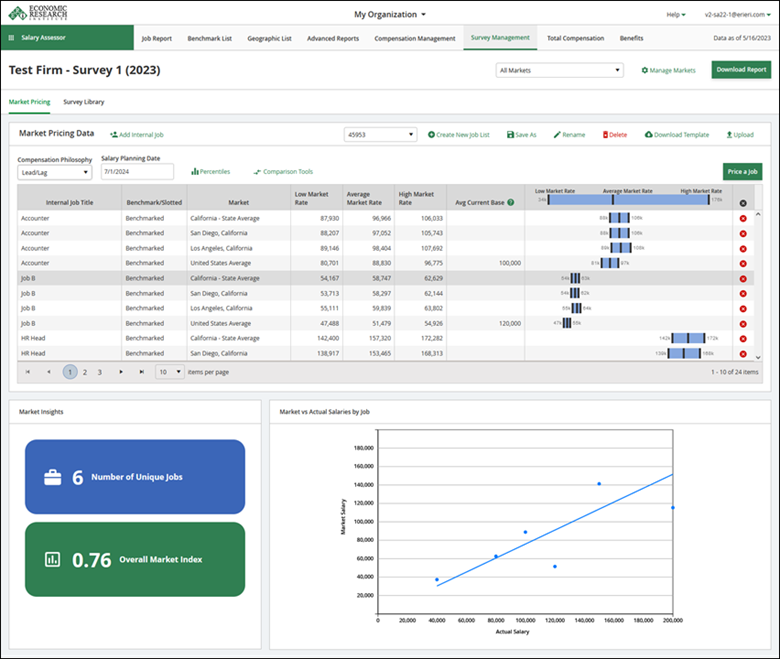
Figure 3. Utilize the Survey Management solution in ERI’s Salary Assessor to upload your external salary surveys, compare them with ERI’s Assessor Series data, and develop an effective compensation plan.
Contact ERI for a free demo today to tap into the power behind ERI’s Assessor Platform !