Challenge
Like other organizations in their field, CodeBreakers, LLC, faces the difficult challenge of staying competitive as a mid-size technology company in a saturated industry. Their goal is to attract and retain talented candidates with advanced technical skills to meet the needs of upcoming product development. However, during their annual workforce evaluation, analysts found the organization struggled with high turnover, and further investigation uncovered that the key employees that they lost were hired by local companies with more attractive benefits offerings. The high attrition rate led to unexpected additional costs in hiring and recruiting and put a strain on productivity and employee morale.
With so many workforce issues stemming from benefits issues, compensation analysts set out to create a data-driven solution without exceeding the company’s budget.
Solution
Using ERI’s annual Benefits Benchmarking Survey and the Benefits resource in ERI’s Salary Assessor, the HR team accessed current market data on the types of benefits offered and employer contribution rates for comparable companies, as specified by geographic region, industry sector, and organization size. This helped the team to benchmark their internal benefits offerings against current market data and evaluate if they were misaligned with the market. The analysts at CodeBreakers discovered that they were not competitive in terms of employer contributions and did not offer sufficient paid time off (PTO) for long-term employees, as well as common additional benefits, such as telecommunication benefits. With accurate and fully vetted market data on benefits trends and practices in hand, they began to create an action plan to improve their benefits packages.
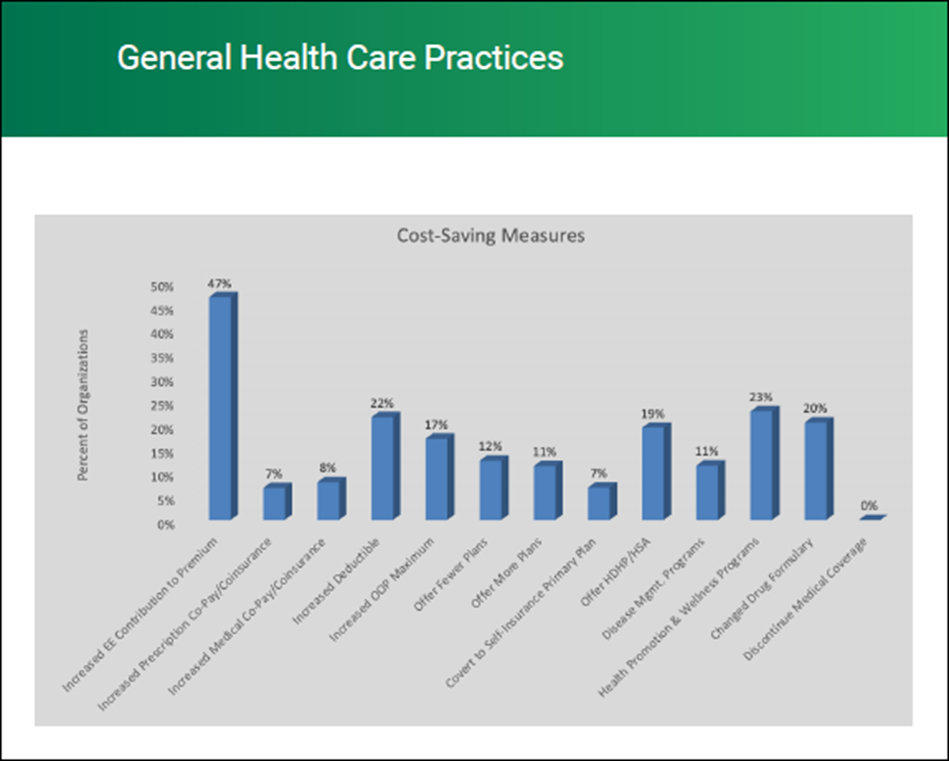
Figure 1. Benchmark employer-provided, employee non-cash benefits using ERI’s Benefits Benchmarking Survey. The report emphasizes health care benefits, with additional sections on paid time off, retirement, life and disability insurance, and executive perks.
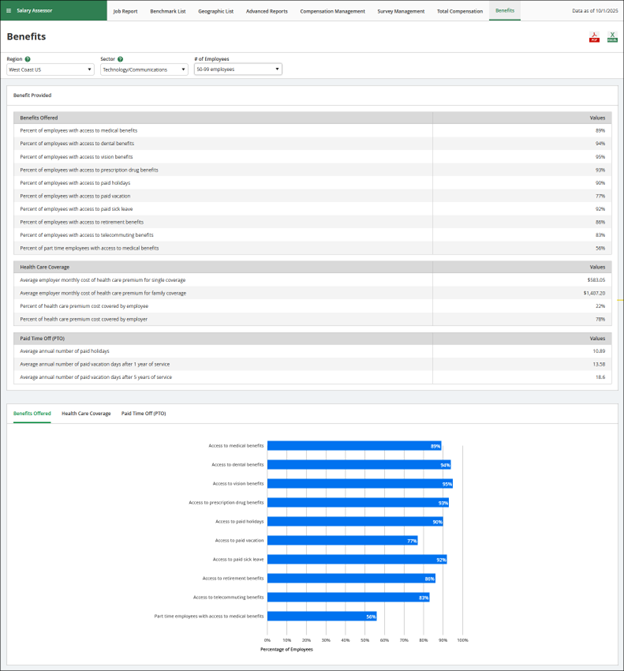
Figure 2. Get current benefits data for benefits offered (including medical, dental, vision, prescription drug, paid holidays, paid vacation, paid sick leave, retirement, and telecommuting), health care coverage, and PTO using the Benefits resource in ERI’s Salary Assessor.
Next, the analysts utilized the Benefits Administration feature in ERI’s Compensation Management solution to strategize and implement additional benefits and increased employer contributions. They could easily define diverse benefits plan options, including health and wellness benefits, financial and retirement benefits, time-off and leave benefits, mandatory benefits, and additional benefits, to efficiently manage the administration of selected benefits and keep track of employer and employee contributions, while keeping an eye on their budget.
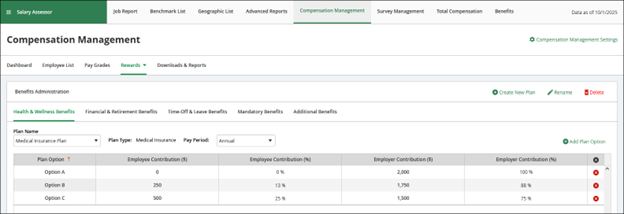
Figure 3. Use the Benefits Administration feature in ERI’s Compensation Management platform to define benefits plan options, including health & wellness benefits, financial & retirement benefits, time-off & leave benefits, mandatory benefits, and additional benefits, to administer in your organization.
Finally, they were able to quickly download and share Total Rewards Statements to provide a complete breakdown of pay for each individual employee, including current base, incentive, and long-term compensation, plus benefits, with employee and employer contributions for each benefit option. Using the Total Rewards Statements, the analysts of CodeBreakers began communicating both benefits and compensation offerings more clearly, showcasing the organization’s commitment to rewarding employees and retaining their workforce.
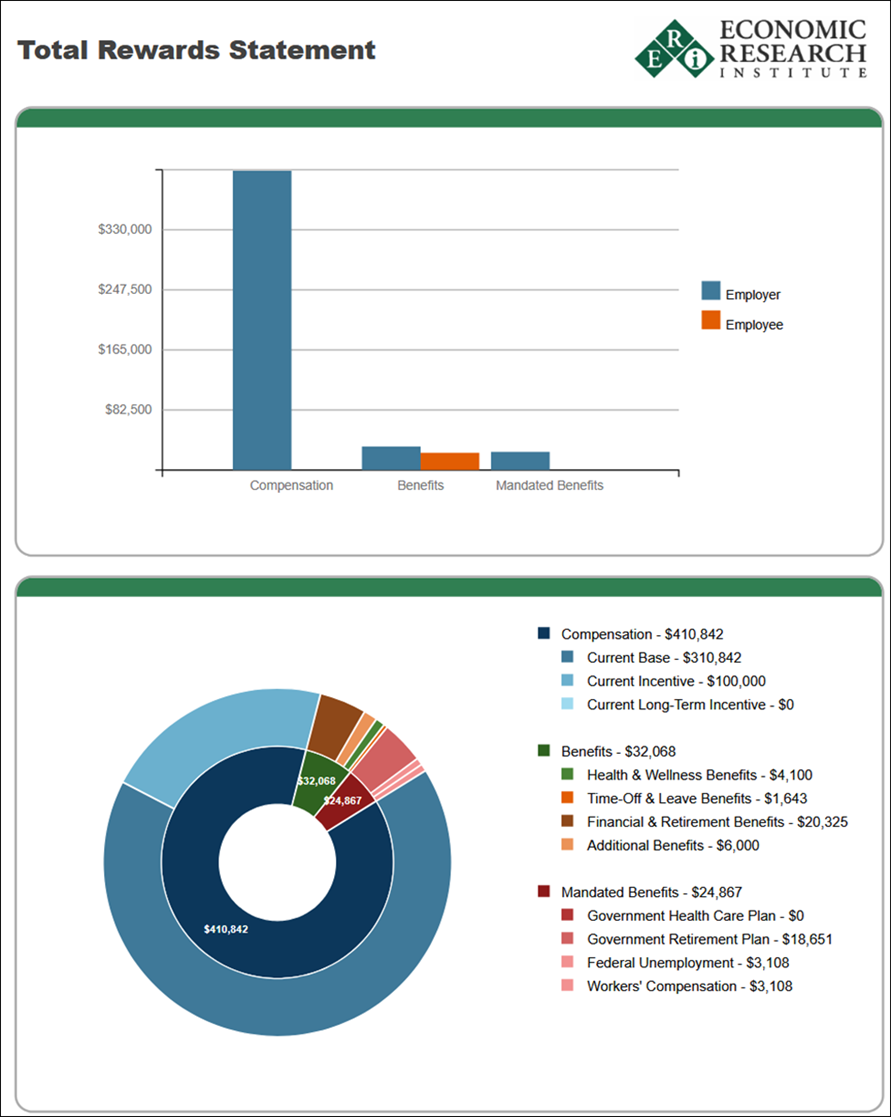
Figure 4. Export a Total Rewards Statement to share a complete breakdown of pay for an individual employee, including current base, incentive, and long-term compensation, plus benefits, with employee and employer contributions for each benefit option.
Essentially, with the following steps, the team was able to access external benefits data, build a competitive benefits program, and administer internal benefit plans:
- Get accurate and fully vetted market data on benefits trends and practices based on specific sectors, organization size, and regions to compare to their internal data, see where they misalign with the market, and create an action plan to improve benefits packages.
- Examine individual factors, such as the types of benefits being offered and employer contribution rates that similar companies incorporate in their benefits packages, to maintain a competitive advantage and inform benefits planning.
- Define benefits plan options with the Benefits Administration feature in Compensation Management, including health and wellness benefits, financial and retirement benefits, time-off and leave benefits, mandatory benefits, and additional benefits, in order to manage the administration of selected benefits and keep track of employer and employee contributions.
- Download and review Total Rewards Statements for an individual employee to see a complete breakdown of their pay, including current base, incentive, and any long-term incentive, plus benefits, with employee and employer contributions for each benefit option.
Results
With access to accurate market data on current benefits practices and trends, this organization will be able to benchmark internal data against these findings, designing competitive benefits packages that will improve employee retention and morale, control costs, and ensure that benefits offerings meet employee needs and expectations. By consistently benchmarking internal data against market data, the company will be able to retain talent through data-informed benefits offerings while employees get to enjoy well-rounded benefits packages that were formerly lacking. Leveraging the Benefits Administration solution and Total Rewards Statement in Compensation Management will also contribute to better budget management and improve employee relations as the company will be able to communicate the value of individual benefits to employees.
The Platform for All Your Organization’s Needs
ERI’s Assessor Platform is key to optimized salary planning. Our robust compensation management solution houses the salary survey data and applications that you need to design competitive and effective compensation structures. From benchmarking with reliable market data to analyzing geographic differentials and conducting pay equity analyses, ERI’s comprehensive platform is an innovative way of merging integral salary survey data with efficient features, all in one system.
Are you interested in ERI’s unique compensation solutions? Try a demo to jump-start the way you manage compensation!