
Looking to Benchmark Pay?
Multiple Regression
Linear regression allows you to predict the value of y given x. One variable allows you to reach a conclusion about another because of correlation and an estimate of its size by an equation. Multiple regression represents the same concept using more than one variable x to predict y. Often, salary level depends on more than one factor. Multiple regression allows you to make predictions based on several factors. The figure below depicts multiple regression:
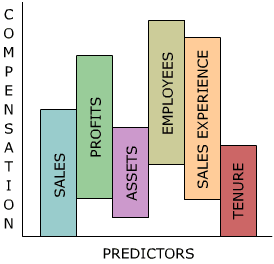
In the figure above, Sales, Profits, Assets, Employees, Sales Experience, Tenure are all x variables or predictors used in a regression formula to predict the y variable, Compensation.
Multiple Regression Model
Multiple regression can be expressed mathematically as:
y = β0 + β1X1 + β2X2 + ... + βkXk + ε
In multiple regression:
- y is the predicted value of the dependent variable
- β1X1 where the value of the regression coefficient β1 determines the contribution of the first independent variable x1 to the regression line, given that the other x variables are held constant
- β0 is the y-intercept
- ε is the model error
Using the above illustration, compensation can be written as:
Compensation = β0 + β1Sales + β2Profits + β3Assets + β4Employees + β5Sales Experience + β6Tenure
Each of the coefficients in front of the independent variables determines how much that independent variable contributes (holding all other variables constant) to the overall regression equation in determining compensation.