Social Security Administration Announces 2024 Payroll Tax Increase

Social Security Administration Announces 2024 Payroll Tax Increase

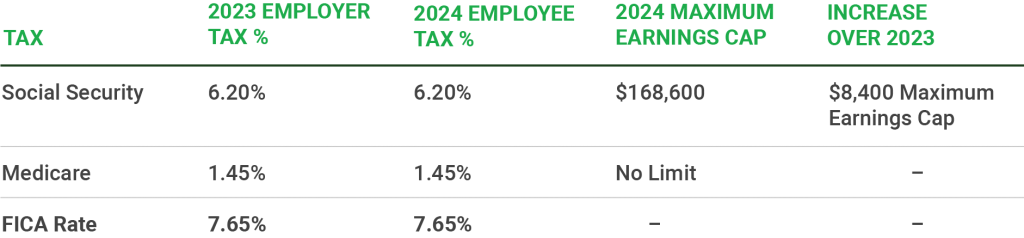
Effective January 1, 2024, the U.S. Social Security Administration will increase the maximum earnings subject to the Social Security payroll tax by $8,400 (from $160,200 in 2023 to $168,600 in 2024).

Note: Additional 0.9% Medicare tax withholding on FICA wages greater than $200,000 ($250,000 for married couples filing jointly) in a calendar year (paid by the employee).

Source: U.S. Social Security Administration

Social Security Fact Sheet

The Internal Revenue Service has announced 2024 retirement plan contribution limits, as well. Learn more about them by looking at our post highlighting the major changes.

Salary Assessor

Retain employees and attract new talent. Know how much to pay.

Try a FREE Demo

About ERI

ERI Economic Research Institute compiles the best salary, cost-of-living, and executive compensation survey. Learn more about new compensation updates, rules and changes and how they affect business planning at ERI.

Top 10 CEOs in Construction Industry

Top 10 Highest-Paid CEOs in the Construction Industry

The construction industry plays a role in shaping our physical environment, including careers in managing, designing, construction, maintenance of buildings, infrastructure, and various civil engineering projects. It is a multifaceted industry that spans residential, commercial, industrial, and public works projects. With continuous technological advancements and changing regulations in the construction industry, it is important for HR professionals to accurately benchmark salaries based on current market data  

Salaries in the Construction Industry 

Compensation in the construction industry can vary widely based on myriad factors, including location, project size, company size, and experience. Understanding top construction CEO salaries provides valuable insights into market dynamics and the competitive landscape and is an important part of executive compensation planning. For more in-depth analysis, use ERI’s Executive Compensation Assessor to benchmark executive compensation packages for planning and reporting. For instance, see how construction management salaries vary by geographic location and company size. You can review current data for executive salaries, bonuses, non-equity incentives, stock awards, option awards, pension, and other compensation to help benchmark total executive compensation and ensure executive compensation packages remain competitive.  

Top 10 Highest-Paid CEOs in the Construction Industry 

For the purposes of this examination, base salary serves as the metric since it is predetermined and the most fixed among the various forms of executive compensation. Other pay, defined as excess benefits and perquisites greater than $10,000, is the second most common form of CEO compensation and is also included in the table below.  

The following is a summary of top CEO pay in the construction industry. Industries are defined using the Standard Industrial Classification (SIC) system as indicated by the organization. This summary covers organizations that filed in any SIC from 1500 to 1799. 

CompanyNameTitleSalaryOther Pay
D.R. Horton Inc David Auld President and Chief Executive Officer $700,000 $29,296,862
NVR Inc Eugene Bredow President and Chief Executive Officer $715,204 $18,573,806
KB Home Jeffrey Mezger Chairman of the Board, President, and Chief Executive Officer $1,150,000 $14,664,791
M.D.C. Holdings Inc David Mandarich Director, President, and Chief Executive Officer $1,000,000 $14,683,346
Jacobs Engineering Group Inc Steven Demetriou Chairman of the Board and Chief Executive Officer $1,411,154 $13,204,367
PulteGroup Inc Ryan Marshall Director, President, and Chief Executive Officer $1,000,000 $13,484,024
Otis Worldwide Corp Judith Marks Chairman of the Board, President, and Chief Executive Officer $1,300,000 $13,177,875
KBR Inc Stuart Bradie Director, President, and Chief Executive Officer $1,191,360 $11,425,675
Quanta Services Inc Earl Austin Director, President, and Chief Executive Officer $1,225,342 $10,813,618
Carlisle Companies Inc D. Koch Chairman of the Board, President, and Chief Executive Officer $1,330,000 $10,187,926

Building total compensation packages for top executive employees can vary considerably across organizations due to a variety of complex factors. Use ERI’s Executive Compensation Assessor to learn more about how construction executive salaries compare to those in other industries, considering total compensation factors such as salary, stock, incentives, bonuses, and more. Keep in mind that compensation figures may change over time, reflecting market dynamics, company performance, and industry trends. Always stay informed of the latest compensation data to ensure your salary planning remains up to date and competitive within your industry.  

Learn more about top 10 executive compensation in various industries at ERI, including the top 10 highest-paid medical professionals in nonprofit health care and the top 10 highest-paid CEOs in technology. 
 

Calculate Holiday Pay

How to Calculate Holiday Pay

Holiday pay refers to pay on days established by law or custom for which workers receive pay while absent from work. Holiday pay can be received in different forms, such as fully or partially paid time off (most common for salaried employees), a bonus, or, most commonly, additional hourly pay for work performed on a holiday. The amount of holiday pay that an employee receives typically depends on their regular pay rate (hourly or salaried), employment contract, and applicable laws. Compensation professionals must consider holiday pay, in addition to base pay, bonuses, commissions, and other factors that contribute to the total compensation package, in the salary planning process.  

Develop a Holiday Pay Policy  

Not all businesses have the luxury of closing for the holidays. When planning your holiday pay policy, consider the following: 

Define Holidays   

The United States recognizes 11 standard federal holidays 

  • New Year’s Day – January 1
  • Martin Luther King’s Birthday – 3rd Monday in January 
  • Washington’s Birthday – 3rd Monday in February 
  • Memorial Day – last Monday in May 
  • Juneteenth National Independence Day – June 19 
  • Independence Day – July 4 
  • Labor Day – 1st Monday in September 
  • Columbus Day – 2nd Monday in October 
  • Veterans’ Day – November 11 
  • Thanksgiving Day – 4th Thursday in November 
  • Christmas Day – December 25

Employee Eligibility 

It is important to determine which employees will qualify for holiday pay. For instance, retailers like Target offered store employees and service center employees an additional $2 per hour for shifts during the holiday season to encourage employees to work.  

How to Determine Holiday Pay  

Organizations must first consider the budget allocated for holiday pay to determine how much employees will receive. Once the holiday pay budget is calculated, it is time to decide how employees will receive the holiday pay, including these options: 

  • Paid time off (PTO): Employees receive a predetermined number of PTO days that can be used for holidays not celebrated by the company or for personal time. 

  • Statutory holiday pay: Employers pay a set amount for designated holidays, regardless of whether the employee works or not. 

  • Time-and-a-half or double-time holiday pay: Employees receive a premium pay rate for working on holidays. 

How to Calculate Holiday Pay for Full-Time and Part-Time Employees 

Calculating holiday pay involves determining the employee’s regular hourly rate and applying any premium rates for work on holidays. To calculate holiday pay, follow these steps: 

1. Identify the employee’s regular hourly rate. If you have a full-time salaried employee, convert their annual salary to the hourly rate. The standard annual to hourly conversion rate is 2080 hours per year. Simply divide the annual salary by 2080 to arrive at the corresponding hourly rate.  

Hourly Rate for Salaried Employees = Annual Salary / 2080 

For example, if a salaried employee is paid $52,000 annually and works 40 hours per week, then their hourly rate is 52,000 / 2080 = $25 per hour. 


2. Determine any additional pay for overtime or shift differentials. For example, in the United States, holiday pay is typically 1.5 or 2 times the worker’s average hourly pay. 


3. Calculate the premium rate for working on a holiday, if applicable. 

Holiday Pay = Total Hours Worked on the Holiday x Adjusted Hourly Rate 

Let’s consider this holiday pay policy example to help illustrate the role of holiday pay in a total compensation package 

An hourly employee, Ann, with a regular pay rate of $20 per hour works 8 hours on a federal holiday. The company’s policy provides double-time pay for holiday work.

Calculation:  

Regular hourly rate: $20  
Double-time premium: 2x regular rate  
Total hours worked on holiday: 8  
Holiday Pay = Regular Hourly Rate × Double-Time Premium × Total Hours Worked  

$20 × 2 × 8 = $320 

Ann usually earns $160 on a normal workday. However, since she worked on a holiday, she will earn $320.  

The holidays are busy enough. Use ERI’s compensation planning software to help you determine holiday pay without the work of manual calculations and easily manage your employee payroll. Schedule a free demo to learn more about how we can help with your overall compensation management. 

Federal Holiday Pay and FLSA Rules 

The Fair Labor Standards Act (FLSA) governs federal labor laws in the United States, including regulations related to holiday pay. While the FLSA does not mandate holiday pay, it does provide guidelines for employers who choose to offer it. Compensation professionals should be aware of FLSA rules and how they may impact holiday pay practices within their organization. 

Accurately benchmarking compensation to factor in pay differentials, such as holiday pay, helps HR professionals plan business expenses and understand the actual cost of labor during different time periods. Visit ERI to learn more about how companies benchmark holiday pay and how to determine holiday pay when pricing roles. 

Performance Bonuses for Charity Executives?

For many years now, charities have been encouraged to act more like for-profit companies, with a focus on measuring their outcomes and the impact of their programs.  The logical next step is to reward those that succeed with performance bonuses for charity executives by establishing a bonus structure in nonprofit organizations.  At the same time, the IRS and other charity regulators have some pretty clear guidelines on what type of compensation is permitted.  The basic principles follow:

  1. Charities are not allowed to pay excessive compensation to nonprofit executives, and
  2. Charities cannot set up compensation arrangements that lead to “private inurement” (where revenues or donations flow directly to an organization “insider”).

There are many practical challenges and obstacles to the idea of setting up a bonus structure in nonprofit organizations and tying bonuses to achieving the organization’s mission.  For example, organizations should consider what exactly needs to be measured to define success, the short-term outcomes versus long-term impacts, the cost, and difficulty of tracking and measurement, etc., all of which have been discussed for years.

nonprofit executives
It’s important to determine if you want to reward executives based on short-term outcomes or long-term progress.

To find the most accurate compensation data on nonprofit executives, try using ERI’s Nonprofit Comparables Assessor. For the moment, let us assume that an organization has decided that a bonus program is needed to improve executive performance. The process for the nonprofit bonus structure should include the basic steps that are listed below.

First, any incentives should be tied to mission-related metrics.  What is measured can include financial and fundraising goals, but this is tricky.  Organizations should include some measures that are preconditions for success rather than measures of success already achieved.

  • The IRS will want to know that there is a “real and discernable business purpose” for implementing the bonus plan.  Does it promote the organization’s charitable purposes (for example, improving services or motivating cost containment)?
  • The plan must not be simply a way to distribute profits to the principals of the organization.

Second, a bonus plan must be established and implemented only with an independent board of directors.  A committee of the board, such as personnel or compensation, also would be acceptable if comprised of independent board members.

  • Board members are not “independent” if they, or individuals or businesses with which they are affiliated, receive compensation from or transact business with the organization.
  • There must be an arm’s length relationship between the organization and the employees benefiting from the plan. Board members receiving compensation from or transacting business with the organization cannot discuss and vote on matters relating to that compensation and those transactions.

Third, there must be safeguards to ensure that charitable services will not be reduced if goals are met and bonuses need to be paid.

  • The organization must be on track to provide all the program services it has committed to in its annual program budgets and plans before paying out bonuses.
  • Managers should not set aside program funds for the bonus pool.

Fourth, total compensation – including amounts paid under the bonus plan, plus all other forms of compensation – must be reasonable.

  • The IRS wants to see compensation in line with the compensation that would ordinarily be paid for similar services by a similar enterprise under similar circumstances.
  • The board should retain the discretion to cancel or reduce the bonus plan at any time if doing so is in the organization’s best interests.
  • In general, compensation based on incentives, including bonuses, is often scrutinized by the IRS to ensure that no prohibited private benefit results.

Careful research on what similar organizations pay is needed to ensure that compensation is in line – check out ERI’s Nonprofit Comparables Assessor to find salaries of executives in comparable organizations.  Then, organizations need to review the impact on total compensation if the executive meets the goals and is paid the whole amount available.  This review ensures that the earned bonus will not change a “reasonable” salary package into one deemed “unreasonable.”

finger-pointing-at-charts
It’s important for executive bonuses to not take away money from other vital programs and services.

The other caution is that the organization needs to have a source of funds to pay the bonuses without a negative impact on programs and services.  What looks like a good management program, in theory, could even have a negative impact on executive morale if earned bonuses cannot be paid. A cap on the size of the bonus plan will help ensure that total compensation is reasonable and will help in budgeting for payments under the plan.

Yes, charities can set up incentive plans and performance bonuses for charity executives, but the IRS requirements and the nonprofit budget constraints must be carefully considered.

ERI Economic Research Institute compiles the most robust salary, cost-of-living, and executive compensation survey data available, with current market data for more than 1,000 industry sectors.

ERI’s Assessor Series® – Solutions for every compensation decision

Try a FREE DemoRequest a Guided Tour

Internal vs. External Equity: What’s the Difference?

Ensuring that employees are competitively compensated relative to the external marketplace and their peers is an essential two-part function of the compensation plan. This analysis reflects two sides of the same coin: equity.  Equity pay entails ensuring that all employees in an organization receive unbiased total rewards based on permitted internal and external factors. Equitable compensation has many benefits: reducing turnover, increasing cooperative behavior, decreasing counter-productive behavior, and ensuring legal compliance. The General Fair Pay Act provisions allow employees to disclose, discuss, and ask about their wages. Both employers and employees have a vested interest in making sure that pay is fair and that differences are not based on sex, race, ethnicity, or other protected categories.  Ensuring an equitable pay strategy is a complex issue.  Internal and external equity analysis allows an organization to evaluate its compensation plan based on the fairness of employee compensation.

What’s the Difference? 

Internal equity refers to fairness of pay among current employees working for the same company and performing the same or similar jobs. An analysis of internal equity ensures that fairness is maintained throughout the organization based on similar responsibilities, performance, knowledge, skills, and experience.  A good review is contingent on accurate job analyses and descriptions, not just job titles (which may be inflated), to provide the appropriate comparators.  Pay grades are an example of a process that is designed to ensure internal equity. These structures ensure that individuals in an organization are compensated in a consistent manner relative to their peers, supervisors, and reports.

External equity refers to fairness of pay against the external market.  External equity compares what the company is willing to pay for talent versus what outside organizations competing for the same talent are willing to pay.  It provides a basis for competitive job offers, salary adjustments, and salary structures. Equity exists when employees are rewarded fairly in relation to those who perform similar jobs in other organizations. 

Both internal and external equity factors are important tools used to define and implement a solid compensation strategy, resulting in effective management of employee total rewards. With the majority of expenses attributable to labor costs, consideration of both is vital to providing fair, equitable compensation and the ability to attract and retain the best talent. 

Why Do Internal and External Pay Equity Matter?

Internal equity looks inside the organization to compare salaries and wages of employees in the same jobs.  Analysis determines if the differences in pay are attributable to legitimate factors, such as performance or experience.  If analysis reveals that a protected group is paid at a lower rate than the norm, further analysis is required to determine if pay practices (intentional or not) are creating disparate treatment.  Perception is a key factor in internal equity.  Employees often compare themselves to others who they believe are in comparable positions, but HR must know the jobs that they are comparing.  This can create tension and lower morale.  The result may be regrettable turnover or employees interviewing and receiving job offers in order to force the employer to evaluate and perhaps make a counteroffer, leaving the employee wondering, “Why not just pay me what I’m worth from the very beginning?”  This can cause resentment in an otherwise effective and productive employee.

External equity looks at factors such as market, company size, revenue, sales, location, and industry to compare salaries for qualified workers. This is typically accomplished using compensation surveys.  The average salary for benchmark positions provides information to help determine if companies are paying their employees competitively.  It is important to pay attention to market changes and stay current because failing to keep up with the competition can lead to the loss of valuable employees.

A review of all jobs on a regular basis (at least annually) helps to keep an eye on compensation, to make necessary adjustments, and to ensure the compensation strategy remains fair and equitable.

Having access to salary survey data and the resulting analyses, as well as taking the time to review your jobs, the organization’s needs, and strategic goals, are all critical to developing a solid understanding of the current labor force, both internal and external.

Both internal and external equity warrant consideration; one is not more important than the other. Both should be considered when determining and maintaining a pay strategy that supports the organization’s strategy.  The perception of fair pay is an important factor which can have a positive or negative effect on morale, productivity, and employee engagement. 

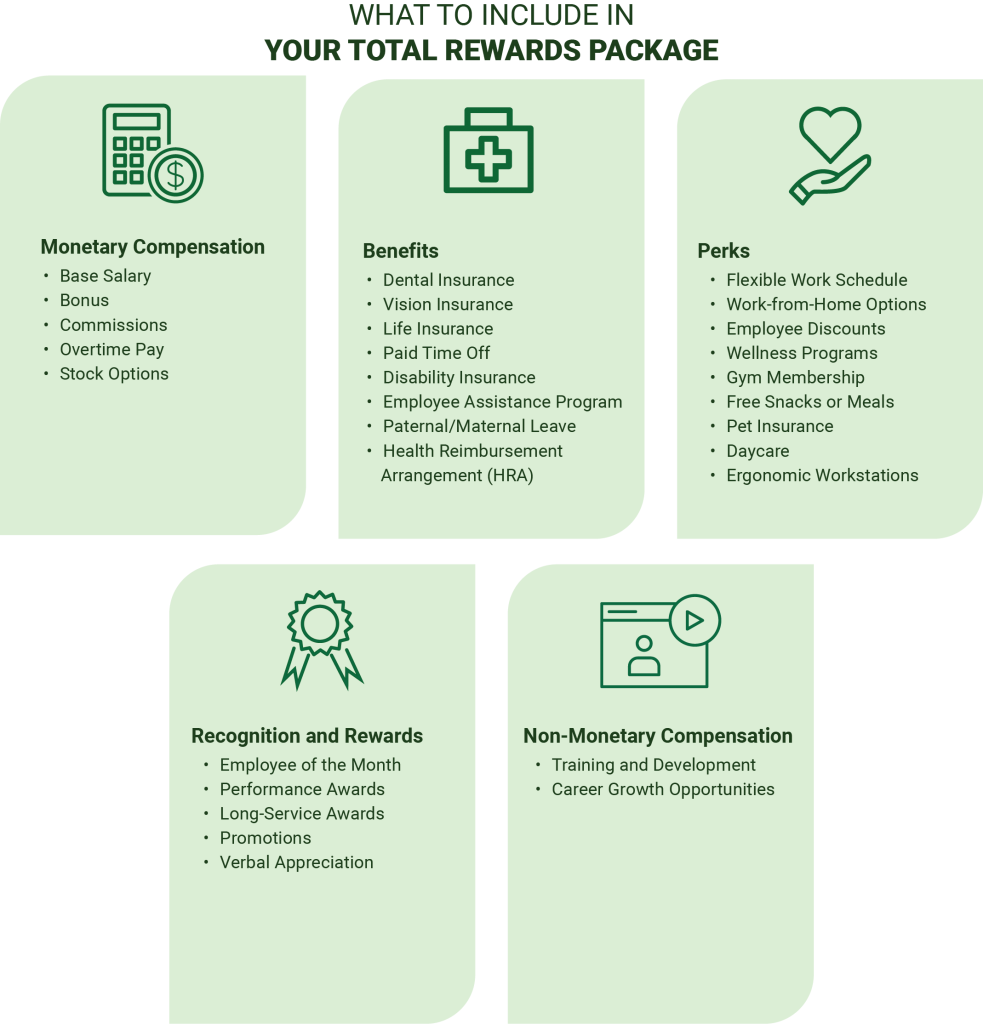
It is important to communicate regularly and honestly with employees about total rewards.  Provide total rewards statements to educate employees, highlight perquisites, and explain benefits, in addition to base pay.  Communicate the entire compensation package.  Employees are savvy when it comes to their salaries and want to know that they are getting the package that meets their needs and expectations, just as the company does.   For more information about total compensation and how to calculate total pay while taking into account internal and external equity, utilize ERI’s Salary Assessor.

Top 10 CEOs in the Retail Industry

Executive pay in public for-profit organizations can vary drastically depending on a variety of factors, including the organizational size and scope, as well as the industries in which they operate. However, unlike many other jobs, geography plays little role in compensation for top executives. Regardless, CEOs are typically (though not always) the highest-paid executives at many organizations.

For the purposes of this examination, base salary serves as the metric since it is predetermined and the most fixed among the various forms of executive compensation. Other pay, defined as excess benefits and perquisites greater than $10,000, is the second most common form of CEO compensation and is also included in the table below. Bonus, nonequity, stock, options, and pension are not included. Find out about top CEO total executive compensation in different industries, including the top 10 highest-paid CEOs in nonprofit health care and the top 10 highest-paid CEOs in tech.

The following is a summary of top CEO pay in retail industries. Industries are defined using the Standard Industrial Classification (SIC) system as indicated by the organization. This summary covers organizations that filed in any SIC from 52xx to 59xx. For every CEO, compensation is restricted to the organization’s primary SIC code to prevent duplicate entries.

CompanyNameTitleSalaryOther Pay
AbbVie IncRichard GonzalezChairman of the Board and CEO$1,688,462$22,319,129
TJX Companies IncErnie HerrmanCEO, President and Director$1,600,001$17,222,769
Starbucks CorpKevin JohnsonDirector, CEO and President$1,540,379$13,125,196
Williams-Sonoma IncLaura AlberDirector, President and CEO$1,500,743$22,632,783
American Eagle Outfitters IncJay SchottensteinExecutive Chairman of the Board and CEO$1,500,000$13,284,288
Lowe's Companies IncMarvin EllisonDirector, President and CEO$1,450,000$21,625,881
Target CorpBrian CornellChairman of the Board and CEO$1,400,000$18,355,188
Dollar General CorpTodd VasosCEO and Director$1,341,718$15,111,105
The Kroger CoW. McmullenChairman of the Board and CEO$1,341,060$21,032,514
AmerisourceBergen CorpSteven CollisChairman of the Board, President and CEO$1,325,000$1,325,000

Fiscal Year 2020; SIC: 52xx, 53xx, 54xx, 55xx, 56xx, 57xx, 58xx, 59xx

When taken on the whole, total compensation packages for the top executive employees vary considerably across organizations. This is due to a variety of complex factors that include market values, vesting time tables, and other variable-related compensation that are often difficult to compare. However, as can be seen, base salaries, though considerably large, tend to be more consistent.

Top 10 highest paid CEOs in Banking and Finance

Top 10 Highest-Paid CEOs in Banking and Finance in 2021

Executive pay in public for-profit organizations can vary drastically depending on a variety of factors, including the organizational size and scope, as well as the industries in which they operate. However, unlike many other jobs, geography plays little role in compensation for top executives. Regardless, CEOs are typically (though not always) the highest-paid executives at many organizations.

For the purposes of this summary, base salary serves as the metric due to generally being predetermined and the most fixed among the various forms of executive compensation. Other pay (defined as excess benefits and perquisites greater than $10,000) is the second most common form of CEO compensation and is also included in the table. Bonus, non-equity, stock, options, and pension are not included below.

The following is a summary of top CEO pay in banking and finance industries broken into two major groupings. Industries are defined using the Standard Industrial Classification (SIC) system as indicated by the organization. For every CEO, compensation is restricted to the organization’s primary SIC code to prevent duplicate entries.

Below are two separate tables for banking organizations (SIC 60xx) and organizations engaged in investment and finance (SIC 61xx, 62xx, 67xx).

Top 10 CEO Base Salary in Banking

CompanyNameTitleSalaryOther Pay
JPMorgan Chase & CoDaniel PintoPresident, COO and CEO, The Corporate and Investment Bank$9,055,948$44,273,299
Citigroup IncPaco YbarraCEO, Institutional Clients Group$8,973,981$9,517,554
Wells Fargo & CoCharles ScharfDirector, CEO and President$2,500,000$18,850,906
Bank of America CorporationBrian MoynihanChairman of the Board, President and CEO$1,500,000$21,663,179
JPMorgan Chase & CoJames DimonChairman of the Board and CEO$1,500,000$82,928,145
TFS Financial CorpMarc StefanskiChairman of the Board, President and CEO$1,500,000$3,251,324
Citizens Financial Group IncBruce Van SaunChairman of the Board and CEO$1,487,000$10,943,076
Citigroup IncJane FraserDirector and CEO$1,333,333$19,207,991
U.S. BancorpAndrew CecereChairman of the Board, President and CEO$1,200,000$17,966,276
PNC Financial Services Group IncWilliam DemchakChairman of the Board, President and CEO$1,200,000 $16,306,270

Fiscal Year 2021; SIC: 60xx

Top 10 CEO Base Salary in Investment and Finance

CompanyNameTitleSalaryOther Pay
GCM Grosvenor IncMichael SacksChairman of the Board and CEO$3,748,100$824,114
General American Investors Company IncJeffrey PriestPresident, CEO and Director$2,300,000$78,000
180 Degree Capital CorpKevin RendinoChairman of the Board, CEO and Portfolio Manager$2,136,327$0
Goldman Sachs Group IncDavid SolomonChairman of the Board and CEO$2,000,000$37,545,072
Property Solutions Acquisition CorpCarsten BreitfeldGlobal CEO and Director$1,908,333$5,994,647
Gaming and Leisure Properties IncPeter CarlinoPrincipal Financial Officer, Chairman of the Board and CEO$1,808,468$11,598,970
Adams Diversified Equity Fund IncMark StoeckleDirector, President and CEO$1,718,237$0
BowX Acquisition CorpSandeep MathraniChairman of the Board and CEO$1,500,000$19,808,250
Morgan StanleyJames GormanChairman of the Board and CEO$1,500,000$33,441,635
BlackRock IncLaurence FinkChairman of the Board and CEO$1,500,000$31,087,335

Fiscal Year 2021; SIC: 61xx, 62xx, 67xx

Compared to 2020, base salaries for seven of the top ten Chief Executive Officers in banking remained the same in 2021, while, for investment and finance, half (5) of the top ten remained the same. When taken on the whole, total compensation packages for the top executive employees vary considerably across organizations. This is due to a variety of complex factors that include market values, vesting time tables, and other variables related to compensation that are often difficult to compare. However, as can be seen, base salaries, though considerably large, tend to be more consistent. Learn more about how executive compensation has changed in 2021 for the banking industry and more at ERI.

California Requires Job Postings to Include Salary Ranges

California Governor Gavin Newsom signed a new law on September 27, 2022, requiring companies with 15 or more employees to post salary ranges on all job postings effective January 1, 2023. This also applies to third parties retained by the employer to announce, post, publish, or make known a job posting on behalf of the employer.

The amendment to California’s Senate Bill 1162 now aligns the state with other states that have passed similar pay transparency laws, such as Washington State, Colorado, and Connecticut.

This new law adds to the previous 2020 California legislation, Senate Bill 973, requiring companies with over 100 employees to submit pay data to the California Department of Fair Employment and Housing.

Senate Bill 1162 includes the following statements pertaining to this new requirement (see #3 and #5 in bold below):

SEC. 2.
Section 432.3 of the Labor Code, as amended by Section 320 of Chapter 615 of the Statutes of 2021, is amended to read:

432.3.
(a) An employer shall not rely on the salary history information of an applicant for employment as a  factor in determining whether to offer employment to an applicant or what salary to offer an applicant.

(b) An employer shall not, orally or in writing, personally or through an agent, seek salary history information, including compensation and benefits, about an applicant for employment.

(c) (1) An employer, upon reasonable request, shall provide the pay scale for a position to an applicant     applying for employment.

(2) An employer, upon request, shall provide an employee the pay scale for the position in which the employee is currently employed.

(3) An employer with 15 or more employees shall include the pay scale for a position in any job posting.

(4) An employer shall maintain records of a job title and wage rate history for each employee for the duration of the employment plus three years after the end of the employment in order for the Labor Commissioner to determine if there is still a pattern of wage discrepancy. These records shall be open to inspection by the Labor Commissioner.

(5) An employer with 15 or more employees that engages a third party to announce, post, publish, or otherwise make known a job posting shall provide the pay scale to the third party. The third party shall include the pay scale in the job posting.

As laws and regulations are updated, ERI stays on top of new and emerging regulations affecting compensation and total pay. Learn more about how ERI stays updated with the newest compensation trends and how tools, such as ERI’s Salary Assessor, help HR professionals benchmark compensation and ensure that total compensation remains competitive based on market rates by region.

Top 10 CEO for 2021 in United States

Top 10 Highest-Paid CEOs in the United States in 2021

As the highest-ranking person in a company, Chief Executive Officers tend to be the highest-paid executives at any organization. Over the years, total compensation for CEOs has continued to trend up, especially in lucrative industries. Out of the top 10 highest-paid CEOs in the United States, 5 of them work in the technology sector.

Below is a list of the top 10 highest-paid CEOs for the most recent complete fiscal year: 2021. The list is ordered by the highest total pay and not the top executive salary. “Other” compensation is defined as total compensation minus salary and includes annual variable cash, long-term incentive awards, pension, and any other compensation awarded in 2021.

CompanyNameTitleSalaryIncentiveLong-TermAll Other
Taylor Devices IncTimothy SopkoDirector and Chief Executive Officer$250,000 ---$1,743,814,254$23,668
The Trade Desk IncJeffrey Green
Chairman of the Board, President and Chief Executive Officer$965,000 $3,703,912 $828,384,776 $1,905,679
Robinhood Markets IncVladimir TenevChief Executive Officer, President and Chairman of the Board$244,125 ---$794,011,732$794,011,732
KKR & Co IncJoseph BaeDirector and Co-Chief Executive Officer$300,000 $24,700,000$476,261,500$58,374,648
Qualtrics International IncZig SerafinChief Executive Officer and Director$500,000 ---$540,000,000$13,050
KKR & Co IncScott NuttallDirector and Co-Chief Executive Officer$300,000 $24,700,000$442,161,500$55,980,932
Affirm Holdings IncMax LevchinChief Executive Officer and Chairman of the Board$10,000 ---$451,052,591$145,135
Social Capital Hedosophia Holdings Corp IIIVivek GaripalliChairman of the Board and Chief Executive Officer------$389,569,439---
Expedia Group IncPeter KernVice Chairman of the Board and Chief Executive Officer$849,999 ---$294,567,250$830,500
Coty IncSue NabiChief Executive Officer and Director$3,549,000 ---$280,200,000$42,455


Looking for more information?

Detailed executive compensation data can be found in ERI’s Executive Compensation Assessor.

ERI Economic Research Institute compiles the most robust salary, cost-of-living, and executive compensation survey data available, with current market data for more than 1,000 industry sectors. Find out how executive compensation has changed for the highest-paid executives and get updated executive compensation data for C-suite executives at ERI.

ERI’s Assessor Series® – Solutions for every compensation decision.

Top 10 Highest-Paid Athletic Heads at Nonprofits 2022

Top 10 Highest-Paid Athletic Heads at Nonprofits 2022

ERI recently published a whitepaper analyzing why nonprofits in the education industry pay higher, on average, than other nonprofit industries. The results showed that athletic heads are one of the highest-paid positions at education-based nonprofits. But just how much do the highest-paid athletic heads make? To answer that question, below is a list of the top 10 highest-paid athletic heads at nonprofits for the most-recent available form year (2019). ERI also has additional information on the Top 10 Highest-Paid Athletic Heads for previous years to compare and see how much nonprofit pay for athletic heads has changed.

CompanyNameTitleSalaryOther Pay
University of MiamiManuel Diaz Head Football Coach$9,571,978 $55,390
Stanford UniversityDavid Shaw Director of Football$8,707,965 $216,718
University of GeorgiaKirby P. Smart Head Football Coach$6,475,000 $49,673
Duke UniversityMichael W. Krzyzewski Basketball Coach$6,331,096 $1,022,386
Villanova UniversityJerold T. Wright Men’s Basketball Coach$6,150,206 $42,046
Texas Christian UniversityGary A. Patterson Head Football Coach$5,962,646 $140,897
Northwestern UniversityPatrick W. Fitzgerald II Head Football Coach$5,687,201 $60,978
University of PittsburghPatrick R. Narduzzi Head Football Coach$4,763,543 $53,263
University of Southern CaliforniaCharles Helton Head Football Coach$4,678,627$135,205
Texas Christian UniversityJames P. Dixon Men's Basketball Coach$4,264,883 $83,092

It is worth noting that, although some top athletic program heads command multimillion-dollar salaries, the average pay for top athletic positions in 2019 was significantly lower, at $377,689. For a more in-depth analysis on nonprofit pay, see ERI’s recent whitepaper “How Much Do Education Nonprofits Pay?”

Looking for more information?

Detailed nonprofit executive compensation data, including source documents and historic data, can be found in ERI’s Nonprofit Comparables Assessor.

ERI Economic Research Institute compiles the most robust salary, cost-of-living, and executive compensation survey data available, with current market data for more than 1,000 industry sectors.