










Compensation that Fits Your Style
From the sales floor to the corporate office, retail and apparel compensation teams manage pay for a wide range of roles and work environments. Seasonal hiring pressures and differences in local labor markets make consistent pay decisions even more challenging. ERI gives HR and compensation teams trusted retail salary survey data and compensation tools to balance these complex factors in one single platform.
- Benchmark hourly, salaried, management, and executive retail jobs against relevant market data.
- Compare geographic labor markets and develop consistent compensation strategies across retail stores, distribution centers, and corporate offices.
- Manage compensation, support pay equity and create consistent pay structures to stay competitive and reduce employee turnover.
Compensation Data & Tools Across Retail and Apparel

Footwear, Accessories & Specialty Retail

E-Commerce & Omnichannel

Distribution & Fulfillment

Luxury Retail
Footwear, Accessories & Specialty Retail
E-Commerce & Omnichannel
Distribution & Fulfillment
Luxury Retail
Retail & Apparel Compensation Solutions

Benchmark Every Role from Storefront to Corporate
Benchmark compensation across your organization that may include hourly associates, store management, merchandisers, distribution employees, e-commerce professionals, corporate employees, and executives. Analyze base salary, incentives, and total cash compensation while accounting for factors such as job, level, industry, location, and minimum wage requirements.

Manage Pay Across Your Retail Footprint
Use ERI’s Geographic Assessor to compare labor costs by neighborhood, city, and state and determine where pay should differ between stores, distribution centers, corporate offices, and remote employees. Build geographic salary structures that support a consistent multi-location retail compensation strategy.

Make Fair Pay Always in Season
With employees spread across stores, departments, regions, shifts, and job levels, inconsistent compensation can be difficult to spot. ERI’s Pay Equity Tool helps retail and apparel organizations analyze employee compensation and compare protected groups by age, national origin, disability, gender, race, religion, and sexual orientation to help maintain fair and competitive total compensation.

Adjust Pay Down to the Details
Employees with similar titles may require different retail compensation based on their responsibilities, schedule, experience, or skills. Accurately factor in pay differentials, such as shift differentials, holiday pay, skills, education, certifications, and direct oversight to improve retention.

Find the Perfect Match
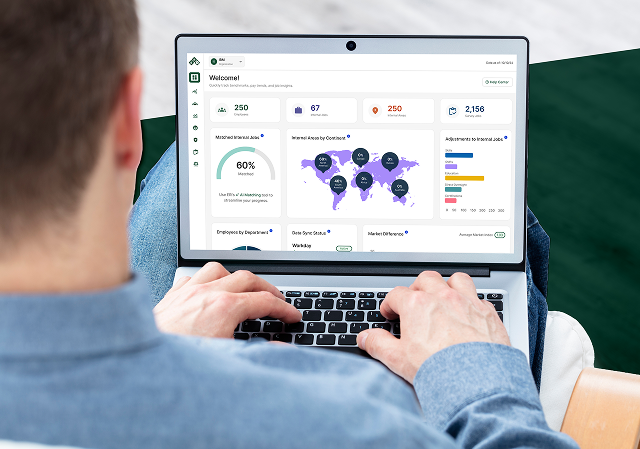
Retail and apparel job titles can vary widely between brands, even when responsibilities are similar. Use ERI’s AI Job Matching tool to match roles based on job responsibilities rather than title alone and identify more relevant market benchmarks. For hybrid or specialized positions, create custom jobs by combining and weighing multiple roles to better reflect the work performed.

Plan, Manage & Communicate Compensation
Use ERI’s Compensation Management tools to organize employee pay, plan salary increases, get alerts on minimum wage updates, manage pay structures across stores, distribution centers, and corporate teams. Review total rewards and communicate compensation decisions with clearer visibility across the retail and apparel workforce.

Don't Let Your Compensation Strategy Go Out of Style
Built for Every Team Behind the Retail & Apparel Brand

Compliance and Legal

Human Resources

Talent Acquisition

Finance & Leadership
Feature Highlights


Retail & Apparel Survey Job Titles
- Retail Sales Associate
- Cashier
- Customer Service Representative
- Department Supervisor
- Assistant Store Manager
- Store Manager
- District Manager
- Regional Manager
- Loss Prevention Specialist
- Retail Operations Manager
- Director of Retail Operations
- Vice President of Retail Operations
- Visual Merchandiser
- Visual Merchandising Coordinator
- Visual Merchandising Manager
- Manager National Visual Merchandising
- Merchandise Assistant
- Merchandise Coordinator
- Merchandise Analyst
- Merchandise Planner
- Inventory Planner
- Assistant Buyer
- Buyer
- Apparel Merchant
- Apparel Merchandiser
- Fashion Merchandiser
- Merchandise Manager
- Head of Merchandise Planning & Allocation
- GMM/Head of Merchandise Buying
- Vice President Merchandising Planning
- Vice President Merchandising
- Chief Merchandising Officer
- Fashion Designer
- Apparel Designer
- Product Developer
- Sourcing Specialist
- E-Commerce Specialist
- E-Commerce Manager
- E-Commerce Product Manager
- Web Merchandiser
- Digital Marketing Specialist
- Digital Marketing Manager
- Social Media Manager
- CRM Manager
- Customer Experience Manager
- Marketing Manager
- Data Analyst
- Warehouse Associate
- Fulfillment Associate
- Inventory Control Specialist
- Distribution Center Supervisor
- Distribution Center Manager
- Logistics Coordinator
- Logistics Manager
- Supply Chain Analyst
- Supply Chain Manager
- Human Resources Manager
- Compensation Analyst
- Financial Analyst
- Accountant
Retail and Apparel Compensation FAQs
How is compensation typically determined in the retail industry? 

Retail compensation should reflect the role, location, and labor market. ERI helps compensation teams benchmark retail and apparel jobs using relevant market data and internal pay structures. This gives teams a clearer basis for setting pay consistently across the organization.
How should retailers set pay for seasonal employees?
Seasonal pay should reflect the competitive labor market for the job and location during the hiring period. Retailers should consider local wages, hiring demand, job responsibilities, shift requirements, and internal equity with existing employees. ERI can help benchmark seasonal roles by market and apply shift differentials where work schedules warrant additional pay.
How can ERI help retail organizations with pay equity, pay transparency and compensation compliance?
ERI helps retail organizations manage pay equity, pay transparency, and compensation compliance across their workforce. Teams can review minimum wage requirements by location and evaluate FLSA classifications. They can also analyze employee compensation and identify employees who fall outside assigned pay grades.
How should retailers account for geographic differences when setting pay across multiple locations?
Retailers operating in multiple locations should consider the cost of labor in each market rather than applying the same wage across locations. Compensation teams can compare market pay between locations and establish geographic differentials, pay zones, or location-specific salary ranges for stores, distribution centers, corporate offices, and remote employees.
Can ERI benchmark both store-level and corporate retail positions?
Yes. Retail organizations can use ERI to benchmark positions across store operations, merchandising, e-commerce, distribution, supply chain, finance, HR, marketing, technology, executive leadership, and more. Compensation teams can use our AI Job Matching tool or create custom niche roles based on responsibilities to benchmark with precision across the whole organization.
Why use ERI for retail and apparel compensation benchmarking?
ERI helps compensation teams benchmark a wide range of retail and apparel roles using retail salary data, geographic differentials, and job-specific adjustments in one platform. Teams can compare pay across stores, distribution centers, e-commerce operations, and corporate offices while building compensation structures that reflect their organization and workforce.