Looking to Benchmark Pay?
Maturity Curves
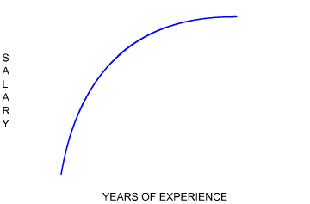
Maturity curves, also known as career curves, are descriptive techniques often used for projecting compensation progression correlating with years of experience. They plot salary (on the y-axis) against years of experience (on the x-axis).
As an analytical tool for surveys, maturity curves allow a grouping (similar to grading) to define the average expected rate of pay. Maturity curves are important in salary surveys because "time on the job" has a great impact on pay, particularly for technical professions such as scientists and engineers and also for sales professionals. The figure below illustrates a typical maturity curve:
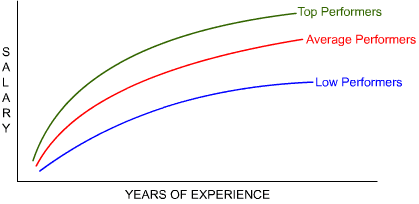
Example of a maturity curve
You have been asked to construct a maturity curve from the following data:
| Years of Experience | Salary ($) |
|---|---|
| 0 | 24,000 |
| 5 | 40,000 |
| 10 | 52,000 |
| 15 | 60,000 |
| 20 | 56,000 |
| 25 | 52,000 |
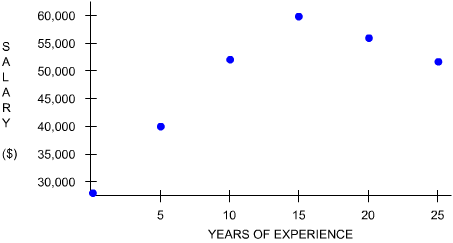
The data above reveals a downward–sloping maturity curve. This should be reviewed, as some profession's maturity curves do flatten and then move downward as an individual is ever further removed from newer contemporary industry knowledge. For example, an engineer's worth to a company may decrease as the individual's knowledge and skill set becomes 'stale'. It’s important to analyze whether this salary trend is due to professional stagnation or unintended compensation decisions that demonstrate potential age discrimination.
Memory Jogger
What can you infer from the following maturity curve of earnings in your field?