FLSA

FLSA and Job Analysis

Originally posted on 2/25/16 and updated on 7/26/16

In the U.S., the Department of Labor has recently amended the Fair Labor Standards Act (FLSA), increasing labor costs, particularly for service industry sectors.  The changes may require any employees earning less than $913 per week ($47,476 annually) to be paid overtime once the standard workweek hours are exceeded.  At ERI, we are helping organizations navigate FLSA minimum wage laws and job analysis requirements by providing technology and compensation analytics to holistically evaluate the business impact on job classifications and labor costs.

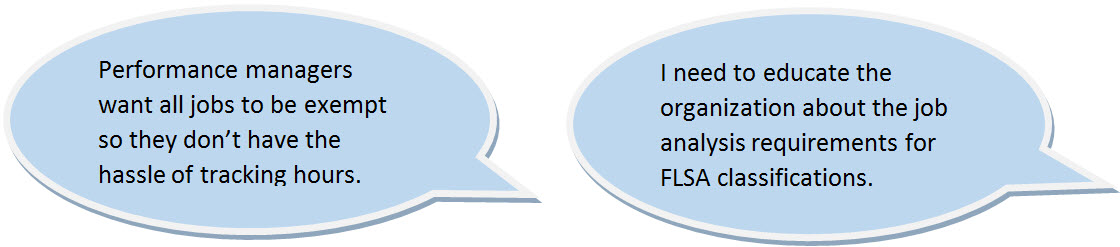
Consider some issues expressed by HR leaders on these matters:

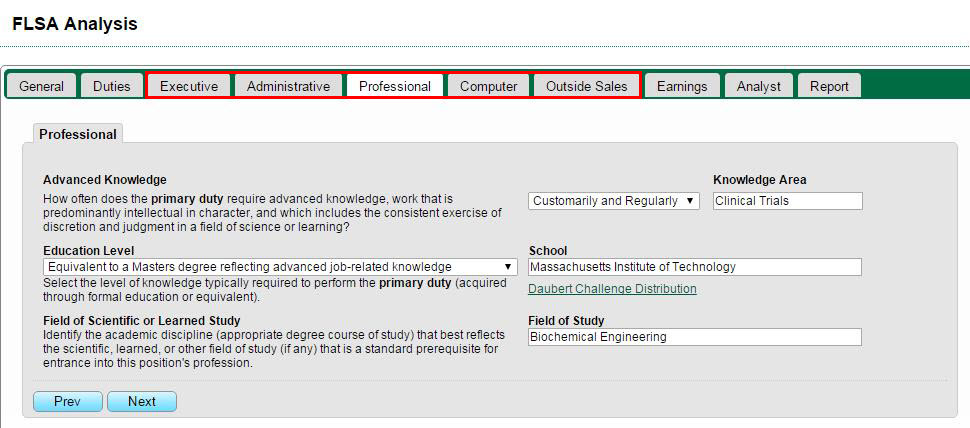
The complexity of FLSA is associated with overtime pay that requires job analysis of actual responsibilities performed, minimum wage, salary thresholds, record keeping (tied to a standard workweek), and regulatory variations at the federal/state/city-level. From an organizational development and job classification perspective, having job analysis software specifically mapped to FLSA regulations can be invaluable.  ERI’s Occupational Assessor (OA) is helping HR business partners and OD experts document and reasonably predict FLSA classifications based on their knowledge of the job relative to each criterion for the exemption tests.  The benefit of the OA is selecting a job match from over 6,000 job descriptions already analyzed by ERI industrial psychology PhD staff, as well as conducting analysis for jobs that cannot be matched with benchmark job descriptions.  Below is a series of screen shots from ERI’s Occupational Assessor FLSA Analysis tool:

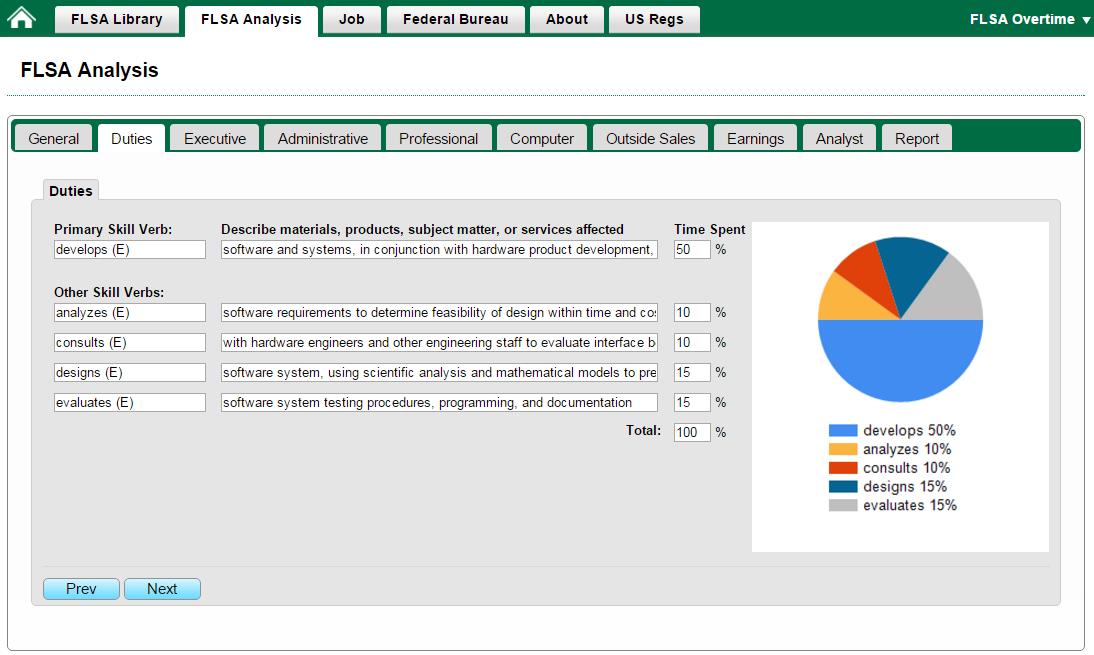
Duties Tab – The Duties tab summarizes primary and secondary job responsibilities based on the job analyst’s knowledge of the job duties.  Some states may have bright line tests with specific percent of duties thresholds (e.g., California at 50% exemption duties requirement).  The Duties tab is designed to evaluate the percent of duties relative to the whole job.

Professional Tab – The Professional exemption test is one of the five exemptions that precludes an employer from having to pay overtime wages.  The Professional test requires the job to be assessed in terms of advanced knowledge, education level, and scientific and learned study requirements.  All three specific criteria must be present (actually performed) in the job.  Similar assessments for Executive, Administrative, Computer, and Outside Sales can be evaluated in the respective OA tabs.  Some jobs may pass more than one exemption.

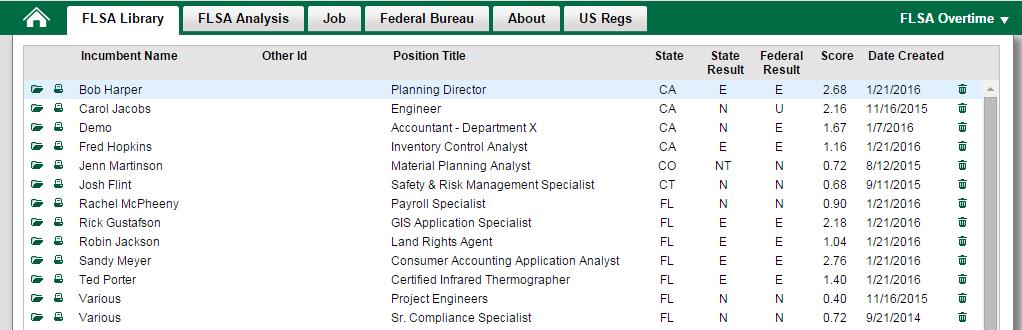
FLSA Library Tab – This tab provides centralized, secure access of job analyses and resultant FLSA classifications.  When business operations change that significantly affect job duties, you can easily review related job content and easily update the job duties in OA and evaluate the impact (if any) on the FLSA classification.

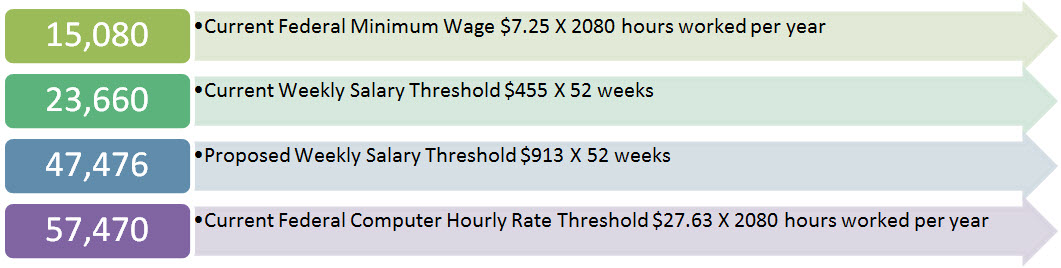
In light of the new legislation, another important part of this assessment is from a labor cost perspective.  It is important to evaluate the business impact of the salary threshold increase to $913/week, particularly on exempt employees currently making less than that.  Consider some of these key annualized labor costs to incorporate into your analysis:

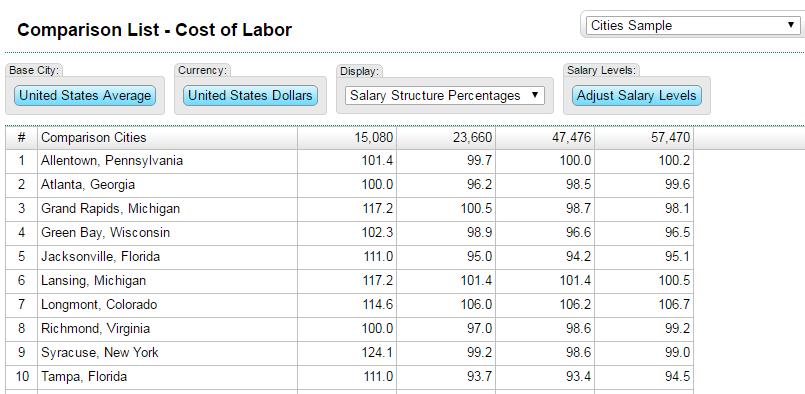
Another compensation analytics tool is ERI’s Geographic Assessor (GA), which provides geographic labor differentials that can be customized to the user defined labor costs.  For purposes of the new FLSA salary threshold change, let’s analyze the geographic differentials relative to the four annualized labor costs mentioned above by adjusting the salary levels.  Typically, the salary level represents the salary midpoints of organization’s compensation structure.   Below is a Comparison List of cost of labor differentials for 10 cities.

Geographic Assessor – The Comparison List includes adjusted salary levels as follows:

Some insight HR leaders gain from this GA Comparison List table follow:

  • For operations in Atlanta, GA, you will lose the competitive advantage of geographic labor differentials if the federal requirement increases to $47,476.  Atlanta is currently 96.2% of the US Average.
  • Syracuse, NY, has the highest state-level minimum wage, which is currently 24.1% about the federal rate (e.g., $9.00/hour versus $7.25/hour).
  • Allentown, PA, has the least variation in labor differential in the location across all job levels.  The differentials range from 99.7% to 101.4% of the US Average.

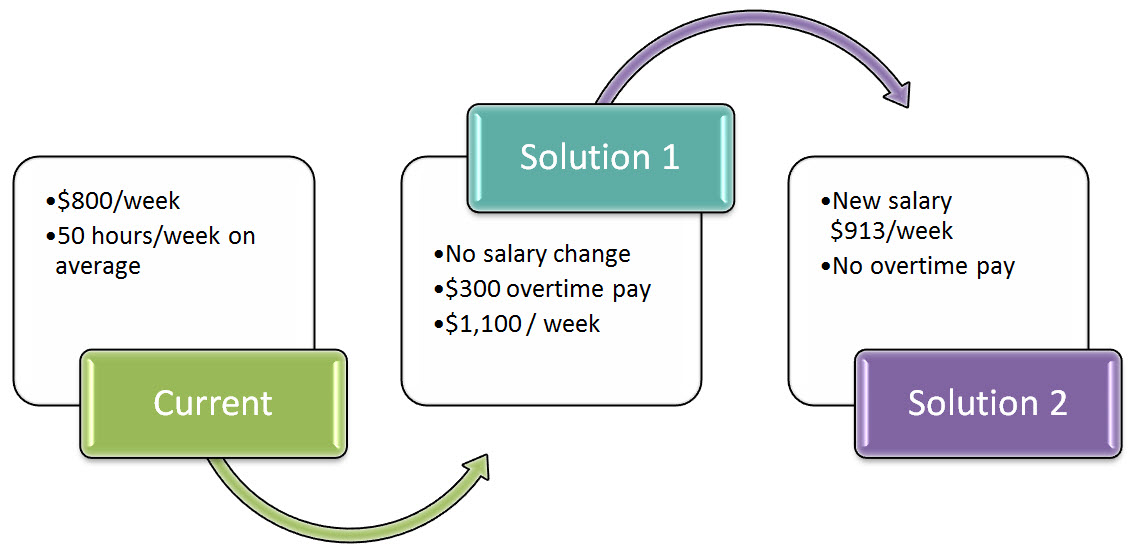
Internally the labor costs analysis will focus on those exempt jobs currently paid less than $913 and review of historical records for their actual hours worked, calculating overtime pay with current salary compared to no overtime with a new threshold:

Although Solution 1 may seem like a win for the employee, from an employee relations perspective, having to revert back to tracking and reporting hours work versus taking ownership of results and self-managing hours will likely have more of a negative effect on employee satisfaction.  Whereas, in Solution 2, increasing the salary to new threshold will result in high pay level yet still have the employee performing the same job with the same level of commitment and motivation as a manager.

Summary

Organizations, especially service industries, have business models that are sensitive to internal and external factors that affect labor costs.  The new FLSA salary threshold of $913/week is more than double the current $455/week requirement.  Evaluate the implications of adjusting the salary levels and changing the FLSA classifications for the jobs from a financial impact, as well as organization development perspective.  For more information about FLSA job analysis and related technology solutions, call our “best in class” service team at or visit www.erieri.com.

ERI Economic Research Institute compiles the most robust salary, cost-of-living, and executive compensation survey data available, with current market data for more than 1,000 industry sectors.

ERI’s Assessor Series® – Solutions for every compensation decision

Try a FREE Demo Request a Guided Tour

Any Action on the ACT Recommendations?

This year’s report of the Exempt Organizations (EO) Subcommittee of the IRS Advisory Committee on Tax Exempt and Government Entities (ACT) focused on planning for the future, which it predicted will not be positive unless its recommended changes are implemented. The full report also included the results of the sector-wide survey of Form 990 data users and filers.

Some critical factors were highlighted by IRS stakeholders — dwindling resources, declining budgets, loss of historic knowledge and personnel, and antiquated technological platforms. For example, the EO has experienced flat or declining budgets over the last three years and the loss of 100 employees. With fewer staff, the percentage of exempt organization returns subject to audit is now about 0.4 percent. And of course, fewer staff also means that there is less expertise available to address questions and issues related to EO tax administration. This situation certainly contributes to the widely held view that the IRS is not able to regulate the tax-exempt community consistently and effectively.

Some of the ACT recommendations are obvious (better training for EO staff; leadership and guidance on major issues impacting the sector; improved communication between EO and nonprofits) and don’t require any reaction, but there are two that merit more discussion:

Release of Information on Compliance Audits 

The ACT recommended that the EO release more information about compliance problems raised in audits — non-identifiable audit information, not return information specific to tax payers. This would include:

  • the number and type of organizations reviewed (but not the specific identities of audited institutions), not just the aggregate number of returns;
  • the most frequently occurring issues that result in tax assessment and penalties; and
  • the outcomes (Did the audit result in a modification of exempt status? Was tax-exempt status revoked? What is the average tax assessment per return examined and per organization examined?)

These data on the type and frequency of specific areas of noncompliance and the impact of the investigations on the organizations could actually help improve compliance and work to create a more self-sufficient sector. This is in addition to the obvious deterrent effect. Publicity is always an effective compliance tool. It also can reassure those who donate money to charities that there really is some ongoing and effective oversight of the sector by the EO.

Release of Form 990 Data in a Usable Format

The ACT recommended that:

“The IRS Exempt Organizations Division should encourage and support a Congressional mandate to require electronic filing of the Form 990 series and should also take interim steps to encourage and provide incentives for voluntary e-filing of the Form 990 series for exempt organizations that are not subject to the mandatory e-filing requirements. The IRS should recommend to the Department of Treasury the elimination of the $10 million asset threshold for electronic filing of the Form 990 found in the Internal Revenue Code Section 6011 regulations.“

In June 2016, the IRS began posting e-filed Forms 990 in the public domain in digitized format. Users of these data, including ERI, are in the process of analyzing how best to access and incorporate this newly available information. At the moment, this piecemeal approach to the data provision makes using Form 990 data a challenge. Mandatory e-filing would greatly improve the data availability for the sector, if all the e-filed data are then available in a usable format.

Bottom Line

The ACT Committee reports each year and makes recommendations, and this year’s report contains few surprises. With trust in the agencies responsible for compliance with the charitable rules and regulations at an all-time low, hopefully more attention will be paid. When budgets are cut and resources are scarce, making more data available at least aids in the efforts of the EO and IRS to remain credible overseers of the nonprofit sector.

Nonprofits React to New OT Regulations

The new regulation from the Department of Labor that expands overtime (OT) benefits to full-time, salaried employees who make up to $47,476 a year has sparked lots of discussion in the nonprofit sector.  As of December 1, 2016, those who work more than 40 hours per week must be paid 1.5 times their hourly rate unless they meet all of the following criteria:

  • Must be white-collar professionals as opposed to manual laborers, administrative support staff, or service workers.
  • Must be paid a salary, not an hourly wage.
  • Must earn at least $47,476 annually, up from the current federal salary threshold of $23,660.

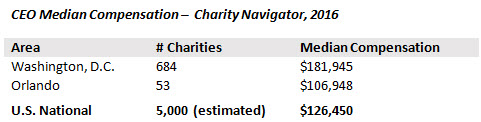
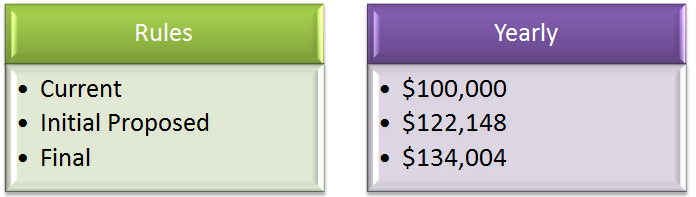
Thus, to avoid paying overtime wages, a nonprofit covered by the Fair Labor Standards Act (FLSA) will have to either limit salaried employees who make less than the threshold to 40-hour work weeks or raise their pay above $47,476 per year.  The rule also raises the salary ceiling for so-called “Highly Compensated Employees” — those exempt from overtime pay — from $100,000 to $134,000 annually. Many high-level managers at nonprofits fall into this category, according to the Department of Labor and ERI’s data, as reported on the Forms 990.

The new rules don’t affect hourly employees, who remain eligible for overtime pay if they work more than 40 hours a week.

Not All Charities Included

The Department of Labor prepared information to help charities impacted by the new regulations. In general, the organization must have annual revenues of at least $500,000 from “commercial activities” (income used for charitable activities does not count) to be covered by FLSA.  However, even if a nonprofit is not covered by the law, an individual employee may be covered if he or she engages in interstate commerce on the job.  That includes making out-of-state phone calls, sending interstate mail and email, and processing credit card transactions, duties that are included in most jobs these days.

Not only will nonprofits need to keep more accurate time records, they will also have to deal with potential increases in personnel expense which may not be budgeted in ongoing contracts.  In fact, the Department of Labor noted in a fact sheet that it is encouraging government and private grant makers to consider how the new rules will affect nonprofit grantees.

Nonprofit Reaction

Some have hailed the new regulation as great news for the very people the sector is supposed to help — for example, that assistant manager at the fast food restaurant will either receive a higher salary or be able to go home sooner. It could lead to more regular schedules because there is an incentive to avoid making a worker stay a little late.

On the other hand, many charity leaders have expressed concern about being able to maintain their programs – hours might be limited and waiting lists longer, as grant and contract money might need to be used for employee wages and salaries as the new regulations are implemented.

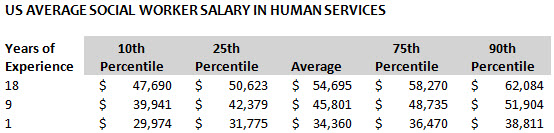
First, ERI’s Salary Assessor is used to show the impact of the new $47,476 threshold.  For example, a job typically considered professional, such as social worker, which meets the duties tests for exemption from overtime, must also earn a salary above the salary threshold. The table below lists the average salary for social workers in Human Services (many working for nonprofit organizations).  This is a job, particularly at the entry level, which might be impacted by the new regulation.

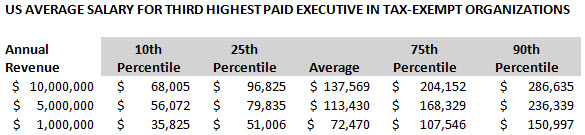
Second, ERI’s Nonprofit Comparables Assessor is based on data reported on the Form 990 and used to review annual salaries that may be affected by the new rule raising the salary ceiling for so-called “Highly Compensated Employees” — those exempt from overtime pay — from $100,000 to $134,000 annually. The table below lists the average salaries for the third highest paid employee in data submitted on Form 990 by all US tax-exempt organizations.  Typically, these would be considered highly compensated and thus exempt from overtime.  It is clear, however, that many of these salaries are way below $134,000, particularly in smaller organizations.

The bottom line – nonprofits should now review current salaries and the job responsibilities in light of the official guidance on FLSA prepared by the DOL (see information).  There may be some hard decisions ahead about the available options — increasing salaries, reclassifying jobs as nonexempt, paying more overtime, or just limiting the use of overtime to remain in compliance and within budget

Compensation Benchmarking at Global Conglomerates

Compensation Benchmarking at Global Conglomerates

A global, diversified, conglomerate company is characterized as being a business entity with several combined operating units having distinctly different businesses that fall under one corporate group.  Sometimes these organizations are structured as holding companies with many subsidiaries operating in multi-industry and multinational business contexts.  From a compensation perspective, the total rewards philosophy and any equity compensation programs will be closely managed at the corporate level.  Compensation benchmarking needs requiring access to many industry-specific data sets across international areas may often be decentralized at the subsidiary or business level.  Alternatively, benchmarking may be consolidated in shared services centers of excellence with compensation experts responding to the needs of business units.

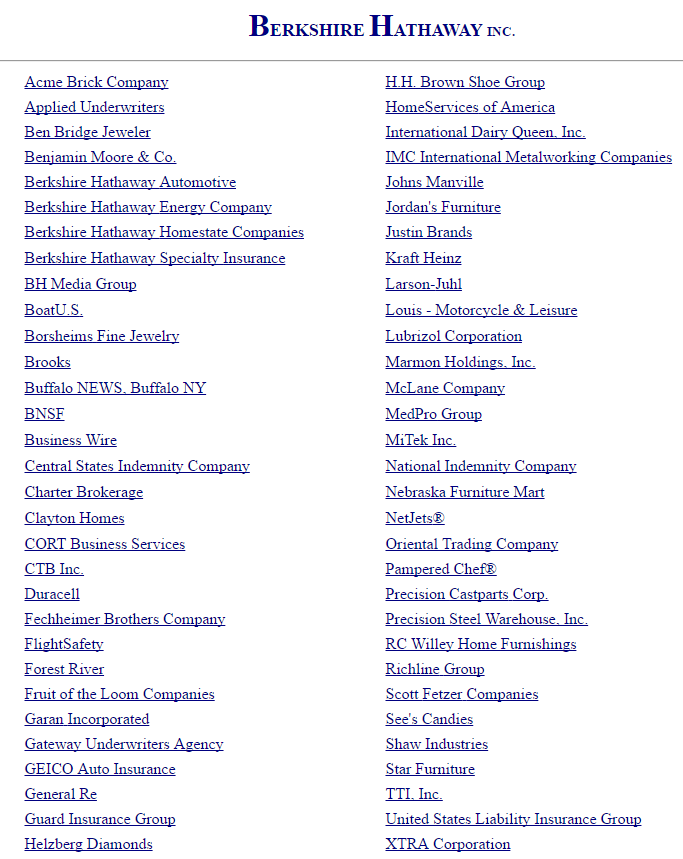
ERI’s Salary Assessor and Geographic Assessor are “go-to” compensation benchmarking tools for global, total rewards leaders, providing compensation solutions that are competitive and aligned with longer term total reward strategies for global conglomerate companies like Berkshire Hathaway, Koch Industries, GE, and The Walt Disney Company.  Let’s continue this discussion, taking a closer look at Berkshire Hathaway.  Below is the list of Berkshire Hathaway companies from the company website:

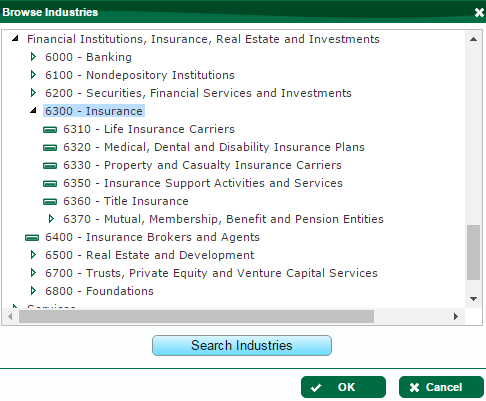
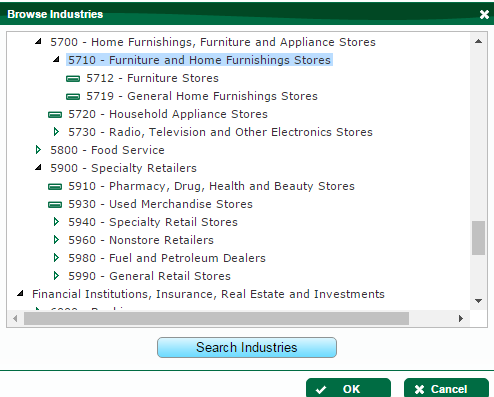
Berkshire Hathaway operates businesses in brick and steel manufacturing; jewelry, furniture, and chocolate retail (durable and non-durable goods); and the insurance sector, to name a few.  A total rewards leader will need many industry-specific cuts of data and must be able to access data for various geographic areas to meet the compensation benchmarking needs of a company like Berkshire Hathaway.  Having the right industry data requires evaluating and selecting industry data sets that are most appropriate for your benchmarking needs.  Generally, it is important to select an industry sector that will have a reasonable sample size to have confidence that data is valid and to ensure that the job matches are reliable.  Let’s take a look at the degree of industry specificity available in ERI’s Salary Assessor using the Berkshire Hathaway example.  Below are industry selection menus for manufacturing, financial services, and retail:

The brick manufacturing and related industry data are part of the concrete products manufacturing sector.  Included in the brick industry are also block manufacturing companies.  Notice there is a separate cement and concrete material production (e.g., the raw material for the manufacturing process).  The insurance sector has several industries with very distinct labor markets, namely life, medical/dental/disability, property and casualty, and title insurance.  The retail sector has many broad and niche industries.  For retail furniture, there are two shown: furniture stores and home furnishings.

In addition to industry diversification at global conglomerates, there are numerous operating business units across various geographic locations.  Getting geographic-specific labor market data is important, especially for strategic decisions to establish a new business in a new location, when labor costs are a key determinant, or when the labor market for external hiring is tied to local labor markets, like operations staff for retail and hospitality industries.

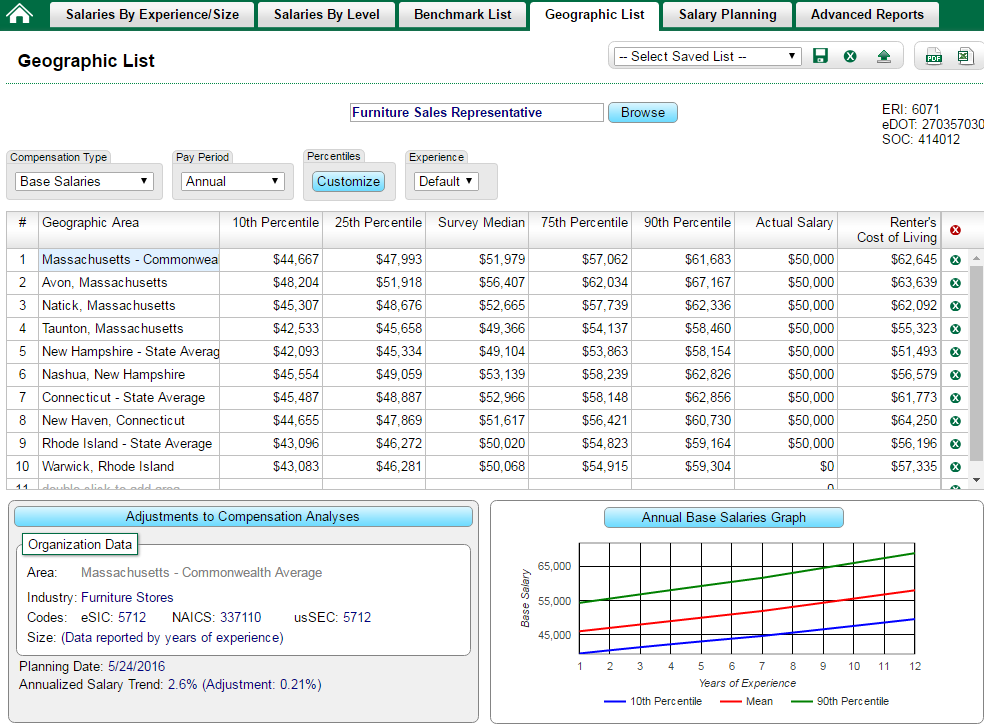
Let’s build on the retail furniture industry example and look at locations for Berkshire Hathaway’s subsidiary, Jordan’s Furniture, that includes seven stores in the U.S. Northeast, covering Massachusetts, New Hampshire, Connecticut, and Rhode Island. We will benchmark data for Furniture Sales Representative.

In this example, we have created a list of geographic areas which includes the state average and the specific city or town of the store locations.  From this type of benchmark analysis, you can draw a number of meaningful insights:

  • Labor cost in Avon, Massachusetts, is the highest across all locations.  Your leadership will find it helpful to understand this differential relative to profit margins and cost of sales.
  • Although Connecticut on a statewide basis will generally have higher labor costs than Massachusetts, New Hampshire, and Rhode Island, the labor costs for the New Haven, Connecticut, location is lower than the Nashua, Avon, and Natick locations.

Most conglomerates have a long-term approach to their business strategies and will invest to establish a sustainable market presence and leadership in the different industry sectors in which they compete.  The other unique attribute for most global conglomerates is their strong internal labor markets.  This means that most of the external hiring will be for entry-level employees, which in turn are trained and developed to establish an internal labor market pool of qualified candidates for future staffing needs.  Their total rewards programs will generally be above-market, with  financial rewards like long-term incentives, equity, non-qualified deferred compensation, and retirement plans.  Whereas their cash compensation will generally be market average unless they are establishing presence in a new market and externally recruiting thought leaders or “heavy hitters.”  Non-financial rewards may include continuous learning, career growth, and international assignments.  With this type of total rewards philosophy, global conglomerates will generally benchmark cash compensation to ensure they remain competitive relative to the market average.

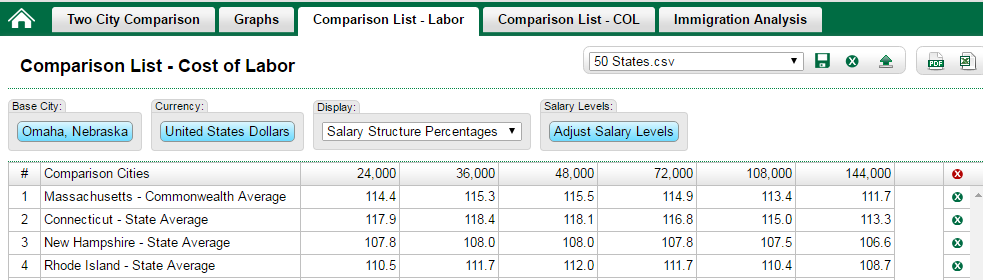
Companies with internal labor markets make significant investments in their employees’ training and development and want to minimize employee turnover.  In order to keep a pulse on the competitive pay levels that affect your organization, it is important to develop compensation benchmark reports that are reviewed on a consistent and periodic basis.  One type of report that will help with the periodic review of compensation structures is a comparison of salary level midpoints and labor market differentials.  Let’s continue this topic building on the Berkshire Hathaway example.

The above analysis shows the salary structure percent differentials for four states relative to Omaha, Nebraska, as the base city for comparison (since it is the location of Berkshire Hathaway’s corporate headquarters).  Reviewing this report on a recurring basis with real-time data can invaluable.  The more competitive the business environment, the more frequently you want to monitor the labor market pay levels.  This type of report can be generated and reviewed on a quarterly basis with updated geographic differentials for specific labor markets.

HR leaders in global conglomerates manage HR programs that heavily invest in talent.  The total rewards programs for these companies are more comprehensive, having both financial and non-financial programs.  Compensation benchmarking in global, conglomerate organizations requires industry-specific survey data that cover many geographic locations.   ERI’s compensation analytic solutions are invaluable salary benchmarking tools for HR and total rewards leaders.  ERI’s Salary Assessor and Geographic Assessor provide access to over 1,200 industries and over 8,000 cities.  For more information about industry-specific survey data for the various geographic locations where you have operating businesses, call us today at (800) 627 3697, and one of our best in class service team members will assist you.

Average Foundation CEO Pay Increases – Useful Data or Not?

According to an article in the Chronicle of Philanthropy, the latest Council on Foundations survey found that salaries for staff members increased 8% from 2011 to 2015, just slightly more than inflation.  However, a further breakout of that median increase revealed that salaries for program officers rose only 2%, while those for foundation CEOs rose 14% over those 4 years.  The new study calculated the rates of increase using responses from 460 foundations that responded to prior surveys.   The complete report is available from the Council on Foundations, but unless you are a COF member, it will cost you $359.

Here are a few key findings:

  • The median salary for foundation chief executives was $166,000 in 2015. For program officers, it was $85,000.
  • The type of foundation matters – family foundations reported the highest median staff compensation and community foundations the lowest.
  • Most foundations in the survey (88%) increased salaries in 2014, and almost 80% planned increases in 2015.
  • About 59% of CEOs were 50 to 64 years old and 19% were older.

At least one conclusion can be drawn from these data – there are changes in CEOs coming, judging from the ages of the current foundation leaders.  And when the time comes to set salaries for those new leaders, detailed data will be necessary to set market rate salaries that will meet IRS requirements and provide justification to those who care about the foundation.

The factors that influence compensation levels for nonprofits typically include type of nonprofit (e.g., grant making foundation, human service provider, art museum) and size (typically annual revenues for charities, but assets in the foundation world).  Geography can also be an influence – for example, are the other organizations competing for this talent at a local, statewide, or national level?

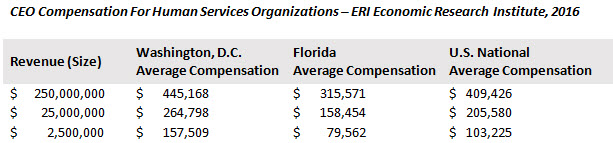
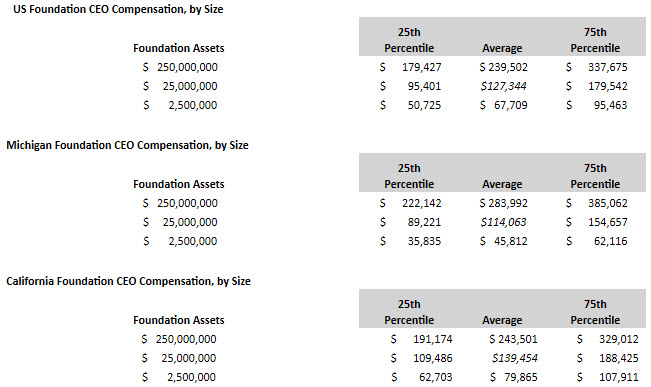
To illustrate, ERI’s Nonprofit Comparables Assessor has been used to calculate average compensation (plus the 25th and 75th percentile to indicate the range) reported on Forms 990 PF by all foundations, shown below.  The table lists average CEO salaries for small ($2.5 million in assets), medium ($25 million in assets), and large ($250 million in assets).  The data reveal that the average compensation varies widely by size of foundation, but there is also a geographic difference.  Compare the average US foundation CEO salaries for similar-sized organizations with those at foundations based in California and in Michigan.

The conclusion is clear – only using detailed criteria to select comparable organizations will yield the data necessary to determine and document the market rates for a foundation CEO.  ERI’s  Nonprofit Comparables Assessor easily provides the necessary detail (actual Form 990 data for all organizations that meet the selected criteria) that is needed to make sure that compensation is reasonable.  Using a compensation average that may include foundations of different types and of different sizes and in different geographic locations is just not specific enough – and average increases are even less useful. See my October 2015 blog if you want to know more on that subject!

Collect and use the data that IRS wants used – it leads to fewer problems from charity regulators and fewer questions from the media, funders, and charity watchdogs, and even the foundation CEOs themselves!

New 2016 FLSA Rules Are Effective December 1, 2016

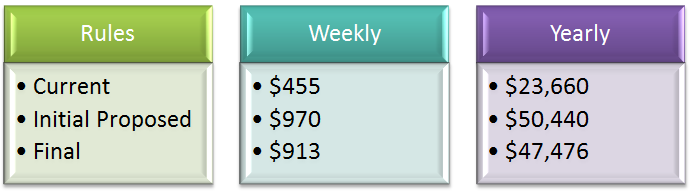
The final Fair Labor Standard Act (FLSA) rule changes were published this week and go into effect December 1, 2016.  ERI has been following these developments from the onset.  The new rules modify the definitions of white collar workers, expanding coverage of FLSA’s minimum wage and overtime standards, introduce automatic increases to the federal salary and annual compensation thresholds, as well as provide guidance on inclusion of variable cash payments in meeting the salary thresholds.  The Department of Labor estimates the compensation for 4 million workers will be impacted by these changes.

Let’s take a look at these highly anticipated final rules and highlight how they are different from current and initially proposed rules.

Standard Salary Threshold

The standard threshold has doubled to $913 week, or $47,476 on a yearly basis, anchored to the lowest-wage Census Region, currently the South.  This number represents the 40th percentile earnings of full-time salaried workers.  The initial proposal anchored the standard salary threshold to the national level, which would have eliminated any advantages for companies in lower cost of labor geographies.  The percentile remained unchanged.

In determining compliance with this standard salary threshold, the final rule also confirmed that employers can include nondiscretionary bonuses and incentive payments (including commissions) to satisfy up to 10 percent of the new standard salary level.  This refers to “metric-specific” or pay- for-performance incentive plans, which most organization are now incorporating into their total rewards programs.

Annual Compensation Threshold

The highly compensated employees (HCE) total annual compensation remains anchored to the national full-time salaried workers 90th percentile, which is currently $134,004.  This final provision did not change from the initial proposed rule except the baseline data increase from $122,148 by 9.7%.

Automatic Increases

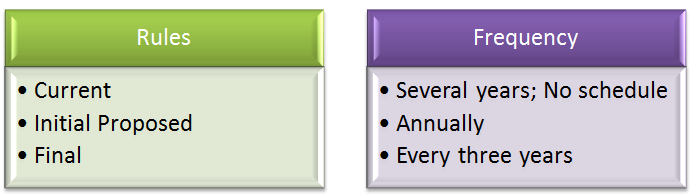
Future automatic updates to the thresholds will now occur every three years, beginning on January 1, 2020.  This provision serves to automatically update to maintain the threshold levels at the 40th percentiles for standard salary and 90th percentile for the total annual compensation of HCEs.  Of the significant changes impacting HR and job analysis, this automatic updating mechanism is the most difficult to incorporate into business planning as the thresholds will be determined by an external agency.  ERI will be working on tools to help you be proactive on this provision.

These changes have significant compensation cost, as well as administrative and organization culture implications.  Here are some additional ERI posts with more helpful insight to FLSA:

FLSA and Job Analysis

Fair Labor Standards Act (FLSA) FAQs

Job Analysis and FLSA Executive Exemption Test

Effective HR leadership requires insightful and proactive solutions that combine internal and external realities coupled with reliable data and tools.  ERI compensation analytic solutions have and continue to be invaluable tools for HR and total rewards leaders in this regard.  ERI’s Occupational Assesor (OA) is an application with job content and rules mapped to FLSA requirements.  For more information about job analysis technology solutions for FLSA, call us today at 1-800-627-3697, and one of our best in class service team members will assist you.


HR leaders

The Role of HR Leaders in Business Integration

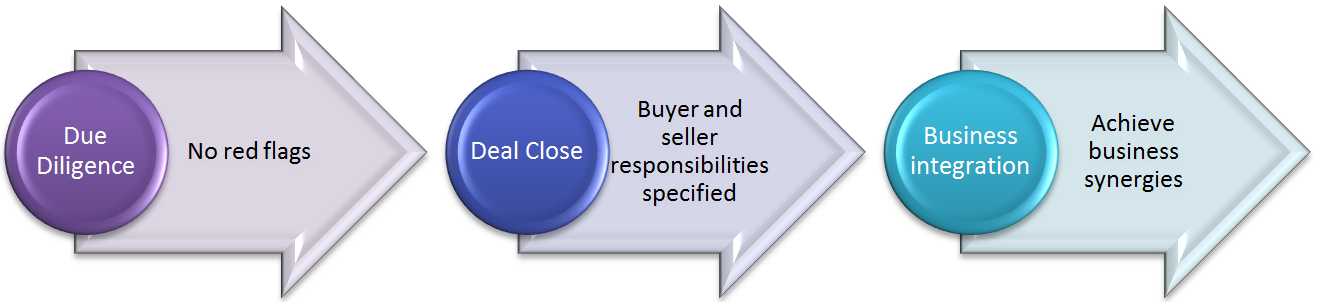
HR leaders manage the human side of business transactions during the due diligence, deal close, and business integration stages.  The strategic questions about how a new business target aligns with business objectives related to growth in new products or services, accessing new geographic markets, and/or recruiting mission- critical talent have already been answered during the research to identify the business target.  During due diligence, the focus is on uncovering any red flags (if any) that may end the discussions for a host of different reasons.  Once there is a definitive agreement signed to pursue the acquisition, the terms of the purchase are detailed with specific buyer and seller responsibilities.  Then the heavy lifting begins with business integration to realize the intended business synergies.

The focus on successful mergers and acquisitions (M&A) transactions have shifted on the need for more effective business integrations.  As HR leaders, the human side includes assessing the caliber of mission critical talent and the similarities and differences of the organization structure and the total rewards.  These HR responsibilities are generally carried out in tandem with cross-functional teams from both sides working together to create a roadmap with timely milestones.

Let’s continue with an example using a recent M&A announcement on May 9, 2016.  The Arizona- based Freeport-McMoRan Inc., entered into a definitive agreement with a Chinese mining-and-processing firm, China Molybdenum Co., Ltd., to sell for $100 million its interests in Freeport Cobalt, including the Kokkola Cobalt Refinery in Finland, which has a large-scale cobalt refinery located in Kokkola, Finland.

As the HR leader with the buyer, China Molybdenum, you want to assess the total rewards programs, understanding the statutory requirements and competitive practices, and then compare those findings to the actual programs at the two organizations.  Some first steps in the total rewards integration with the compensation structures include normalizing the job levels, titles, and associated pay grades.

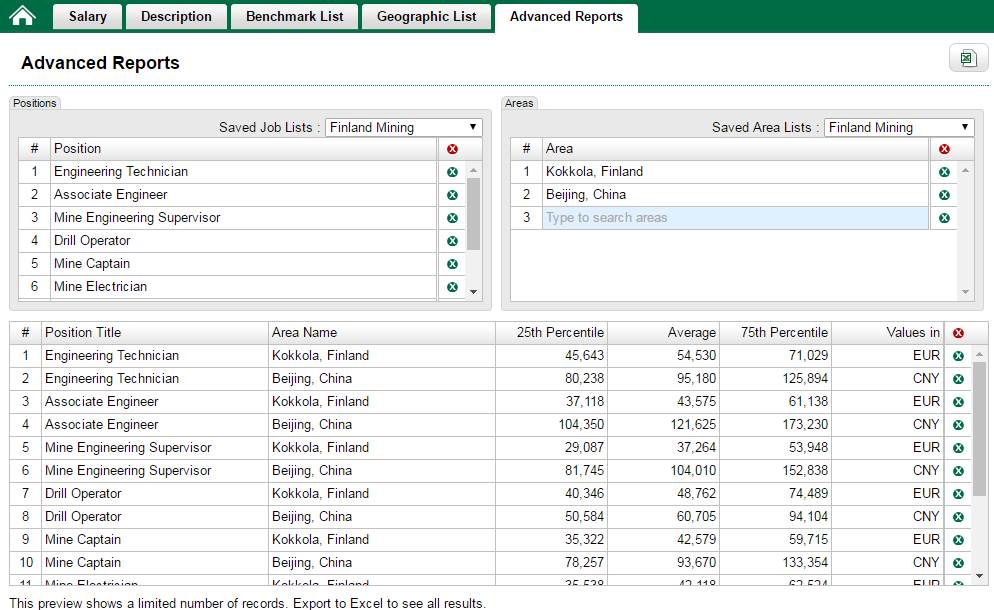
Compensation programs as a point of integration serve to inform both sides of the similarities and differences of functions.  This should be done relative to local practices and the global business strategy by reviewing internal and external data.  The internal data should be available from the HR department HRIS group.  The external market data can be pulled from your market analysis tool by first identifying the benchmark jobs that exist in Finland and setting the geographic locations to create a comprehensive analysis.  Below are examples of the reports and analyses for the compensation levels of various mining job.

ERI’s Global Salary Calculator – Advanced Reports tab

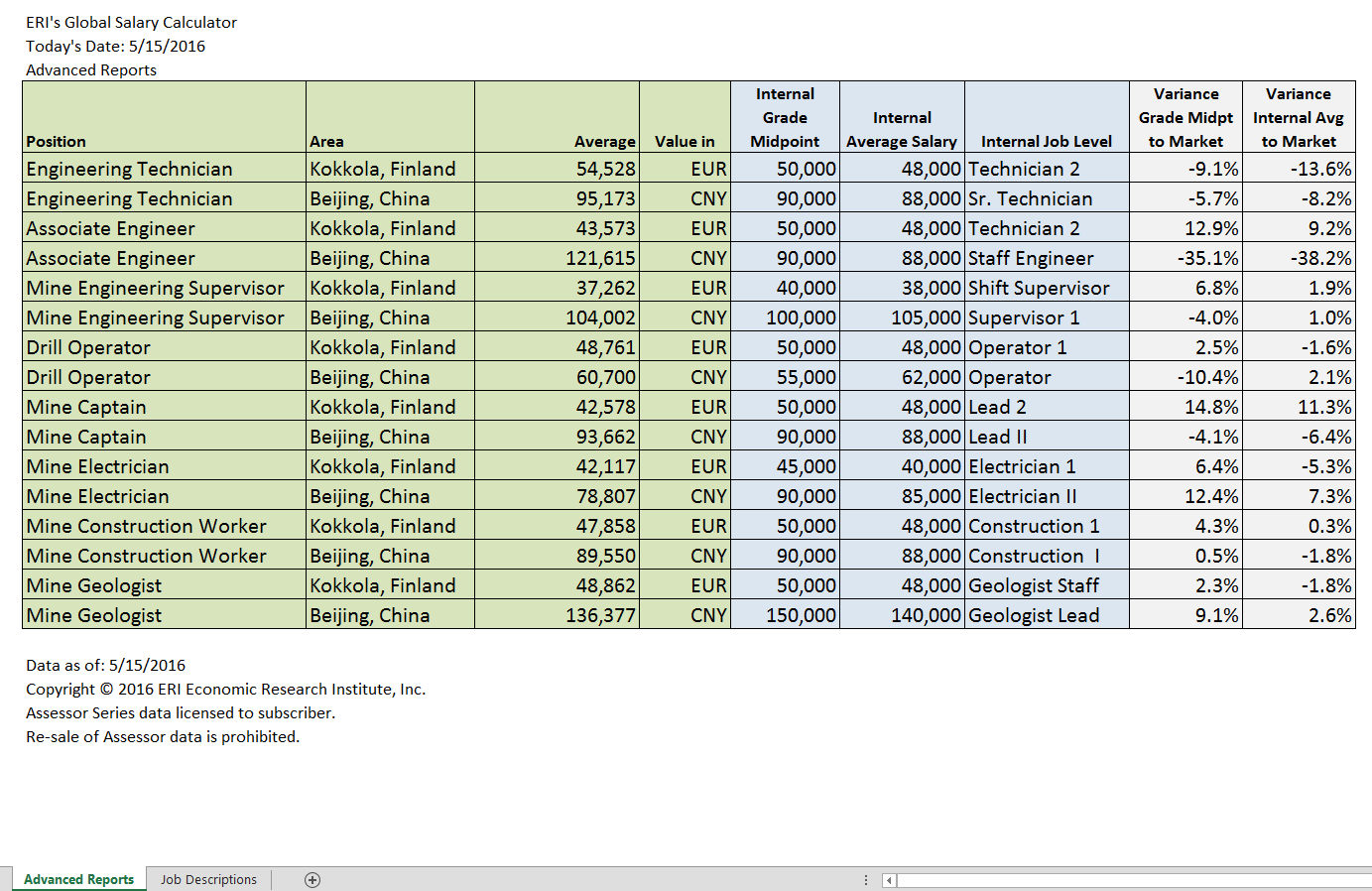
The external data benchmark jobs identified include Engineering Technician, Associate Engineer, Mine Engineering Supervisor, Drill Operator, Mine Captain, Mine Electrician, Mine Construction Worker, and Mine Geologist.  Now you can combine the market data with the internal data to conduct some variance analysis of local differences to the local markets.

By exporting the data to MS Excel, you can compare the actual average salaries of your employees and the salary structure pay grades midpoints relative to market average to determine the degree alignment across the two organizations.  Based on this preliminary analysis, the Associate Engineer benchmarking job matching and results should be reviewed as well as the Mine Electrician.  There may be an internal business reason for these variances or perhaps the jobs were not appropriately matched externally and across the two locations.  Further financial analysis is then conducted by converting the Finland analytics currently in Euros to Chinese Yuan to normalize the overall costs to one currency.

Continuing with this example, Freeport-McMoRan also agreed to sell its stake in an African surface-mining operation in the Congo to China Molybdenum Co., for $2.65 billion in cash, as Freeport looks to pay down debt.  The Congo operations employ about 3,400 full-time workers and 4,200 contractors.   A challenge for some organizations is establishing cohesive work groups integrating the employees from the acquired entity.  Given the size of the operation in Congo, it is likely that China Molybdenum will send a few key business leaders on an expatriate assignment to the Congo in order to manage the newly acquired site and train local leadership on the processes of the new parent company.

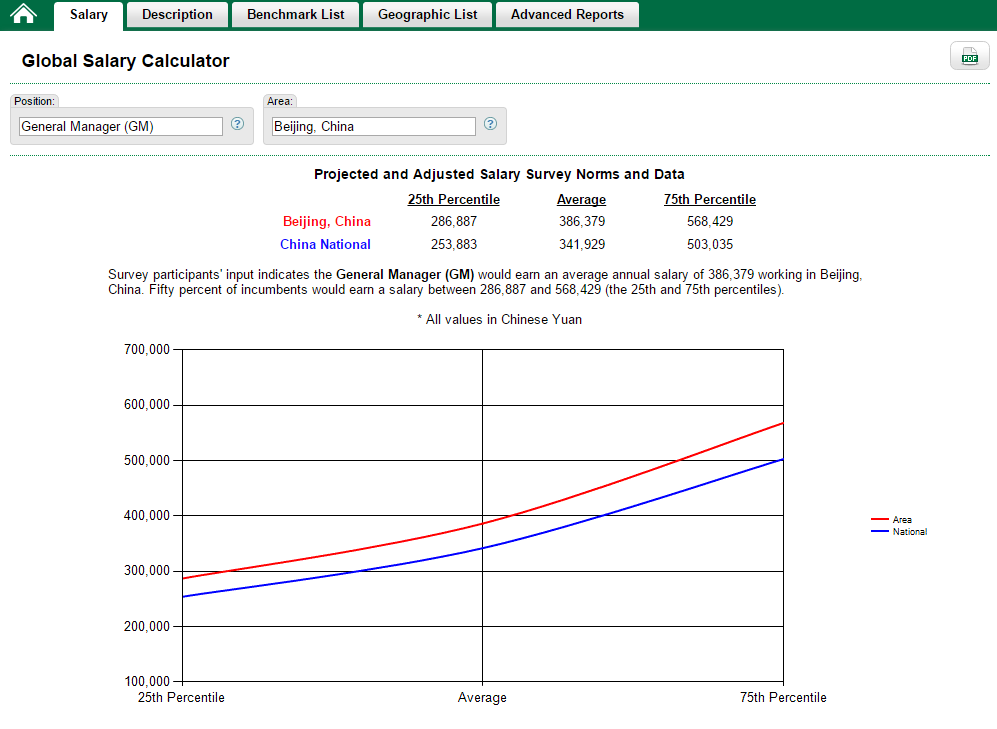
Identifying the right individuals as well as providing a reasonable financial relocation package are essential when initiating an expatriate assignment.   This staffing decision may be a promotional opportunity for the managers identified suitable for the roles.  When a move includes both a promotion and expatriate assignment, it is best to follow a two-step process.  First, determine the promotion and associated compensation increase.  Using ERI’s Global Salary Calculator, let’s benchmark the job of General Manager in China, which will be the new job for promotion.

ERI’s Global Salary Calculator – Salary tab

First, we selected the benchmark job description of General Manager and the location of Beijing China.  This results in the average salary benchmark of 386,379 Chinese Yuan.  This pay level can be used to evaluate the promotional increase associated with the assignment.  Since the individual is likely top talent in the organization, the benchmark also provides the 75th percentile salary benchmark to consider a higher promotional range.   After reviewing this benchmark relative to the current pay level and internal pay ranges, the new salary may be set to 500,000 Chinese Yuan.

After completing the promotion recommendation, the relocation package needs to be evaluated.  Using ERI’s Relocation Assessor, a relocation offer with itemized cost-of-living differences can be analyzed to understand the cost implications for the employees and the organization.  This type of information can be invaluable for the employee.

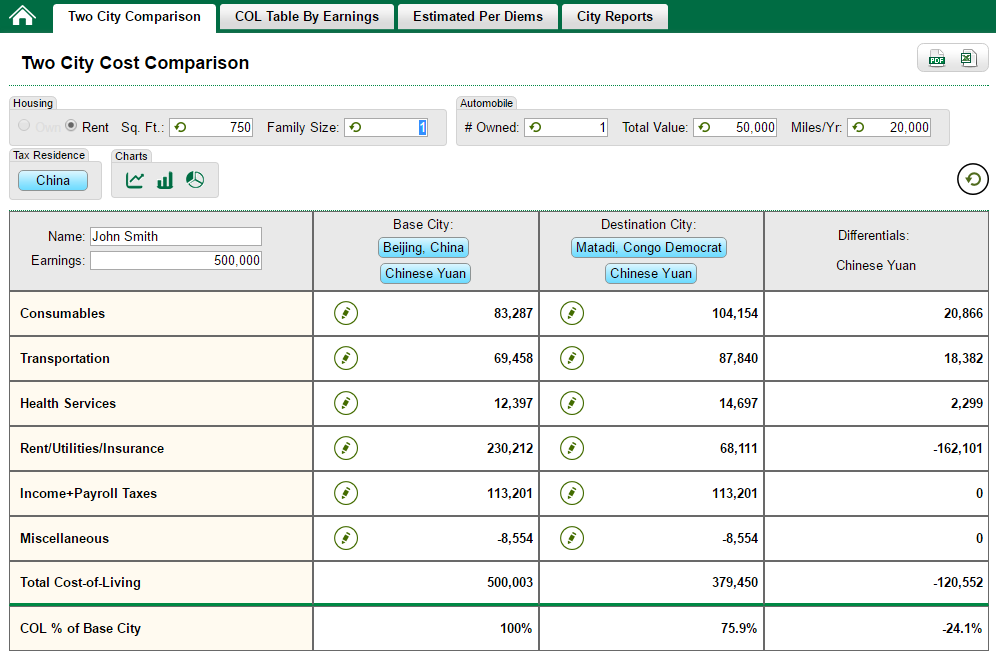
ERI’s Relocation Assessor – Two City Comparison tab

ERI’s Relocation Assessor default assumptions include renter housing expenses, single person family household, 1 car, and “professional” lifestyle spending patterns.  Inputting earnings of 500,000 Chinese Yuan as the earnings level and selecting base city Beijing, China, with a corresponding destination city of Matadi, Congo, the cost of living in the Congo is 24.1% less than in China.  Most of this differential is represented in lower cost in housing in the Congo.  This type of analysis is a helpful starting point to begin discussing the move to the Congo with the respective employees.

For HR leaders of global organizations, the increased complexity of labor market differences coupled with the synergies required to create one combined organization can be challenging.  Executing effective business integration requires having the right resources and tools in place.  Aligning compensation structures and making some immediate staffing decisions to get the right employees in the right role at the right time are essential.  For more information about this topic and compensation benchmarking, call us today at 1-800-627-3697, and one of our best in class service team members will assist you.

Are You an HR Leader Responsible for North America?

Most organizations have North America operations whether corporate headquarters is based in Canada or the U.S.  Understanding the fundamental operating framework of HR management helps to navigate across borders, especially when it comes to total rewards programs. As a baseline of comparison, Canada is organized into 13 provinces, whereas the U.S. has 50 states.  From an HR perspective, compliance is governed at the provincial and state levels with some overarching federal labor regulations.

Another important consideration is the country’s culture or philosophy toward labor relations and the implications on the HR or total rewards programs.  In the U.S., roughly 5% of the overall population are in unions (14.5 million union members in a 319 million population), whereas Canada sees almost 15% of the population in a union (e.g., 4.7 million union member in a 35 million  overall population).  How does this potentially translate to HR programs?

Let’s take a look at health care, which is a significant financial component of total rewards.  In the U.S., health care coverage is still “privately” managed with an entrepreneurial business model, whereas, in Canada, primary health plan coverage is a single payor, federally funded program with a paternalistic business model that is administered and managed at the provincial level.  Canadian companies may choose to pick- up the employee portion of the costs to fund the national health care plan as a competitive practice.  They may also offer supplemental health care plans that fill the gaps not provided by the national plans, such as comprehensive dental coverage.  Notwithstanding countries that have government health care systems, the private sector competitive practices may also follow this Canadian example (e.g., supplemental health care plans) with a similar approach.

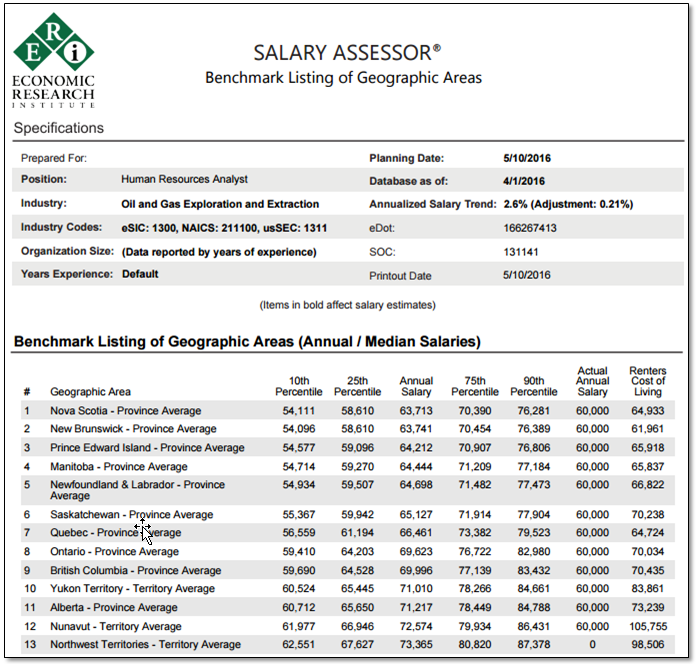
The other area that North America HR leaders need to evaluate concerns the similarities and differences in the labor markets.   Let’s begin by analyzing the compensation differentials in each of the provinces with an example for Human Resources Analyst in the Oil and Gas Exploration and Extraction industry sector.

Source:  ERI’s Salary Assessor

This report displays the 10th, 25th, Annual Median Salary, 75th, and 90th percentile benchmarks.  The data is sorted in ascending order based on the median annual salary values.  By doing so, you determine that the median salary range for this job across the 13 provinces is 63,713 CAD to 73,365 CAD, with Nova Scotia being the lowest and Northwest Territories the highest.

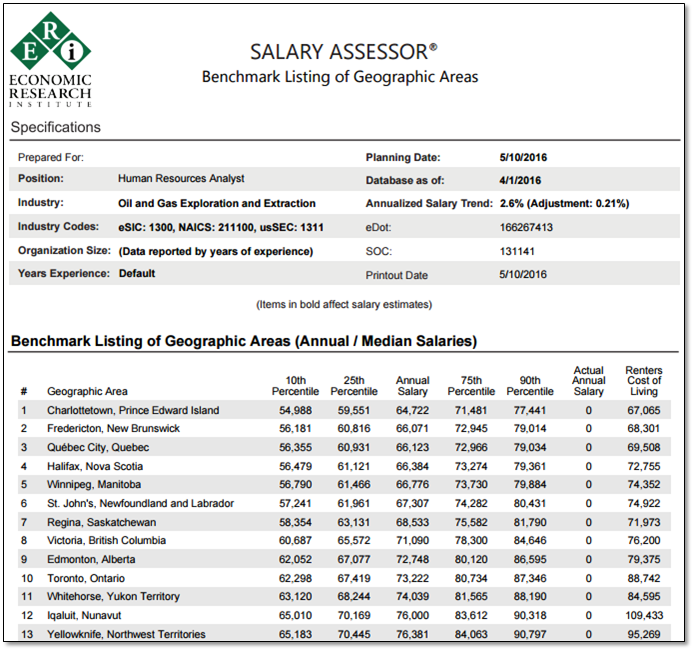
Another meaningful analysis to evaluate the compensation for Human Resource Analyst in the Oil and Gas Exploration and Extraction industry sector is reviewing the geographic differentials for the capital cities in each of the provinces.

Source:  ERI’s Salary Assessor

This report displays the geographic labor markets for the 13 provincial capitals in ascending order based on the median annual salary for Human Resource Analyst.  The base salary range is 64,722 CAD to 76,381 CAD, with Charlottetown, Prince Edward Island, being the lowest and Yellowknife, Northwest Territories, the highest.  Comparing the Northwest Territories province median salary of CAD 73,365 with the CAD 76,381 benchmark for Yellowknife, there is approximately a 7% differential, which can be instrumental in attracting, engaging, motivating, and retaining top talent.  As an HR leader, it is essential to keep a pulse on these differences to ensure that pay is not a driver of exits and turnover in your organization.

Next, let’s look at North America labor markets for executives, which are more broadly defined from a geography perspective, with industry and revenue size of the organization being key determinants of compensation.  Most executive compensation benchmarks begin with data that is disclosed by publicly-traded companies via the required annual filings.  In Canada, these are the Information Circulars filed through the Sedar system and, in the U.S., these are the annual Proxy Statements (or 10-Ks) filed via the Edgar SEC filing system.  The public data is then supplemented with survey data collected for executive pay levels of incumbents whose compensation is NOT required to be disclosed.

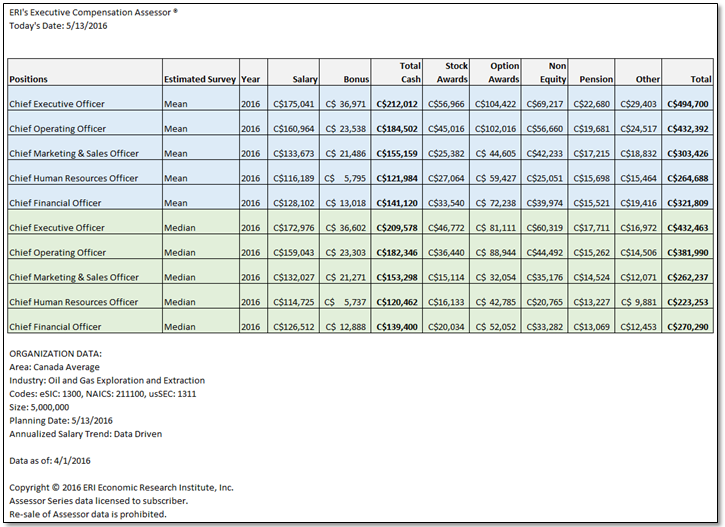
Let’s analyze a benchmark report for Canadian data of the top five C-Suite executive positions typically disclosed in annual filings:  CEO, CFO, COO, CMO, and CHRO.

Source:  ERI’s Executive Compensation Assessor

In this example, the job scope criteria selected includes a revenue size of CAD 5 million revenue in the Oil and Gas Exploration and Extraction industry sector, building on the earlier example.  The benchmark report includes all the essential executive compensation components, such as base salary, cash bonus and incentives, and equity awards like restricted stock units and stock options as well as retirement pensions and other perquisites for executives.  Comparing the median and mean values can also be meaningful.  In this example, the CEO total compensation  ranges from CAD 432,462 to CAD 494,700, representing a 14%+ difference in pay level.

HR leaders are in an enviable position to be “in the front seat” when organizations are expanding operations into new geographies.  The effectiveness of the journey requires insightful solutions that combine internal and external realities coupled with reliable data and tools.  ERI compensation analytic solutions are an invaluable tools for HR and total rewards leaders in this regard.  For more information about North America compensation benchmarking, call us today at 800-627-3697, and one of our best in class service team members will assist you.

E-filing of Forms 990 Proposed in CHARITY Act

Senators John Thune (R-SD) and Ron Wyden (D-OR) have recently introduced S. 2750, the Charities Helping Americans Regularly Throughout the Year (CHARITY) Act, and the proposed legislation includes “requiring nonprofits to file their paperwork electronically,” according to the Senate press release.

The proposal also would require the IRS to release Form 990 data in an open, machine-readable format. The IRS now provides only TIF images, which provide a picture of the form – the data can only be used for analysis by manually entering the information into a database.  This is expensive and time-consuming, delaying timely access to usable data and creating the possibility of transcription errors.

While this proposed legislation represents progress on the Form 990 e-filing front, there is a long history and still a long way to go.  Past blogs have discussed what appeared to be promising developments.  Consider these examples:

  • The Federal Budget proposals for the last several years have included mandatory Form 990 E-filing.  President Obama again included mandatory electronic filing of the Form 990, with the requirement that the IRS release 990 data in an open, computable format.
  • A Federal District Court ruled that the IRS had to provide computer-readable data for some organizations that e-filed their Form 990 data.
  • The Government Accountability Office (GAO) recommended that Congress expand the mandate for electronic filing of nonprofit tax forms. The report concluded that expanded e-filing would result in more accurate and complete data becoming available in a timelier manner, which, in turn, would allow the IRS to more easily identify areas of non-compliance.
  • Congressional discussions of tax reform in late 2014 included a requirement for open Form 990 data from both the House and the Senate.

So Form 990 e-filing seems to have bi-partisan legislative support, as well as support from the executive branch.  The nonprofit sector itself has been on record as supporting e-filing for years.  And the federal court has ruled that electronically-filed data should be available to the public.  Why hasn’t it happened?

The IRS has consistently responded that it just doesn’t have the money to pay the administrative costs involved – in fact, Congress has actually decreased its budget in recent years.  In 2015, the IRS did announce that it would release electronically-filed Form 990 data in an open format in 2016, but there has been no further news on this and we are almost five months into 2016.

What are the chances that this bill will become law?  At the moment, passage is probably unlikely, with only two sponsors so far – and it is an election year.  Some say that it does establish language and an intent, making it more likely that that e-filing could be included in a larger budget or appropriations bill later this year.  At the time of writing, the upcoming election appears to have had a chilling effect on all Congressional activities, so this may not be the year when e-filing and computer-usable Form 990 data are achieved.  There is little opposition to the concept – just not enough positive support at the moment!

Benchmarking Executive Jobs for Small and Medium-Sized Businesses

How an organization pays its executive management needs to be strategically aligned with short-term objectives and, most importantly, the long-term goals of the business.  The complexity of executive total rewards is due to the following:

  • Stakeholders:  There are many constituencies that have an interest or active role in determining executive pay, namely the Board of Directors, shareholders, and the incumbent executive employee.
  • Components:  In addition to base salary, this includes performance-based and discretionary cash compensation, equity awards delivered with stock options, restricted units, restricted stock awards, and/or performance equity awards.
  • Competition:  The executive talent pool of effective leaders, as well as experts in their business sectors, is limited; top executives are coveted by other companies.

If you are trying to benchmark executive roles typically not included in the annual filings, ERI’s Executive Compensation Assessor can help.  At ERI, we have subscribers from small businesses with $1 million or less in revenue to Fortune 10 global companies with over $20 billion in revenue.   At first glance, a total rewards practitioner will ask this question:

The answer is compensation analytics.  By applying times series regression analysis, a reasonable compensation benchmark estimate is available based on criteria specific to the position:  job content, revenue size, industry, and geography.

Data for top executives at publicly-traded organizations is available in the annual filings, as required disclosures for their shareholders.  The data is in a table called the Summary Compensation Table (SCT), which has up to seven compensation components: salary, bonus, stock awards, option awards, non-equity incentive compensation, change in pension and non-qualified deferred compensation, and all other compensation.  Some public data pay elements use different terms.  The table below includes their definition and intended purpose, which can be readily translated for compensation programs of privately held small and medium-size businesses (SMBs).  Once the similarities of the terms are evaluated, the associated compensation analytics benchmarks can be appropriately applied.

The definitions and intended purpose are similar in SMBs that are privately held.  The equity compensation components in privately held companies, however, are typically phantom stock plans that can be designed as full-value awards or appreciation awards, depending on the business objectives and organization culture.

Let’s take a look at a compensation analytics benchmark for CEO.

Image:  ERI Executive Compensation Assessor (XA) – Survey & Proxy Analysis Tab

The estimated survey mean for the total compensation of the CEO in a biotechnology company with $5 million revenue in Basking Ridge, NJ, is $963,887.  The base salary benchmark is $327,430.  Also shown is the maximum reasonable compensation benchmark of $1,093,047, which represents estimated maximum reasonable compensation limits for salary plus bonus.

Executive total rewards programs have various components which need to be evaluated: base salary, cash incentives, equity, perquisites, and retirement plans.   Having reliable and robust compensation analytics to benchmark these critical executive roles can be a strategic competitive advantage.  To learn more about executive compensation data and related compensation analytic solutions, call us today at (800) 627 3697, and one of our best-in-class service team members will assist you.