
Looking to Benchmark Pay?
PROGRAM DEVELOPMENT
An important use of a pay-for-performance program is for base salary management under a merit pay plan to determine the movement of employees within a pay range. The goal of the program can be to match employee performance level with position in the pay range over time. This concept is shown below.
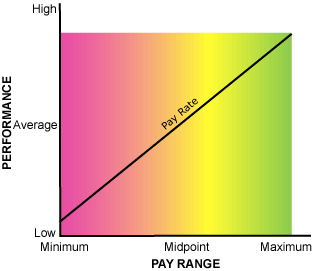
The Concept of Pay-for-Performance
Upward movement. Movement upward in the rate range typically occurs only when the employee's pay rate is lower in the salary range than their performance is on the performance scale. Pay-for-Performance allows the organization to rapidly move high performers upward in the salary range by giving larger increases to these employees or even promotional opportunities.
Downward movement. Pay-for-Performance may also allow freezing of the pay rate at the current level due to performance. In pay-for-performance systems, employees typically will not receive pay cuts due to poor performance. The worst thing that can happen to their pay is that it will remain the same. If an employee is demoted to a lower job, it is appropriate to reduce the pay within the lower job’s salary range.
Requirements of a Pay-for-Performance Program
A traditional pay-for-performance program requires the use of:
- a salary range
- a performance appraisal
- a merit matrix for pay increases
We'll now review each of these requirements.
Salary Structure
A pay-for-performance program typically relies on a salary structure that defines the salary range minimum, midpoint, and the maximum for each job. The midpoint is based on the market value of the job. The salary range also needs to be broad enough to represent the labor market and recognize employees with various levels of education/experience and performance within a job. A 50% salary range spread is most commonly used. For example:
| Minimum | Midpoint | Maximum | Range Spread |
|---|---|---|---|
| 40,000 | 50,000 | 60,000 | 50% |
The range minimum and maximum are based on the midpoint and are calculated this way:
| Minimum | = | Midpoint |
| 1 + (Desired Range Spread / 2) | ||
| Maximum | = | Minimum x 1.5 |
Each year, a salary structure is typically adjusted based on the market movement in salaries or through a complete market pricing. In the United States, merit budgets are typically 1% over the normal salary structure adjustment.
Movement within the salary range is determined based on the performance of the employee, and the employee’s position in range will increase over time with acceptable or higher performance. It is fairly common now that when an employee with good performance reaches the salary range maximum that a lump-sum merit increase is administered in lieu of no merit increase at all.
Performance Appraisal
A simple, well-designed, and well-communicated performance management program is important for the success of the overall program. Now, programs are less rigid, more forward thinking, and focused on performance achievement, future potential, teamwork, and the big picture. These programs also support more frequent communications than the traditional annual performance review. Online and mobile technology are also utilized in best-in-class programs today.
Today’s programs encourage ongoing feedback and quarterly performance discussions. For example:
Performance Discussions (Quarterly)
- Goal setting and attainment
- Individual and Team Performance Achievement
- Opportunities
- Contribution
Coachinging/Feedback (Ongoing)
- Regular performance feedback
- Multi-sourced coaching/feedback
- Personal development and growth
Development (Ongoing)
- Skill development
- Opportunities for growth and development in current role
- Future growth opportunities – current role/lateral/promotional
Most companies today still value performance ratings. The most common performance rating system will include five performance tiers and should always be accompanied by a description for each rating. Some companies elect to use three, four, five, and even ten tiers of performance ratings. An example of a five-tier performance rating program:
| Performance Rating |
|---|
|
5 - Far Exceeds Expectations Performance significantly and consistently far exceeds job performance standards. |
|
4 - Exceeds Expectations Performance regularly and consistently exceeds job performance standards. |
|
3 - Meets Expectations Performance regularly and consistently meets all job performance standards. |
|
2 - Sometimes Meets Expectations Performance is still developing or does not consistently meet job performance standards. Performance improvement or further development is needed. |
|
1 - Does Not Meet Expectations Performance does not meet performance standards of the job. Immediate corrective action required. |
There are several online performance appraisal programs available for purchase or subscription. Some companies will even elect to design their own program which may better reflect the culture and needs of the organization.
Typically, the 12-month performance review will be based on the full-year performance rating, and a merit review may accompany the 12-month review, which then aligns employees’ pay with their performance.
Memory Jogger
In a pay-for-performance program: