
Looking to Benchmark Pay?
ADMINISTRATION OF PERFORMANCE APPRAISAL
The Human Resource Department typically designs the performance appraisal program and oversees administration. This is not an easy task. Managers do not like conducting performance appraisal and will avoid it unless required to do so. To the extent that managers see the process as belonging to Human Resources and offering little help in managing their employees, managers not only avoid it, but also resent having to take the time that's required to perform the appraisals.
Besides the design of the performance system itself, let's take a look at the major administrative questions:
- When should the appraisal be done?
- Who should perform the appraisal?
- How can the performance appraisal process be improved?
When should the appraisal be done?
Part of the administration of performance appraisal is deciding when the appraisals should be done. This involves determining the timing of the appraisals, whether to tie performance appraisals to pay increases, and how frequently performance appraisals should be done.
Timing
Ideally, performance feedback should occur as the job is being performed. When adequate feedback occurs, a great deal of the emphasis on the performance interview is unnecessary.
There is also the question of when formal ratings need to be done in order to be coordinated with pay increases.
The Great Debate: Tying Performance Appraisal to Pay Increases
| For | The two should take place as close in time as possible. This way the performance-reward connection is clear in the minds of the employees. The greater the time lag, the less likely an employee will see that what he or she did was related to the pay increase. |
|---|---|
| Against | Close timing makes it difficult to create a meaningful change in the employee's behavior because he/she may be defensive if there is negative feedback. |
| Pay-for-Performance: A current performance appraisal MUST be available for all employees when the time comes to allocate increases under a pay for performance program. | |
Frequency
Most performance appraisals are administered once a year.
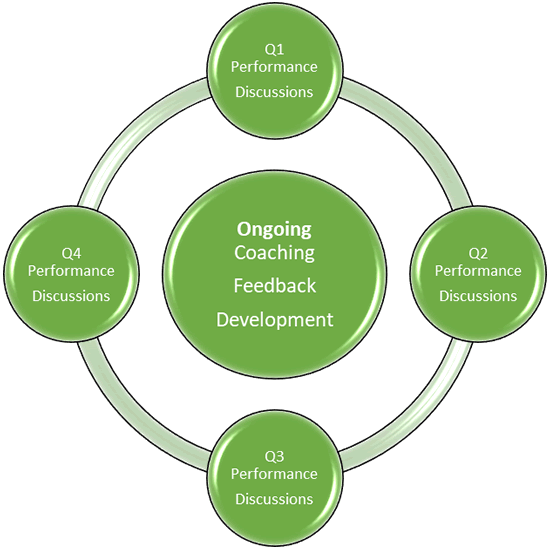
In today’s new performance management programs, the once-a-year program is being replaced with ongoing processes and discussions. Below is an example of a program with quarterly performance discussions and ongoing coaching, feedback, and development. In this example, Q1 provides an opportunity for goal setting and planning. Q2 and Q3 allows for progress towards objectives and performance achievement feedback. Q4 allows for year-end attainment while having ongoing coaching, feedback, and development discussions. A merit increase would typically be administered after the year-end attainment review and discussion.
Exercise Question
If there is a long lag between a performance appraisal and a pay raise, which of the following aspects of motivation theory is weakened?