compensation analytics

Why Compensation Analytics?

Organizations are leveraging internal and external datasets, such as ERI’s Salary Assessor, to generate analytics upon which they can make smarter business decisions. The effective design of robust analytics can be based on time series regression analysis.  This generally is the result of iterative analytics that lead to identifying meaningful independent variables.  These independent variables help to predict with some reasonable certainty a probable outcome.

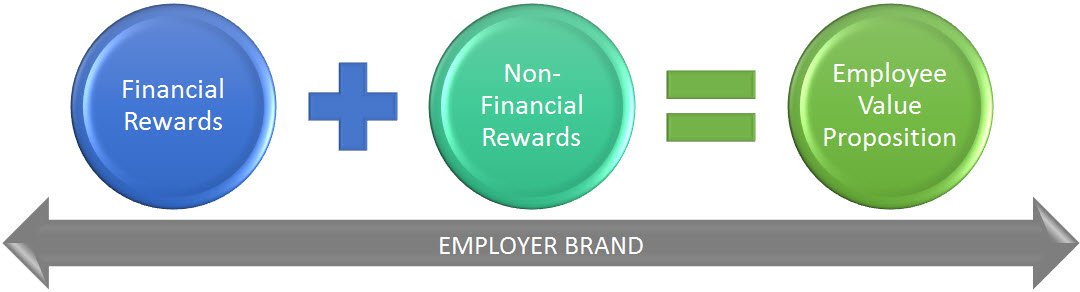
As HR, compensation, and total rewards leaders, establishing an employer brand that effectively communicates a winning employee value proposition that includes both financial and non-financial rewards is one of the most important objectives.  Getting the financial part of the equation right requires an economically sustainable and cohesive philosophy based on a long-term strategy.

To get the compensation financial element right, start by defining how you want to compete in the external market place and collecting relevant compensation data.  This may be accomplished by surveying your competitors’ pay levels at a single point in time and using the resultant descriptive statistics as input or by purchasing salary survey data.  Traditional compensation survey benchmarks are actual data points and calculations of simple averages, percentiles, and counts, which have been normalized to a common date.

Today, organizations that integrate compensation analytics into the decision making process generally have a balanced framework that reflects short-term and long-term planning needs. To support business planning cycles, organizations use compensation structures and labor cost estimates based on data from a single time period benchmark with a smaller sample size, as well as an analytics benchmark with a larger sample size that reflects data collected from thousands of available salary surveys, representing the movement of pay levels over time.  At ERI, the compensation analytics benchmark is calculated with time series regression analysis, integrating ERI’s historical datasets with most recent datasets.  The regression equations applied can be linear, quadratic, cubic spline, and polynomial cubic spline.

Let’s take a look at both types of benchmarks for Chemical Operator based on 1) quarterly updated ERI Assessor Databases and 2) the annual Survey Participant Database (March 2015 effective date):

# of Incumbent10th25thMedianMean75th90th
ERI Assesssor Databases
Annual Salary$41,803.00$45,261.00$49,180.00$49,923.00$54,275.00$58,770.00
Incentive / Variable Pay$748.00$803.00$880.00$889.00$971.00$1,052.00
Total Direct Annual Compensation4,515 to 4,819$42,551.00$46,070.00$50,060.00$50,812.00$55,246.00$59,882.00
Survey Participant Databases
Annual Salary$35,266.00$47,833.00$61,000.00$59,446.00$67,566.00$73,882.00
Incentive / Variable Pay$1,721.00$2,193.00$2,207.00$2,429.00
Total Direct Annual Compensation1,243$35,266.00$49,604.00$63,193.00$61,871.00$69,995.00$73,882.00

As a business leader, you want to give appropriate weight to the scale of the data. In the above example, the Survey Participant Database has 1,243 incumbents, while the ERI Assessor Database has 4,515 to 4,819 incumbents (read “A Comparision of Salary Assessor and ERI Salary Survey Data” for context on the reporting a range of incumbents).  Your compensation survey partner should also provide some insight as to why the Survey Database is 20% higher (e.g., perhaps one of the global players is “buying” talent in the market in order to establish new operations in a new location).

Next, evaluate the internal factors. Apply a consistent, robust business decision-making framework that includes analytics and current descriptive statistics.  The internal factors which should be considered include the following:

Well managed organizations will have both short-term and long-term strategic plans with corresponding forecasts. As HR, compensation, and total rewards leaders, you want to effectively align your decision making framework to the business planning cycles.  Having compensation structures designed and managed using information that reflects current market conditions and time-series regression will prove to be invaluable.  Basing a significant fixed cost strategy on a larger sample size which reflects the movement of pay over time while still understanding the current landscape may be more competitive for particular jobs, geographic areas, and industry sectors.

ERI Economic Research Institute compiles the most robust salary, cost-of-living, and executive compensation survey data available, with current market data for more than 1,000 industry sectors.

ERI’s Assessor Series® – Solutions for every compensation decision

Try a FREE Demo Request a Guided Tour

Variation in Nonprofit CEO Salaries Matters

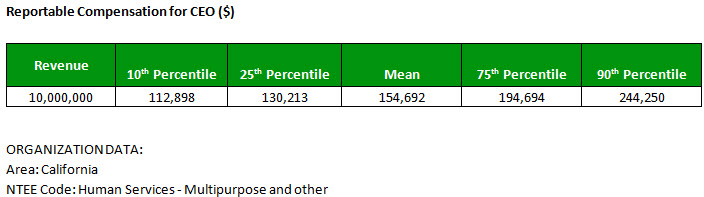
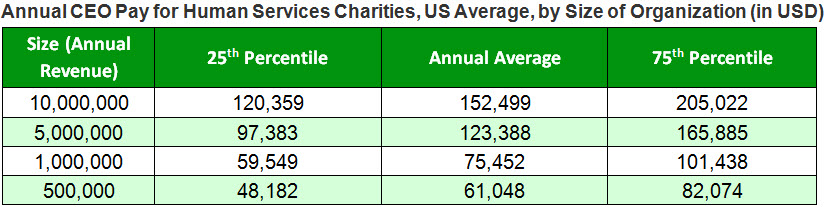
Headlines may cover the instances of high pay for nonprofit executives, but a closer look at all the data reported on CEO pay indicates that compensation averages are actually pretty low.  Using ERI’s Nonprofit Comparables Assessor, the table below shows the average annual pay for CEOs of all US Human Services organizations (plus averages for the 25th and 75th percentiles).  These calculations are based on pay reported by charities on Forms 990, the annual report required by the IRS.

These averages show why nonprofit boards might be more worried about paying their executives too little, rather than too much.  The IRS focuses on preventing “excess compensation” and only defines “reasonable compensation” as “an amount as would ordinarily be paid for like services by like enterprises under like circumstances.”  An average CEO salary of $75,000 for heading up a $1 million human services charity hardly seems excessive, but let’s examine some of the reasons for the salary levels.

  • Influence of who is on the board.  For example, a volunteer board member earning $50,000 a year in his regular job may think paying a $100,000 CEO salary is too much.  At the same time, another board member who is president of his own company and earning $450,000 per year may assume that no qualified person could be recruited for the job for less than $100,000.  Some board members may have jobs with generous pension plans and health insurance (not offered by the nonprofit) and don’t think about those benefits when considering total compensation packages for the CEO.
  • Funding the salaries. Most CEOs realize that there is a direct relationship to their salaries and fundraising.  Yes, they can get increases, but that just means the CEO has to increase funding efforts to pay for those increases.  Other salaries within an organization are also related to the CEO salary, so increasing the CEO level also means that there will be increases in other positions to maintain the relationships.  Again, that means more fundraising for the CEO.

Boards setting CEO compensation must focus on their goals – attracting and retaining the talent needed by the charity.  The following should be kept in mind:

  • Keeping competitive with other comparable organizations.  This requires a review of salaries in similar nonprofits, looking where the current CEO might come from or find their next job.  While nonprofits may be the most likely type of organization, also include government or even for-profit companies if relevant, and remember to consider total compensation, accounting for any variation in benefits, if substantially different.
  • Maintaining relationships within the organization.  Setting a salary using other organizations may require some more adjustments for other positions within the organization.  The appropriate spread between the CEO salary and the salaries of other employees may be important to recruiting and keeping a qualified committed workforce.
  • Considering budgeting constraints.  Obviously the Board is responsible for keeping the total costs of the organization (including the CEO salary) under control.  So make sure that salary increases can be implemented without causing financial stress.
  • Reviewing “other” compensation.  Sometimes other benefits are important to employees and can act as incentives.  While some might be costly (for example, dental insurance, improved pension), others (like an extra week of vacation, flexible work schedule) can make a compensation package more attractive without needing substantial funding.  When collecting information on comparable organizations, get as much information on such benefits as possible and see what might work. And ask the CEO what he/she wants!

While IRS Instructions for Form 990 (page 68 covers “reasonable compensation:) will give the requirements, there is a lot more to determining nonprofit compensation levels that will serve a charity well – that is, not too high and not too low.  Using ERI’s Nonprofit Comparables Assessor  to get basic compensation data on comparable organizations is a great first step.

job descriptions

Job Descriptions: Start with a Baseline

Organizations are faced with two business imperatives: global competition and constant change.  To respond and seize market opportunities, organizations need to deftly identify their workforce talent who can be mobilized in a timely manner.   One way that HR professionals and business leaders can navigate this decision making process is by leveraging the knowledge amassed on job content collected by job analysis.

Formal or informal job analysis is a fundamental strategic core competency for human resources professionals. The job content ascertained from a job analysis provides line of sight to specific job responsibilities, business context, and connections with other jobs.  The end result usually is a job description, which most of us have relied upon for a host of different reasons.  Whether your professional focus is employment law and compliance, people and culture, or total rewards and performance management, having knowledge and access to job content information is essential.

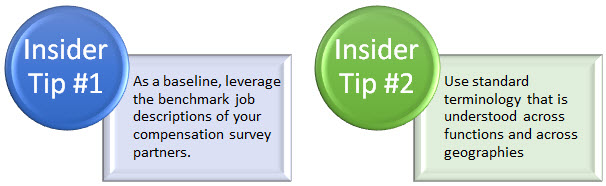
Collecting job content information from scratch can be a very ambitious objective.  For a basic understanding of the jobs and a consistent use of terminology that can be understood by your stakeholders, leverage the benchmark job descriptions available from your compensation survey partners.  You can then supplement this information for various purposes.  Using a Human Resource Manager job, the examples that follow explain how the job content, depending on the purpose, can evolve.

Benchmark Job Descriptions

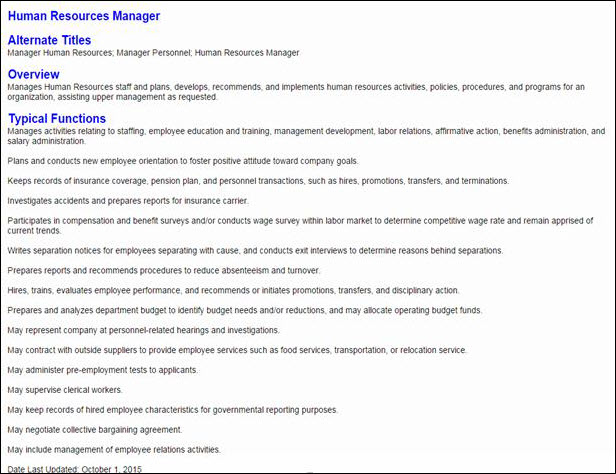
The organizational process of selecting survey sources, matching jobs, and applying the survey results to design compensation programs will generally require cross-functional collaboration with key stakeholders.  The process of job matching will involve analyzing these benchmark job descriptions in order to gain insight into the differences between the internal job duties and responsibilities.

(Image: ERI’s Salary Assessor benchmark job description of Human Resources Manager)

Internal Job Description

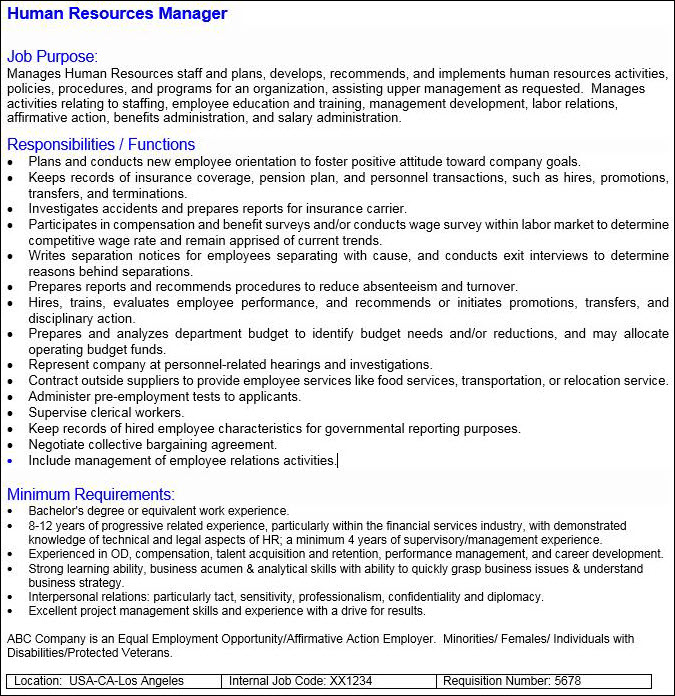
Internal job descriptions are relied upon for many uses, such as setting performance standards, training plans, career development plans, staffing decisions, and organization development.  These descriptions communicate the details of jobs to many stakeholders.

(Image: ERI’s Salary Assessor benchmark job description supplemented with minimum requirements, work location, job code, and requisition number)

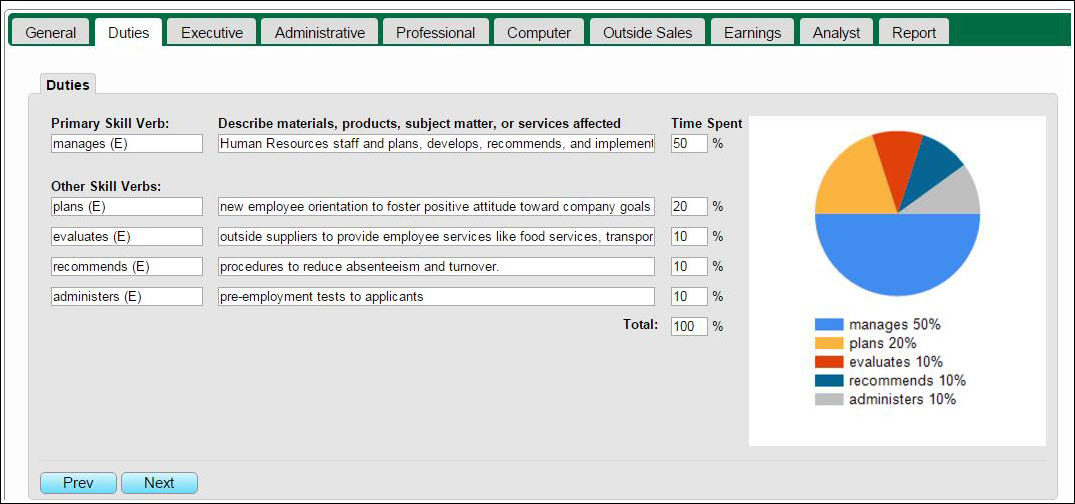
Most organizations collect additional job content information that explains the allocation of effort and time spent on specific duties and responsibilities. The use of this data has far reaching implications, such as automation, mentoring and coaching, organization effectiveness, compliance, and FLSA overtime exemption assignment, to name a few.   Below is an example of a detailed analysis of duties and responsibilities of the Human Resources Manager job:

(Image: ERI’s Occupational Assessor)

Job Postings

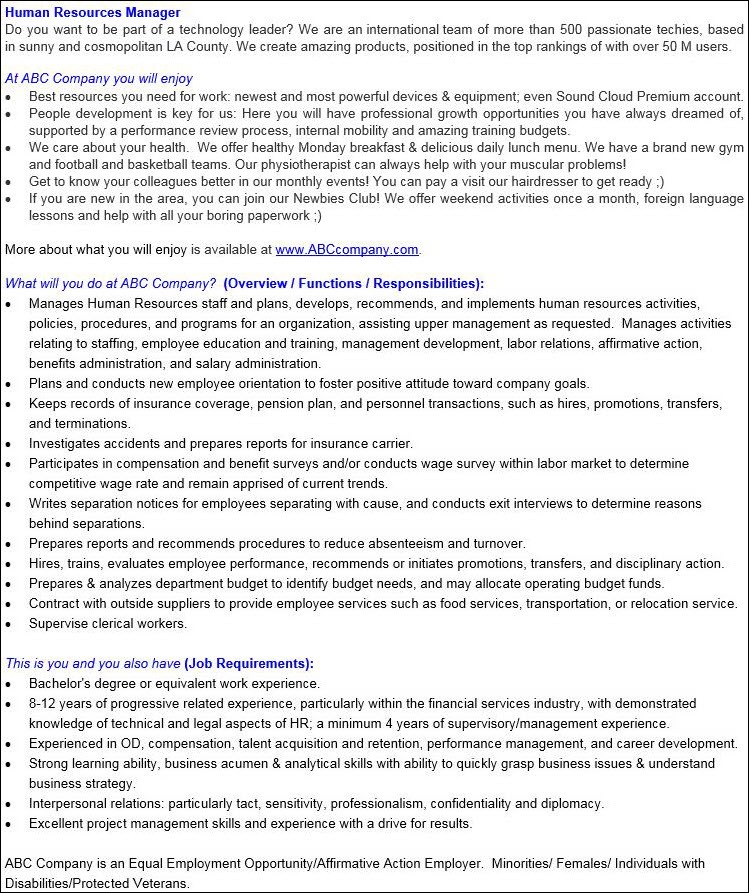
Job postings advertise the employment opportunity to a targeted labor market, providing realistic job and work environment expectations.  Below is an example of a job posting for a Human Resource Manager:

(Image: ERI’s Salary Assessor benchmark job description supplemented with details pertaining to work environment, organization culture, minimum requirements, business description, company website, perks, and benefits)

Jobs and the information pertaining to their impact on the organization’s value chain should be easily understood and accessible across the organization.  Creating an effective and efficient process to make decisions about the talent in your organization, an understanding of the cross functional relationships between jobs will be invaluable to the organization.  It is important to have standardized tools and credible baseline information upon which to build these processes.

To access a more detailed complimentary course on Job Analysis, visit our website, www.erieri.com, or call our “best in class” service team at 1-800-627-3697 for further assistance.

ERI Economic Research Institute compiles the most robust salary, cost-of-living, and executive compensation survey data available, with current market data for more than 1,000 industry sectors.

ERI’s Assessor Series® – Solutions for every compensation decision

Try a FREE Demo Request a Guided Tour

The Gap Between Executive and Average Worker Pay in Nonprofits

In the business world, there is a lot of discussion about the often huge gap between the pay of top executives and the average employee within an organization.  While some interpret the data as executives reaping a windfall while worker pay stagnates, there is also research that focuses on the fact that the best-paying companies are pulling away from the worst-paying companies – that is, while increased executive pay contributes to the wage gap, so does the success of the companies in their overall industries. See a recent Wall Street Journal article for a discussion of this issue.

Researchers will continue to debate whether or not the predominant driver of inequality is the gap between, not within, firms.  There are also some changes in the way companies are run that need to be considered.  For example, many companies now use contractors – rather than employees – to perform some lower level functions (e.g., security guards, office cleaners, etc.) and also have turned some employees into independent contractors (e.g., writers, project managers, etc.).  The remaining core employees may tend to earn more in successful entities (Consider David Weil’s perspective in his book, “The Fissured Workplace”).

So the argument goes that companies operating in a unique market niche can raise compensation for all employees more successfully than those in a more competitive environment.

Does this same wage gap exist in the nonprofit sector?  First, the wage gap between nonprofit executives and the average employee in their organizations has always been a fraction of what occurs in the for-profit world.  One reason is the tremendous difference in size between entities in the sectors, as most nonprofits are small, and revenue size is one of the most influential factors in determining executive pay.  Of course, nonprofit status brings with it a burden to work for the public good and have salaries that are comparable to those in similar organizations – with salaries subject to scrutiny by the public, as well as the IRS and state charity regulators.

Many nonprofits operate in a very competitive environment, competing for government and foundation grants, contracts, donors, and even customers (e.g., concert attendees, museum-goers, college students, etc.).  Supporters have similar options for services, and dominant market positions may quickly change if a government grant is not renewed or a major supporter stops contributing.   So, the ability for nonprofits to build and maintain the unique competitive “moat” that helps for-profit businesses become successful may be more limited.

The IRS regulations call for setting compensation using compensation data of other nonprofits of similar size providing similar services.  So while size – based on revenues of the organization – is a very important influence on compensation levels, another major factor is the kind of work performed, reflecting the success of the subsector.  ERI’s Nonprofit Comparable Assessor was used to create the table below illustrating average salaries of CEOs of similarly-sized charities of different types.

US Average CEO Compensation in Different Type of Nonprofits (in US$)

While the largest nonprofits with $500 million in revenue have higher CEO average salaries overall than those with $50 million in revenue, hospitals have the highest salaries of the types of nonprofits shown.  Clearly there is a big salary difference among organizations of similar size depending on the type of service provided.  As mentioned above, this compensation information is public – anyone with an Internet connection can access Forms 990 – so clearly documented justification of pay is necessary for nonprofits to have ready for the media, donors, clients, etc.

The decision of what to pay nonprofit executives is much more constrained than in the for-profit world due to government regulation and public review.  Nonprofits must base compensation on data from similar-sized organizations providing similar services.  To attract and retain the staff talent needed to run their organizations, CEOs must pay market rates for social workers, administrative assistants, security guards, and nurses, for example.  Typically, it is assumed that the salaries for these positions will be paid based on the market for that job, whether at a government, for-profit, or nonprofit facility. Does a staff nurse working in a large hospital with a highly paid CEO receive a higher salary than one in a human services agency with a lower paid CEO?  Only time and research will tell how much of this discussion of disparities will spill over to the nonprofit world.

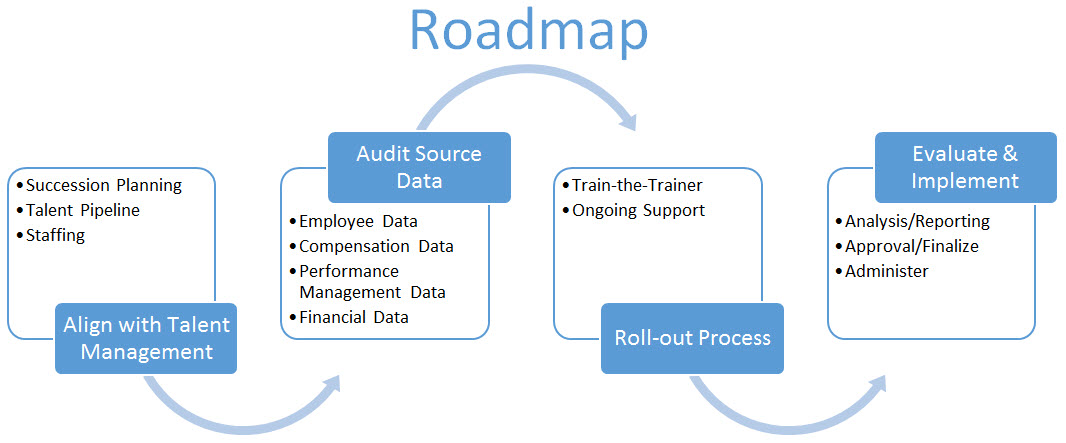
2016 Salary Increase Planning Roadmap

Compensation professionals are typically busy this time of the year preparing for 2016 salary increases for employees.  If you already have two or three years of experience managing the process, you have likely figured how to smooth out the bumps in the road.

Here is a suggested roadmap that has some underlying best practice assumptions:

  1. Collaboration:  Involve the cross-functional stakeholders to help shepherd the effort and minimize resistance along the way.
  2. Knowledge sharing:  Communicate, educate, and train Human Resources, line management, and approvers.
  3. Business Context:  Align the salary increase process with the overall employee value proposition and business strategy.

Align talent management objectives as they pertain to succession planning, talent pipeline, and staffing decisions.  The policies that pertain to new hires, promotions, and transfers need to be well-aligned with succession plans for employees with high potential in order to fill business leadership roles and meet long-term business strategy objectives.  Some organizations may have policies that serve as business rules that impact salary increases.  Consider the following examples:

  • New hires:  Typically if hired in Q4 of the plan year, new hires will not be eligible for salary increases.
  • Newly promoted:  Typically if promoted in Q4 of the plan year, the newly promoted will not be eligible for salary increases.
  • Transfers:  The receiving cost center is responsible for full allocation and the submission of recommendations with input from previous line managers.

Audit source data, partnering with the appropriate data stakeholders in IT and HR, so that the roll-out process is effective and rework minimized.  Several types of data should be included:

  • Employee Data:  Employee name, employee ID, position title, department, performance manager name, performance rating, time in position, and work location.
  • Compensation Data:  Salary grade min/mid/max, compa-ratio, market index, and survey data.
  • Performance Management Data:  Ratings, goals, achievements, and development plans.
  • Financial Data:  Data specific to business units, departments, and scope.

Roll-out the process using the appropriate tools depending on your budget.  Consider using a cloud-based solution that houses salary planning sheets organized by the line manager (such as ERI’s Salary Assessor®) or Excel® spreadsheets.  These tasks are critical to a successful roll-out:

  • Train-the-Trainer:  Depending on the size of your organization, you may need to train HR business partners that support each business unit or train the line management directly.
  • On-going Support:  Offer and maintain support that may be focused on the technology, some delivered with effective self-service, and include a process for escalations that go directly to the compensation specialist.

Evaluate & Implement

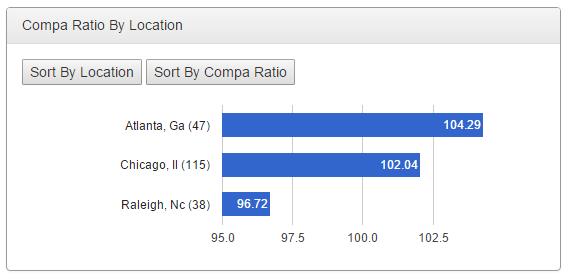
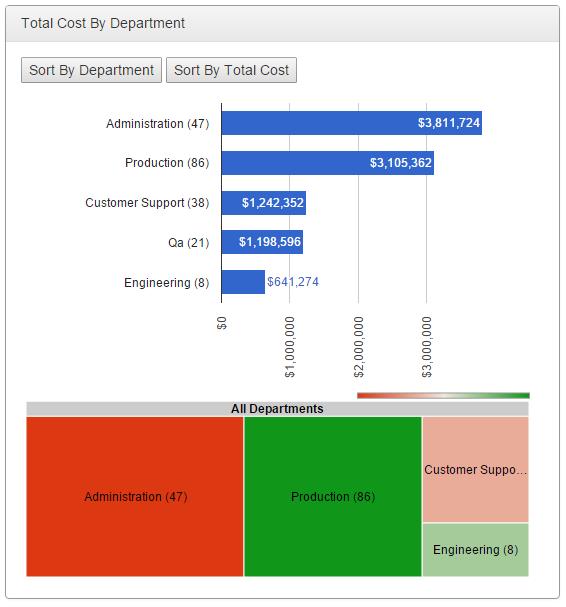
Once the recommendations are submitted, evaluate and review for effective talent management alignment and cost controls.  The one-over-one approval process may be done at this stage or in the roll-out process.  Having a dashboard of reports to facilitate the final review and approval is helpful.  A common analysis is compa-ratio and cost summary as depicted in the images below (Image sources:  ERI Salary Assessor salary planning reports):

Summary

Planning salary increases as part of your overall total rewards and talent management efforts can be highly effective when it is well-integrated.  Involve the right stakeholders, provide comprehensive and quality information to make effective salary increase recommendations, communicate with purpose using business vernacular, and evaluate the recommendations and process, coaching the business users.  Salary increases are one of the financial rewards that organizations can offer.  Keep it relevant and evaluate it throughout the year.

Access a more detailed complementary course on planning salary increases by visiting our website, www.erieri.com, or call our “best in class” service team at 1-800-627-3697 for further assistance.

Performance Management & Goal Alignment

Performance Management & Goal Alignment

Total rewards leaders are instrumental in improving business performance by ensuring that financial and non-financial reward systems are aligned to business strategy, HR strategy, and organization culture (see WorldatWork’s updated total rewards model introduced this year).  Performance management is often used by total rewards leaders to help drive a sustainable performance culture with short-term and long-term alignment of SMART (Specific, Measurable, Attainable, Relevant, and Time-base) goals.  In order to take the mystery out of this topic, goal alignment will be demonstrated below by way of example.

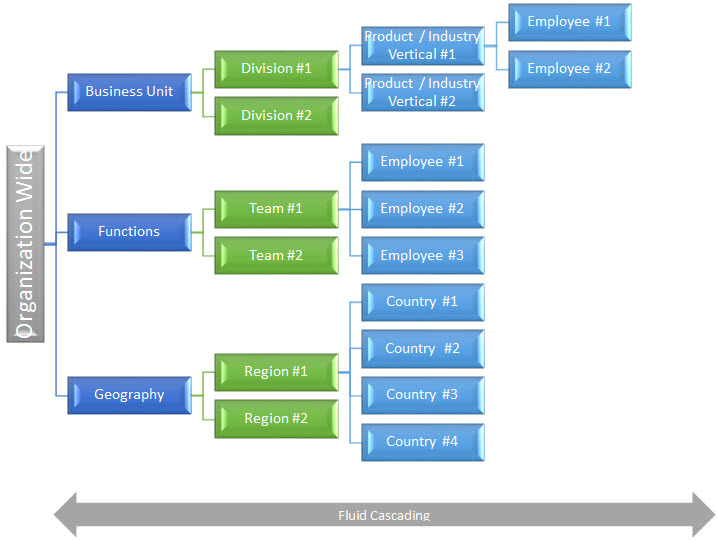
For goal alignment in performance management to occur, business leaders begin by establishing a business plan using a cascading communication approach, fostering a collaborative flow of information that cascades up, down, and across the organization.  This approach ensures that appropriate stakeholders ( e.g., project sponsors, process owners, change agents, and front line employees) provide insight to customer needs, organization capability, and related mission critical considerations to move the organization forward, thereby creating a line of sight that engages employees.  The graphic below depicts fluid, cascading communication on a continuum from the organization-wide level to the individual employee.

Business Plan

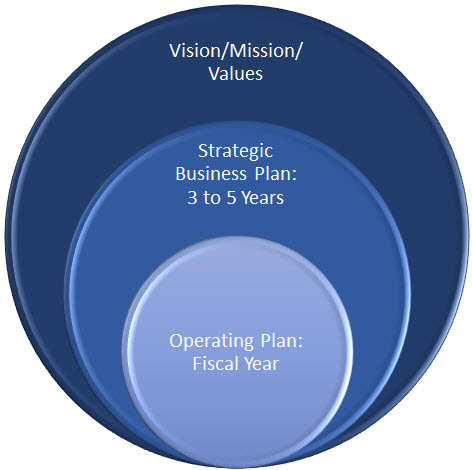
Since goals are defined based on business plans, it is important to provide a well-articulated, long-term strategic business plan that includes shorter fiscal year operating plans.  The “glue” to alignment is having a business plan that is consistent with the organization’s vision, mission, and values.  Depending on the organization’s size, culture, and business cycle, HR leadership may also have to facilitate these discussions to determine the details of the business plan as the basis of goal setting.

Human resources leadership provides input to the business planning process, addressing the following business imperatives:

  • Strategic core competencies of your organization with general direction for leveraging strengths
    • Ensuring that total rewards and HR programs for the related jobs and their incumbents are effective
  •  Organization capability gaps and specific actions to fill them or minimize their risks
    • Understanding how job design will affect talent acquisition or retooling in relation to incremental labor and training costs

Effective business planning should provide insight to the following mission critical items:

  • Value chain and related cost drivers
    • How do we create value for our customers?
    • What are the related costs, expenses, and capital investments?
  •  Internal and external risk assessment
    • What are the strengths, weaknesses, threats, and opportunities of achieving the strategic and operating plan?

SMART Goals

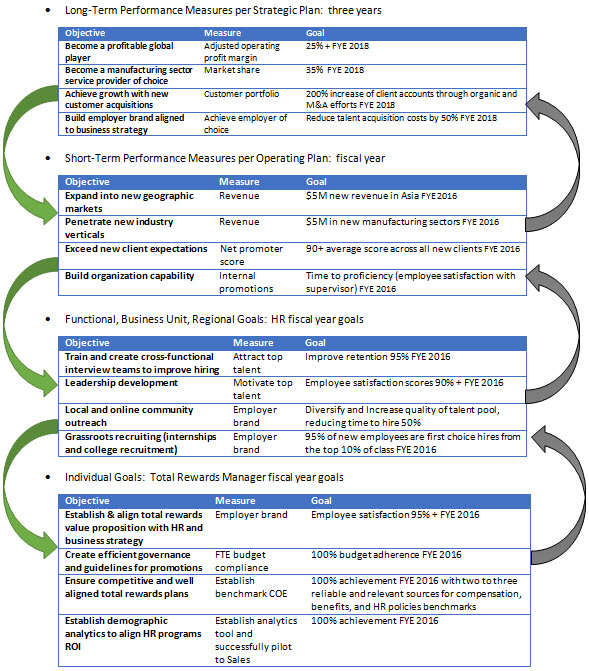
With well-articulated business plans in hand, HR leadership can help to drive this cascading process to set SMART goals with business leaders, creating a roadmap to achieve the business plans.  Below are examples of SMART goals that cascade from a strategic three-year business plan, a fiscal year operating business plan, HR function goals, and individual goals of a total rewards manager.

The true test of whether goals are aligned is to read them in both directions and ensure that they are well integrated.  Total rewards leaders should also guide the goal setting process with an understanding of infrastructure capabilities to reliably measure specific business outcomes, ensuring that stakeholders have confidence in the process.

Summary

This broad HR topic has been provided to assist readers in designing performance management and goal setting processes and evaluating processes currently in place.  By applying a cascading communication approach to the business planning and goal setting process, HR leadership can achieve alignment all the way to the individual employee level.  With fluid communication, all stakeholders (e.g., project sponsors, change agents, process owners, and front line employees) are engaged and committed to achieving the goals.  There are technologies that enable organizations to set up efficient, automated workflows for managing the whole performance management and goal setting process.  An automated solution, combined with an effective performance management and goal setting process, is often a winning combination.

In addition to this blog, a related ERI white paper on performance measures is available.

Fair Labor Standards Act (FLSA) FAQs

ERI developed the Occupational Assessor (OA) FLSA module over ten years ago to provide organizations with an efficient method for beginning the process of classifying employees as exempt or non-exempt from overtime regulations.  For this reason, ERI closely watches all developments relating to the FLSA and to the overtime regulations at the federal level and for the nine select states that the cloud-based Occupational Assessor covers.  Not surprisingly, we have received many questions related to the Notice of Proposed Rulemaking announced on July 6 and provide the FAQs below to assist subscribers with planning.  ERI’s upcoming webinars, “Navigating FLSA Compliance,” scheduled for September 19, 2015, and December 8, 2015, will also address the proposed rule changes (register here).

How different are the proposed changes?

The proposed changes affect the salary levels of “white collar” exemptions (e.g., Executive, Administration, and Professional exemption tests).

In an effort to keep the regulations current without having to go through the typical proposal-comments-revisions-implementation cycle, the minimum salary level required to be exempt will be based on data from the Bureau of Labor Statistics (BLS). Specifically, the minimum salary will be tied to the 40th percentile of earnings for full-time salaried workers from the annual BLS data.   The latest 40th percentile annual salary reported in the context of this proposed change is currently $47,892 (or $921/week)  and is expected to increase to $50,440 (or $970/week) by the time the rule is law.  The current salary level is $23,660.

The annual compensation level of Highly Compensated Exemption test (HCE) which is currently set to $100,000 is proposed to be changed to $122,148, which represents the 90th percentile of all salaried employees from the annual BLS data.  This test requires that some exempt duties be performed on a “regular basis” and that the annual compensation be met.

How often is the minimum salary level value expected to be updated?

To prevent the effective erosion of the salary level thresholds, the proposed regulations will likely incorporate the requirement to update the salary level annually based on the 40th percentile of the BLS data or possibly based on inflation tied to the Consumer Price Index for All Urban Consumers (CPI-U).

Which employee groups will likely not be impacted by the salary change?

The proposed rule changes make no inference to impacting the following groups:

  • Non-exempt employees who are paid on a salary-plus-overtime basis
  • Salespeople in the “outside salesperson” exemption
  • Teaching professionals
  • Lawyers practicing law
  • Doctors practicing medicine
  • Employees meeting the computer exemption, paid an hourly rate of at least $27.63

Depending on the “comments” submitted prior to the final outcome, the employee groups impacted may be revised.

How does ERI’s Occupational Assessor work?

The user begins by conducting an appropriate job match by selecting a job title and reviewing the corresponding job content.  The user then selects the specific location based on the ZIP code of the incumbent(s) and chooses the industry sector from over 1,200 codes or descriptions.  Next, the user is prompted to evaluate the job content based on each of the exemption tests and answer specific questions related to FLSA requirements. The OA then provides a prediction regarding the exemption status of the job based on the user’s responses to the set of questions for each exemption test.

Which states currently have unique overtime laws and are reflected in the product?

  • California
  • Colorado
  • Connecticut
  • Hawaii
  • Kentucky
  • New Jersey
  • Pennsylvania
  • Washington
  • Wisconsin

Can I do job-level or incumbent-specific analysis?

There are a number of factors that determine the approach to auditing your organization to comply with this new requirement.  As a best practice, FLSA analysis should be conducted on an incumbent basis.  If you have multiple incumbents in the same work location and your supervising “performance” managers are well trained, conducting a job-level analysis may be a reasonable approach.

Do the results provide the total cost impact of the changes?

No. The results are a prediction of the exempt status for a given incumbent based on the responses to the FLSA job analysis questions.

Organizations should begin cost impact analysis based on a number of possible scenarios:

  • Give salary increases to all exempt employees earning less than the proposed salary level threshold.
  • Reclassify jobs based on the current number of hours the employees are working.
  • Hire additional employees, while limiting work hours to prevent overtime costs.
  • Reassign some of the non-exempt duties to full-time non-exempt roles.

How often do I have to evaluate the classification of my jobs?

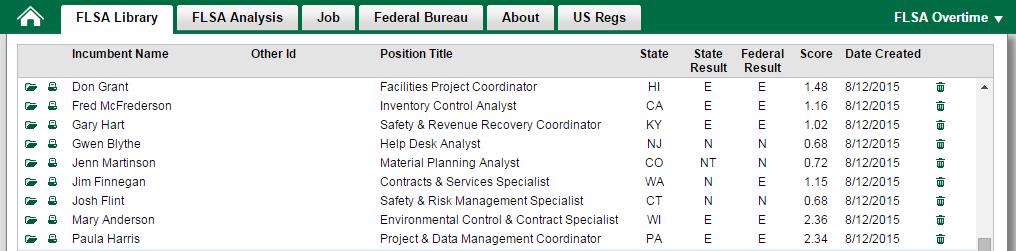
As an on-going process, organizations should evaluate significant changes to their business operations relative to the impact they have on employee job design and responsibilities.  ERI’s Occupational Assessor allows you to easily review the date, job analyst who conducted the assessment, and full details of the assessment.  Below is example of the FLSA Library tab where authorized users can retrieve, update, and audit job classifications.
How soon will these changes be reflected in the Occupational Assessor?

We plan to release a special update when the regulations become law.  Based on the regulatory process and the possibility that the current comment period may be extended another 60 days beyond the deadline of September 4, 2015, the rule may not get finalized until sometime in Q1 2016, requiring companies to comply as early as Q2 2016.
Tracking Nonprofit Executive Salaries: Arts Organizations

Running a nonprofit arts organization seems to be a challenging job – fundraising, choosing programs that appeal to patrons, expanding the audience, and ensuring that donors and subscribers remain engaged for the long run.  How well – or poorly – are these arts organization executives paid?

The category entitled “Arts, Culture, and Humanities” of the National Taxonomy of Exempt Entities (NTEE), the classification system used for nonprofit organizations, comprises only a small proportion of all nonprofits.

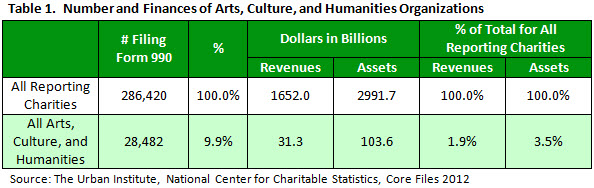
More than one million nonprofit organizations registered with the Internal Revenue Service in the United States are defined as charities (tax-exempt under IRC Section 501c3 and able to receive tax deductible contributions), but only 286,000 of these had enough revenue to require filing a Form 990, the annual IRS information form.  Out of the 286,000 reporting public charities, almost 10% were classified as Arts, Culture, and Humanities.  The table below also shows how this group represents only a small proportion (less than 2%) of the total revenues in the sector and 3.5% of the total assets in the sector.

These numbers show that there are many smaller organizations in this category, with a larger number of organizations as a proportion of the total representing a smaller proportion of revenues and assets than would be expected.  However, a more detailed review reveals the wide disparities in size within this category.

The following examples of  compensation for the top job, typically Chief Executive Officer or Executive Director, illustrate the differences in average compensation first by size of organization and then by geographic location.

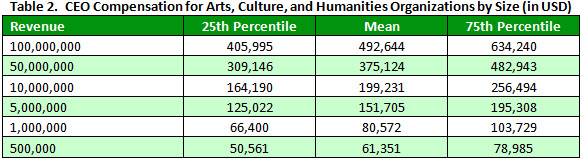
Using ERI’s Nonprofit Comparables Assessor, average CEO salaries in the United States for all Arts, Culture, and Humanities organizations by size were calculated.  Table 2 shows the huge range in salaries paid to CEOs of different-sized organizations.

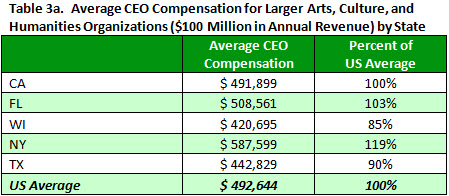
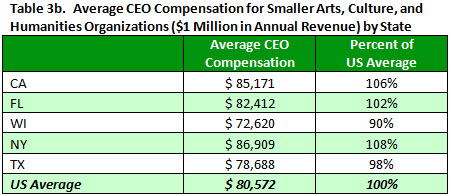
Next, the possible influence of geography on pay was explored.  Table 3a lists the compensation for CEOs of larger organizations (with annual revenues of $100,000,000) in several states and the relationship of those average salaries to the US average.  Table 3b is a similar table for smaller organizations (with annual revenues of $1,000,000).  Again, there is lots of variation in the salaries.

Because the IRS requires that public charities set executive salary levels looking at compensation data from similar organizations (typically defined as similar in type of service or mission, size, and geographic location), it is important to consider a number of the criteria that most influence compensation.  The examples in the tables above show that compensation averages by size alone and by geography alone for similarly classified organizations vary widely.  ERI’s Nonprofit Comparables Assessor can provide more detailed breakouts to ensure that boards can determine competitive compensation levels for executives that meet IRS regulations.

Another Recommendation for E-filing Form 990

In February 2015, my blog reported on three developments in the move toward electronic filing of Form 990, the annual IRS reporting form required from nonprofit organizations.  Now, a fourth can be added.  Is this enough to actually get an e-filing requirement enacted?

The “Form 990” actually is a family of forms – the regular Form 990 is used by organizations with annual gross receipts of $200,000 or more or total assets of $500,000 or more. The Form 990-EZ is filed by exempt organizations with gross receipts of less than $200,000 and total assets of less than $500,000. The Form 990-N “postcard” is electronically-filed and includes limited information from organizations with annual revenues of $50,000 or less. There is also a Form 990-PF, filed by private foundations. Finally, there is a Form 990-T for use by organizations that need to report “unrelated business income.”

Currently, the IRS provides only TIF images of the forms – a picture – so using the data requires manual entry into a database.  This is expensive and time-consuming, delaying access to usable data and risking transcription errors. It seems clear that e-filing would result in more accurate and complete data available much more quickly.

At the beginning of 2015, there was progress in Form 990 e-filing:

  • President Obama’s 2016 Federal Budget proposal to make electronic filing of the Form 990 mandatory and to release the data in an open, computer-usable format;
  • The federal court decision requiring the IRS to make electronically-filed data available under the Freedom of Information Act in a machine-readable format; and
  • The recommendation by the Government Accountability Office (GAO) to mandate electronic filing of the Form 990 (see TAX-EXEMPT ORGANIZATIONS).

There is bipartisan legislative support, as open Form 990 data was also included in the December 2014 tax reform discussion drafts from both the House and the Senate.  The nonprofit sector itself has been on record as supporting e-filing for years.

And now the latest development – the Advisory Committee on Tax Exempt and Government Entities (ACT), an advisory committee to the IRS, made the following recommendation its number one priority in its annual report released in June 2015:

“The IRS Exempt Organizations Division should encourage and support a Congressional mandate to require electronic filing of the Form 990 series and should also take interim steps to encourage and provide incentives for voluntary e-filing of the Form 990 series for exempt organizations that are not subject to the mandatory e-filing requirements. The IRS should recommend to the Department of Treasury the elimination of the $10 million asset threshold for electronic filing of the Form 990 found in the Internal Revenue Code Section 6011 regulations.”

The full report issued on June 17, 2015, also included the results of a sector-wide survey of Form 990 data users and filers.  The sections of the form covering compensation received more survey comments than any others, and a further ACT recommendation called for a task force to consider updates, enhancements, and/or deletions to the form.

So, if there is this much bipartisan legislative and administrative support, as well as judicial and nonprofit sector support, for e-filing and data in a computer-friendly format, will there actually be action on these recommendations?  Only time will tell.

Nonprofit CEO Compensation Depends on What?

Charity Navigator (CN) recently completed its 11th annual national study which focuses on differences among the financial, accountability and transparency practices of charities located in various metropolitan markets in the US.  Read about the full study at  http://www.charitynavigator.org/index.cfm/bay/studies.metro.main.htm#.VYLOnflViko.

The findings:  For different metropolitan areas in the US, the rankings of charity executive salary levels are not particularly related to financial, accountability and transparency practices.

The study included only about 8,200 charities that are evaluated by CN, rather than the data from the more than 100,000 that annually file Form 990, the IRS reporting form for charities.  ERI Economic Research Institute creates a database of all Forms 990 filed each year and uses the data to create the Nonprofit Comparables Assessor, a software tool that allows the user to choose a type of charity, size (based on annual revenues or assets), and geographic area.  These are the criteria specified by the IRS for selecting comparable organizations for salary data.  The resulting group of comparable organizations is used to assess what salary levels are appropriate for a given charity and provide the necessary documentation of comparable data.

CN divided the 8,200 charities it evaluates into 30 metropolitan markets. However, there was no differentiation by type of charity or size.  For example, CEO salaries in hospitals and adoption agencies and food banks could all be averaged together in a given metro area. Using Form 990 data and a review of the charity websites, CN then ranked each charity on its “financial, accountability & transparency” practices.  Check the report for more details on the ranking criteria.

The table below lists the areas with the highest median CEO pay for the included charities by metro area and then the Financial/Accountability Rank for the same areas.  There does not appear to be much of a relationship between these two rankings.

Metro Market Compensation Rank Median CEO Pay Financial/Accountability Rank
New York City 1 $195,758 17
Washington, DC 2 $185,593 20
Boston 3 $166,849 3
Cleveland 4 $163,623 8
San Francisco 5 $158,697 9
Philadelphia 6 $158,198 26
Los Angeles 7 $155,583 4
Pittsburgh 8 $155,000 10
Milwaukee 9 $154,408 13
St. Louis 10 $152,794 16
National Average $126,100

The major issue with the Charity Navigator data appears to be the limited number of charities included and the division into the 30 “markets” – the number of charities in each market varies widely, and for some charities, there would be a national labor market, rather than a more limited metro area.  As usual, ensuring that the data used are from comparable organizations is essential when assessing compensation levels.  Using ERI’s Nonprofit Comparables Assessor, the table below looks at the #1 in compensation (New York City) with #10 (St. Louis) using examples of different size and type of organization.

Reportable Compensation for NY CEO — ERI Data
Size Health Orgs Human Services Orgs
(Annual Revenue) Mean Mean
100,000,000 477,520 320,280
10,000,000 211,406 165,143
5,000,000 165,421 135,289
1,000,000 93,593 85,151
Median reported by CN — $195,758
 
Reportable Compensation for MO CEO — ERI Data
Size Health  Orgs Human Services Orgs
(Annual Revenue) Mean Mean
100,000,000 411,328 227,414
10,000,000 174,429 123,400
5,000,000 134,730 102,658
1,000,000 73,969 66,960
Median reported by CN — $152,794

Obviously, the best way to decide on appropriate pay for the CEO of a charity is not by looking at an average for all charities within a geographic region.  Research has shown (and the IRS concurs) that the factors that should be considered most influential are type of organization and size, along with geographic location.  Increasing financial accountability and transparency might relate to compensation, but just averaging the pay for some charities in a given location, without considering the most influential criteria for comparability — size and type of charity — does not provide a basis for linking the two. A much more detailed analysis is necessary.