
Looking to Benchmark Pay?
The Economy and Wage Growth
Projections for 2026 are for average salary increase budgets of 3.4%. Inflation is over 3%, moving away from the target of 2%. The unemployment rate of 4.4% remains low by historical standards. Salary growth has been in decline for a number of quarters but it appears to be flattening out.
For highly paid employees, the top 10% of the wage distribution, income growth was positive over the period 1979 to 2021 and that trend continued through 2024. However, for the bottom 90% of wage earners, real wage growth was almost nonexistent from 1979 to 2021. (Source: Economic Policy Institute, Inequality in Annual Earnings Worsens in 2021.) There was some temporary relief for the bottom 10% of wage earners who saw wage growth of 9% in the period 2019 to 2022, a significantly higher rate of increase among all groups in the wage distribution, and this continued through 2024. Unfortunately, workers in the middle of the wage distribution saw very little real wage growth and even declines during this period. (Source: Economic Policy Institute, State of Working America Wages 2022.) Wages declining in real terms are essentially not keeping pace with inflation and this has pushed some that were in the middle class into the lower income group.
After the 2008-2009 Great Recession, the labor market started to gradually tighten. During the COVID-19 pandemic, workers in the leisure and hospitality industries in particular lost their jobs. As the pandemic was winding down toward the end of 2021, wages overall did start to climb as demand for workers began to surge with the leisure and hospitality industries leading the way. This led to an historically low unemployment rate that continues to the present.
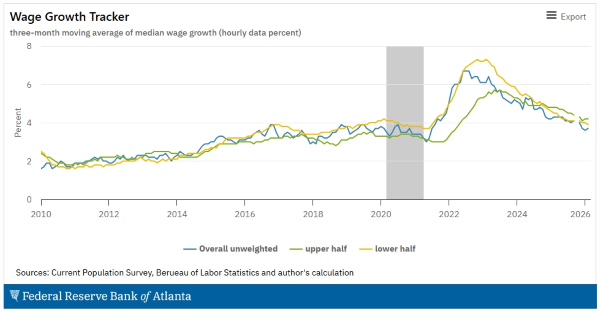
As mentioned earlier, over the period 2019 to 2022, the bottom tier of wages did post some real growth. Income growth at the bottom of the wage distribution is at least in part a response to increases in state and local minimum wages and the tight labor market. However, overall growth in wages is returning to the historical norm.
The effects of technology, global trade, and labor market institutions (e.g., unions or government intervention such as minimum wage) continue to determine what different jobs pay. The level of wages earned reflects the effort and ability of workers. Highly skilled workers are benefiting from technological advancement because of their education and specialized skills. Technology often has the opposite effect on less skilled workers by eliminating their jobs or by decreasing wage growth.
Globalization of trade and offshoring has expanded the talent labor markets. Labor supply is sourced globally, especially for technology or skill-based jobs. The routine, less skilled work in the manufacturing sectors, typically where unions are involved, has been crowded out with displaced workers generally moving into lesser paid jobs. However, as U.S. companies look to secure more of their supply chain at home, and with large government incentives for strategic industries taking effect, manufacturing is making a comeback. This does not mean that global sourcing is coming to an end, it just means companies have learned that they need to diversify their supply chain.
Memory Jogger
The increase in pay inequality has been good for: