
Looking to Benchmark Pay?
Multiple Salary Structures
Many factors influence the need for a separate salary structure.
Multiple structures can be used to reflect the different pay rates of geographic locations, job types, levels, and functions. A large, multi-national corporation can have 100 or more salary structures which can be dependent on the number of countries they may operate in and the types of jobs within each location. A business will typically have separate salary structures for executives, commissioned sales, professional/management, and administrative/operative employees. Different compensation strategies, market rates, geographies, different incentive plans, unionization, and different job evaluation methodologies can also all influence the need for a separate salary structure.
In the example below, you will notice the slant of the market trend lines. The nonexempt line is much flatter than the other lines. You will notice how steep information systems is in relation to the professional/management line. Sales is typically also managed to a separate structure which better supports sales compensation practices. It’s not uncommon to see a separate structure for executives since the market trend line is very steep for these jobs as well.
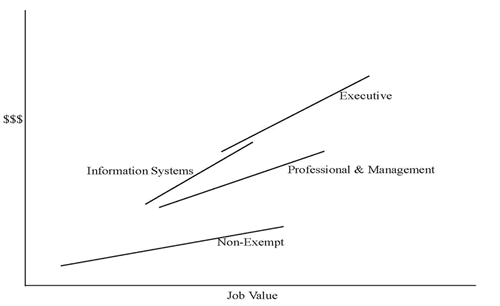
Exempt vs. nonexempt positions
U.S. organizations with more than one salary structure usually have separate structures based on the Fair Labor Standards Act (FLSA) classifications of exempt and non-exempt jobs. Typically, this applies to multi-national organizations as well using a professional/management structure and an administrative/operative structure in each country of operation.
The reasons for having these separate structures:
The slope of the pay-policy line for these groups is normally different. Nonexempt jobs have a flatter market trend line than exempt jobs. Exempt jobs traditionally have greater knowledge, problem solving, and accountability attributes that are reflected in the market value of the jobs.
Also, the pay-policy lines will start and stop at different places, so there will be little overlap between them.
Career advancement from one salary grade to another results in greater financial opportunity for exempt jobs and the inherent steeper slope of their pay policy line. The opposite is true for non-exempt jobs.
Discrimination
When developing multiple salary structures, it is important not to discriminate. If a structure contains most of the protected work classes such as female or minority-dominated jobs, then the structure may appear discriminatory and have an unintended adverse impact. All job families that constitute a salary structure should be examined for a possible adverse impact. Multiple salary structures should be designed carefully to avoid unintentional discrimination due to labor market practices. If women and minorities are segregated, then the composition of jobs in all groups will have to be balanced by gender and race as well as consider the realities of the labor market.
Memory Jogger
A major reason to have multiple salary structures is to: