









Build a Compensation Strategy That Keeps Up with Evolving Software Technologies
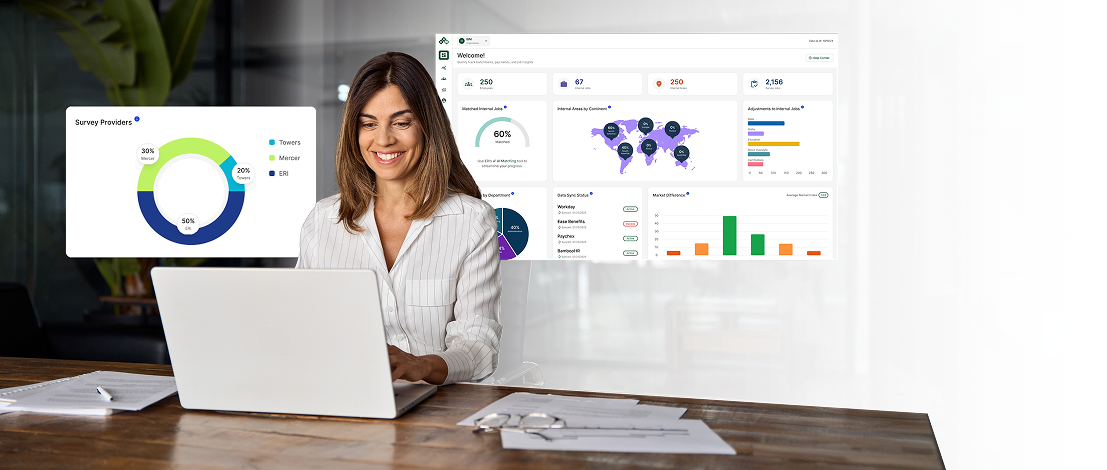
Software companies compete for specialized talent in a market where jobs, skills, and technologies evolve quickly. Employment for software developers, quality assurance analysts, and testers is projected to grow 10% from 2025 to 2035, according to the U.S. Bureau of Labor Statistics, adding to the pressure to price specialized roles accurately as workforce needs change. ERI’s Assessor Platform combines software industry salary data with compensation management tools to help teams benchmark specialized jobs, evaluate geographic pay differences, and build compensation structures that keep pace with their workforce.
- Benchmark specialized and emerging software roles using salary data by industry, location, experience, skills, certifications, and other relevant factors.
- Use AI Job Matching and Hybrid Jobs to evaluate roles that do not align cleanly with a traditional benchmark.
- Manage salary structures, geographic pay, compensation planning, and employee pay analysis as your workforce grows.

Compensation Solutions Built for Every Software Subindustry
SaaS & Enterprise Software

Artificial Intelligence

Cybersecurity Software
Cloud, Infrastructure & Developer Technology
SaaS & Enterprise Software
Artificial Intelligence
Cybersecurity Software
Cloud, Infrastructure & Developer Technology
Keep Your Software Compensation Strategy Up to Speed

Save Time with AI Job Matching
Software companies building new teams or introducing emerging positions need a consistent way to match jobs and maintain an organized job architecture as their workforce evolves. Use ERI’s AI Job Matching tool to compare your internal jobs with up to five relevant ERI benchmark matches with 94% accuracy. Review job responsibilities and evaluate which match best represents the role.

Build Salary Structures That Support Technical Career Growth
As software organizations grow, employees need clear and consistent career progression. Use ERI’s AI Pay Grade tools to develop pay grades and technical career levels, align grade midpoints with market data, and localize salary structures for different geographic markets.

Competitive Pay Across Remote and Geographic Markets
Flexible work and global hiring put software teams in competition across a variety of labor markets. Use ERI’s Geographic Assessor to compare salary levels by location, evaluate geographic pay differentials, and support remote employee compensation decisions with localized salary structures for the markets where you hire.

Benchmark Specialized Software Jobs with Reliable Market Data
Two employees may have similar titles, such as Software Engineer and Program Engineer, but perform very different work. Use ERI to benchmark technical jobs against consistent job definitions and refine compensation based on location, industry, experience or job level, skills, certifications, and other job-specific factors. For specialized roles, teams can also account for credentials, such as Certified Secure Software Lifecycle Professional, when evaluating pay.

Communicate Employee Pay with Confidence
Encourage pay transparency across your organization with clear, comprehensive reports. Easily download and share reports that analyze compensation by department, pay grade, salary increase, incentive, budget, and more.

Scale Your Compensation Strategy as You Grow
Rapid hiring can leave software companies with inconsistent titles, salary ranges, and compensation practices. Use ERI’s trusted salary data and compensation management tools to efficiently analyze large volumes of job titles by location, industry, and organization size for quick and accurate benchmarks.

Smarter Pay Decisions for Your Software Workforce
Built for Teams Managing Software Compensation
Compensation & Total Rewards Teams

Human Resources

Talent Acquisition

Finance & Leadership
Feature Highlights for the Software Technology Industry


Software Job Titles
- Software Engineer
- Software Developer
- Principal Software Engineer
- Software Engineer Staff
- Software Engineer Lead
- Software Developer Lead
- Software Engineering Manager
- Software Development Manager
- Software Development Director
- Vice President Software Development
- Front End Developer
- Back-End Developer
- Full Stack Developer
- Full Stack Engineer
- API Software Engineer
- Mobile Applications Engineer
- Android Software Developer
- iOS Developer
- Java Developer
- Python Developer
- AI Software Engineer
- AI Developer
- AI Agent Developer
- Machine Learning Engineer
- Deep Learning Engineer
- Natural Language Processing Engineer
- LLM Application Engineer
- Prompt Engineer
- Artificial Intelligence Architect
- Artificial Intelligence Researcher
- Applied Scientist
- AI Product Manager
- Director Generative AI
- Head of AI
- Cloud Engineer
- Cloud Architect
- Platform Architect
- Infrastructure Architect
- Cloud Systems Administrator
- Solutions Architect
- Ethical Hacker
- Systems Integration Manager
- Data Integration Engineer
- Business Intelligence Engineer
- Data Warehouse Developer
- Data Visualization Developer
- Digital Product Manager
- Product Management Director
- Scrum Product Owner
- Agile Project Manager
- Software Project Manager
- User Experience Designer
- UX Designer
- User Researcher
- Software Test Engineer
- Release Engineer
- Release Manager
- Technical Account Manager
- Technical Support Engineer
- Implementation Manager
Software FAQs
How is compensation typically determined in the software industry? 

Compensation in the software industry is typically based on the role, job level, experience, location, specialized skills, and market demand. When determining employee pay, organizations may also consider internal pay structures and the employee’s total rewards package, including base salary, incentives, equity, and benefits. Software companies can use compensation benchmarking data to compare similar roles and establish competitive, consistent salary ranges.
What should software companies look for in compensation management software?
Software companies should look for compensation management software that brings together reliable market salary data with tools for salary benchmarking, pay grades and ranges, geographic pay analysis, salary planning, pay equity analysis, and employee communication. A connected compensation platform helps HR and compensation teams make consistent compensation decisions as their organization scales and grows.
Can ERI help me set up my compensation strategy for my organization?
Yes. We understand that there is no single compensation strategy that works for every organization. If you need help developing or optimizing your compensation strategy, ERI’s team of expert consultants can help. With more than 35 years of compensation experience, we can help you:
- Customize and shape your compensation philosophy and strategy
- Design and implement high-impact compensation plans that drive results
- Structure clear job levels, career ladders, and organizational hierarchies for growth
- Unlock the full potential of our Assessor Platform for long-term success
Can ERI support startups and enterprise software companies?
Yes. ERI supports software companies at every stage of growth. Whether you’re a startup building your first compensation structure, or an enterprise organization managing complex global workforces, ERI can tailor compensation solutions to your needs. Benchmark specialized technology roles, create and maintain pay grades, compare geographic markets, plan salary increases, and manage employee compensation as your organization scales.
Can ERI account for software skills and certifications when benchmarking compensation?
Yes. After selecting an appropriate job benchmark, compensation teams can refine pay based on relevant skills and certifications. Software-related certifications available in ERI include credentials such as:
- Artificial Intelligence (AI) Engineering
- Generative Artificial Intelligence (AI)
- CompTIA Security+
- Java Certification
- Ajax Certification
- AWS Certified Developer
- Certified Secure Software Lifecycle Professional
- Certified Scrum Developer
- Google Cloud Certified – Professional Cloud Developer
- Microsoft Certified Solutions Expert
These adjustments can help teams account for specialized expertise when evaluating compensation for technical roles. Contact us to learn more about all the software certifications and skills that are available in the Assessor Platform.
How can software companies benchmark emerging or hybrid technical roles?
Software roles do not always align cleanly with a single traditional benchmark. ERI’s AI Job Matching and Hybrid Jobs tools can help compensation teams evaluate relevant benchmark jobs and create blended roles when responsibilities span multiple functions.