
Looking to Benchmark Pay?
Changing the Pay-Policy Line
If there are large differences between pay levels at the headquarters and geographic locations, it may become necessary to create a geographic salary structure by adjusting the headquarters' salary structure for the new location.
How do you go about it?
Adjust the existing pay-policy line:
- upward
- downward
- OR
- by changing the angle of the slope (this is much more complicated)
Let's take a closer look…
Upward. Adjust the pay-policy line upward if the average salaries in the non-headquarters location are higher than the average salaries at headquarters.
Downward. Adjust the pay-policy line downward if the average salaries in the non-headquarters location are lower than the average salaries at headquarters.
Angle of the slope. When adjusting the angle of the slope, this is almost like creating a new salary structure for your branch office. As a result, the complexity in managing the two structures increases.
Adjust the angle of the slope of the pay-policy line if either the high- or low-level jobs have significantly higher or lower pay averages. The slope will flatten out if the non-headquarters facility is located in a unionized city or in one with a “living wage” ordinance that drives up pay at the low end of the pay scale. On the other hand, a city that has a big high technology sector may have tremendous competition among organizations for high-level professionals. This will drive up the high end of the pay scale and make the pay-policy line a steeper slope.
Angle of the line
When the angle of the slope changes, it may not change evenly from top to bottom. This can even create a pay-policy line that is curvilinear in shape.
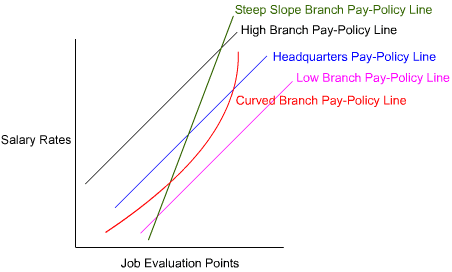
Ideally, the slope of the line for the headquarters and branch office salary structures will be the same. For a business with multiple branch offices, a simplified approach to managing geographic pay is critical.
Memory Jogger
A salary structure for a branch-office in a highly unionized city would probably have a pay-policy line that is: