
Looking to Benchmark Pay?
Introduction
Top management employees typically participate in custom designed and unique compensation programs.
There are several reasons for this:
- Compensation programs segmented by business leadership levels, particularly for executives, are important because of their vital role in an enterprise's success.
- Management make up a small number of employees in an organization and represents a high percentage of total compensation costs.
- Top management needs to take a longer–term view to support attainment of the entity's mission, strategy and long-term goals.
One can see (image below) the complexity of the compensation elements at an executive level by examining pay categories for a Chief Financial Officer in the United States.
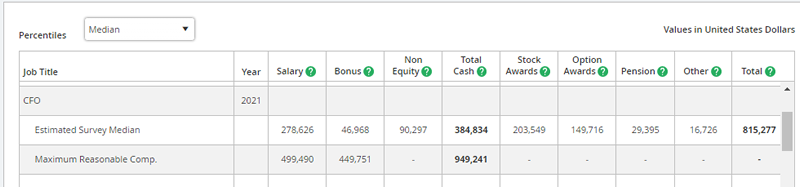
Image source: ERI Executive Compensation Assessor
Course Overview
This course analyzes how compensation for business leaders is established and introduces you to the common components of their compensation. We will discuss the:
- goals and theories behind these programs
- use of base salaries, short-term incentives, and long-term incentives
- advantage of long-term and deferred compensation
- use of perquisites, golden handcuffs and golden parachutes
- role of Board of Directors oversight
- developments in regulatory reform
The course will conclude with a discussion of how compensation differentials between staff and management may play a role in the future design of compensation packages. Also, peer group comparison is essential, and comparison techniques will be reviewed. For the design of pay packages to affect company performance, management compensation plans should be evaluated on an ongoing basis.