In today’s dynamic global economy, rising inflation has far-reaching effects at all organizational levels. From budgeting for essential materials and sourcing suppliers to employee buying power and how salary increases impact employee motivation, inflation is on everyone’s mind. ERI’s Assessor Platform, backed by over 35 years of compensation research, has tracked the ebb and flow of inflation over time, with data updated every six weeks (or whenever special circumstances warrant an update) to keep our finger on the pulse of current trends in the labor market. Frequent dataset updates are a key part of maintaining the accuracy of ERI’s Assessor Series, leading many to wonder how specific economic trends are incorporated into our robust compensation database. Looking specifically at cost of living and inflation, we were asked, “Does ERI account for inflation when updating geographic pay differentials?” Our response below seeks to offer some context for HR and compensation professionals concerned about the impacts of inflation.
Cost of living and inflation are primarily employee-expense based, while cost of labor and geographic pay differentials are employer-pay oriented. As a result, geographic pay differentials can reflect the long-term effects of inflation as market pay levels adjust, but they are not designed to capture short-term inflationary swings in real time. Inflation can move more quickly and more sharply than labor costs, both upward and downward, so updates to geographic pay differentials will more likely reflect sustained trends rather than immediate fluctuations.
Over time, these measures are often correlated. Locations with a higher cost of living tend to develop higher market pay levels, which, in turn, can contribute to higher local living costs. Geographic pay differentials are intended to reflect pay variation across geographic areas, whereas broader national increases in the cost of living are more appropriately captured in changes in average U.S. salary levels over time. Those salary changes, however, also tend to occur with some lag and are typically less volatile than inflation itself.
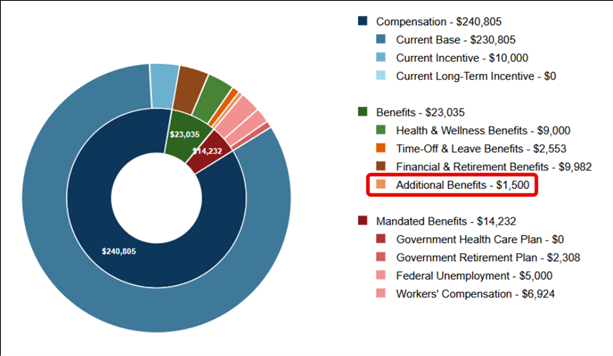
When considering the more immediate impacts of inflation, pay adjustments for sudden inflationary increases are typically handled as short-term or one-time adjustments rather than incorporated into base pay, as inflation spikes are often temporary. To support this, ERI’s Salary Assessor provides useful tools for planning short-term or one-time adjustments, such as a cost-of-living stipend. Using the Benefits feature in the Total Rewards section of Compensation Management, subscribers can add a cost-of-living stipend under Additional Benefits and then apply the stipend to relevant employee(s) in the Employee List. By exporting and sharing a Total Rewards Statement, employees will be able to see the Additional Benefits that they have been allotted.
ERI has been aggregating and analyzing salary survey data for over three decades, with data accuracy remaining our top priority throughout that time. We have tracked compensation for thousands of job titles through myriad economic cycles, including periods of high and low inflation, and are continuously evaluating trends in the labor market to provide subscribers with the most timely and reliable cost-of-labor and cost-of-living data available.
To learn more about current trends in compensation movement and the labor market, read ERI’s latest National Compensation Forecast or sign up for our next Compensation Trends Webinar.
For questions about how ERI’s Assessor Platform can help you make data-driven decisions about geographic pay differentials, cost of living, comprehensive compensation management, and more, please sign up for a guided tour.