Our Process
The accuracy of our data is our number one priority. Along with our Ph.D. level data scientists and seasoned compensation professionals, we have included AI in our rigorous process to analyze and provide extensive data of the highest quality.
The Methodology for Our Salary Survey Process
ERI’s published data are derived from five fundamental sources:
- ERI’s Salary Surveys – ERI conducts salary surveys of HR departments to capture current market rates.
- Customer HRIS Data – Customer integrations with HRIS systems provide a consistent stream of updated compensation data.
- Data from Proxies/10-Ks and Forms 990 – Proxies, 10-Ks, and Forms 990 document executive compensation for publicly traded and nonprofit organizations.
- Proprietary Databases – ERI captures compensation data from HR departments through a variety of portals, which flow into ERI’s databases.
- Purchased Survey Data – ERI purchases salary survey data from other salary survey firms, which further increase ERI’s data volume.
After collecting the data, we conduct quality assurance to ensure that data are vetted and verified:
Job Matching Jobs are matched by trained analysts.
VerificationParticipants are interviewed to double-check data that do not fall into parameters.
Data CleaningAI classification and prediction tools are used to quickly identify issues, such as keying errors, misclassifications, and missing data.
ERI conducts advanced analytics using several methods:
Machine LearningMachine learning is particularly useful for classification and prediction tasks. ERI uses these tools to better understand how underlying market, organizational, and occupational structures influence compensation today and into the future.
Meta-analysisConsidered the gold standard of scientific research, meta-analysis is a method of systematically analyzing the results of many individual surveys to identify trends across the full range of data. This method results in a larger sample size and provides more accurate results than individual surveys.
RegressionERI uses various forms of regression at different points in our analyses, including multiple regression, logistic regression, and cubic spline regression.
To accurately capture the full scope of each occupation and how it exists in the economy, these analyses have been validated against independently collected market data.
Analysts double-check the results for each job approximately every six weeks. This second round of quality control allows us to be confident in the data we publish.
The carefully curated dataset is published and reflects compensation rates with an unparalleled level of accuracy.
ERI’s compensation database provides robust analyses for the following:
35,800+ Job Titles
10,500+ Locations
1,100+ Industries
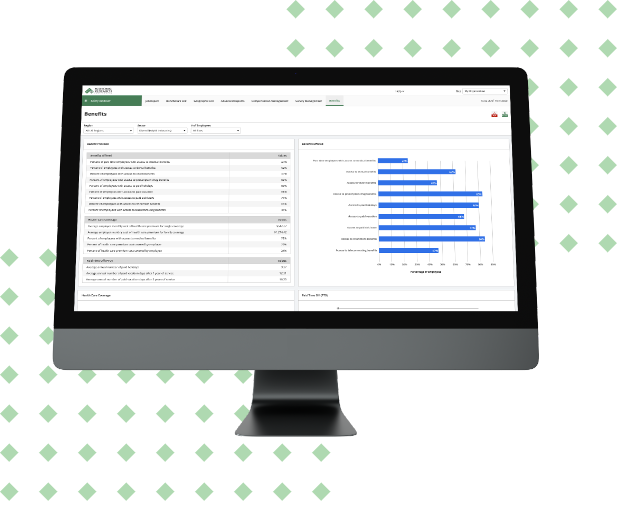
Explore ERI’s Compensation Data
See how our data can be used to meet your compensation planning goals. Experience ERI’s Assessor Platform.