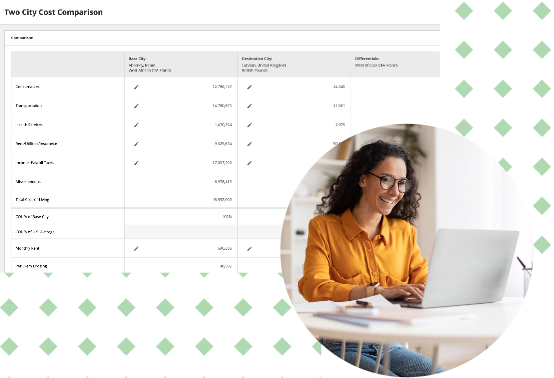
Using a cost-of-living calculator can be helpful when comparing the affordability of different locations and what expenses might come with those locations. ERI's cost-of-living comparison calculator gives you the most accurate cost-of-living data in the market. Use ERI's cost of living data to compare expenses between two locations and negotiate cost of living adjustments in relocations.
Current City
City You Are Moving To
Yearly Household Income
Are you moving?
Enter your current city with your destination to compare the cost of living.

Our Process

Cost-of-Living Index Breakdown

All these factors should be considered when deciding to move to another location. ERI’s cost-of-living calculator can help you accurately predict how far your money will take you in a new location.

Housing

Housing is typically the largest component of expenditures. ERI collects both aggregate city-level and neighborhood-level data for areas within cities that are more desirable to most management/professional lifestyles. Monthly rental data collected defaults to a square footage based on the specific earnings level and assumes unfurnished rental of an apartment or a condominium.
Utilities are estimated based on costs for common heating, cooling, and sources of energy for the location. Water and sewer cost estimates are also included.

Food and Consumables

Consumables are built up from a market basket of goods and services that a typical management/professional household would purchase and consume. The percentage of income dedicated to consumables varies by income level and family size based on the base city expenditure pattern. A typical market basket of goods would include the costs for meats, dairy products, produce, bakery products, miscellaneous grocery products, and miscellaneous goods and services.

Health Care

Health care services include out-of-pocket costs for the employee and carrier zone rates by location, along with hospital costs. They are based primarily on group medical benefits, as tracked by national carriers and ERI's in-house methodology.

Transportation

The cost of transportation score uses local data on commuting patterns and city dispersion, combined with fuel cost factors, public transportation, and efficiency patterns of public transportation in relationship to a transportation price-level index. A relative cost of airline travel component is also included. In major cities, where parking is a substantial cost, estimates are included for parking expenses during regular business hours.

Comparing the Cost of Living

Using our renowned Relocation Assesor tool, we evaluated how the cost of living might compare in popular states and cities in America and internationally.

Between States

Cost of Living: California vs. Texas
California
140% Higher

Texas
92% Lower
The cost of living in California is more than 140% above the average cost of living in the United States, while Texas is 92% of the average cost of living in the U.S.
Cost of Living: Colorado vs. Texas
Colorado
110% Higher

Texas
92% Lower
When comparing the cost of living in California versus Colorado, California's cost of living is about 140% more than the United States average, which is still significantly higher than the cost of living in Colorado.

Between Cities

Cost of Living: New York vs. London
New York
170% Higher

London
161% Higher
New York and London are two very well known cities around the world, with millions of people moving to these vibrant cities for endless work opportunities. While both offer exciting possibilities, London has a significantly higher cost of living compared to the national average in the UK. For example, if you make $122,200 in New York and relocate to London, you would then have to make £138,900 or around $185,200 dollars in order to achieve the same standard of living in London.
Cost of Living: Chicago vs. Boston
Chicago
135% Higher

Boston
170% Higher
Boston has a higher average cost of living than Chicago as a whole. If you were earning $97,300 in Chicago, you would need $122,300 to have to the same standard of living in Boston.

Why

Why choose ERI data

Our Relocation Assessor is unique because it offers more than just third-party data. It provides detailed cost-of-living information for both rental and home ownership scenarios, enabling comprehensive cost-of-living analyses and assumption adjustments. The tool contrasts cost of living for multiple earnings levels in up to 1,000 cities at a time as compared to a base area, such as a headquarters or a national average. Additionally, it examines trends over time and integrates multiple sources, ensuring a more robust validation process than what could be achieved with a single source or snapshot in time.

Frequently Asked Cost of Living Questions

How does inflation affect cost of living?
Rising Prices: The prices of goods and services increase as a direct response to inflation. Meaning, everyday items, like food, housing, and transportation, become more expensive and less affordable.
Purchasing Power: As prices rise, the purchasing power of money decreases. In the event that wages do not keep pace with inflation, people can afford less with the same amount of income they earn.
Essential Expenses: Inflation tends to affect essential expenses more significantly than luxury goods. Necessities, like groceries, rent, and utilities, may see more price increases.
Cost of Borrowing: Central banks might raise interest rates as a strategy to combat inflation, which can increase borrowing costs. Higher interest rates can lead to more expensive mortgages and loans and thus increase living costs.
Impact on Savings: Inflation can decrease the value of savings if the interest earned is lower than the current inflation rate. This means that money saved today will have less purchasing power in the future.
How does inflation affect salary negotiation?
Increased Salary Expectations: Inflation increases the cost of living, and, as it rises, employees often expect higher salaries to maintain their purchasing power. This can lead to more aggressive negotiation tactics from current or potential employees.
Employer Constraints: During periods of high inflation, companies may face pressure to control costs internally. This could limit their ability to offer substantial raises to employees, making negotiations more challenging.
Benchmarking against Inflation: Employees may use inflation rates as a benchmark during negotiations by asking for raises that at least match or exceed the inflation rate to ensure their real income doesn’t decline.
Focus on Benefits: Employees might negotiate for additional benefits instead of just salary increases, such as flexible working arrangements, bonuses, or enhanced health benefits, to account for the rising cost of living.
Job Market Dynamics: In a tight labor market, demand for skilled workers is significantly more than the supply. Employees might find more leverage to negotiate higher salaries.
Where does ERI's Cost of Living data come from?

ERI gathers and analyzes cost-of-living data from a wide range of sources, including areas that are often overlooked in traditional surveys. Our team collects housing sales data from commercial databases and compiles information on gasoline prices, consumer goods, medical insurance premiums, and effective tax rates from trusted online sources.

Accuracy is our top priority. Our Ph.D.-level data scientists and experienced compensation professionals leverage advanced AI technology as part of a rigorous analytical process to deliver comprehensive, high-quality data.

Learn more about Our Methodology